

Views: 0 Author: Site Editor Publish Time: 2026-07-17 Origin: Site


The transition of the Robot Vacuum from a novelty gadget to a highly complex, standard commercial facility appliance marks a significant shift in floor maintenance. The underlying technology varies drastically between models, making the selection process complicated for procurement managers. Buyers frequently experience buyer's remorse due to a misalignment between their facility’s physical environment—such as floor types, layout complexity, and the presence of industrial debris—and the specific navigation or cleaning technology of the purchased unit. This guide shifts the focus from marketing claims to a technical breakdown of how a commercial autonomous mobile robot (AMR) vacuum operates. We frame this as a decision-stage blueprint to evaluate internal mechanics, navigation systems, and maintenance requirements. Understanding these elements ensures a high-ROI purchase that genuinely meets your operational cleaning needs without requiring constant manual intervention.
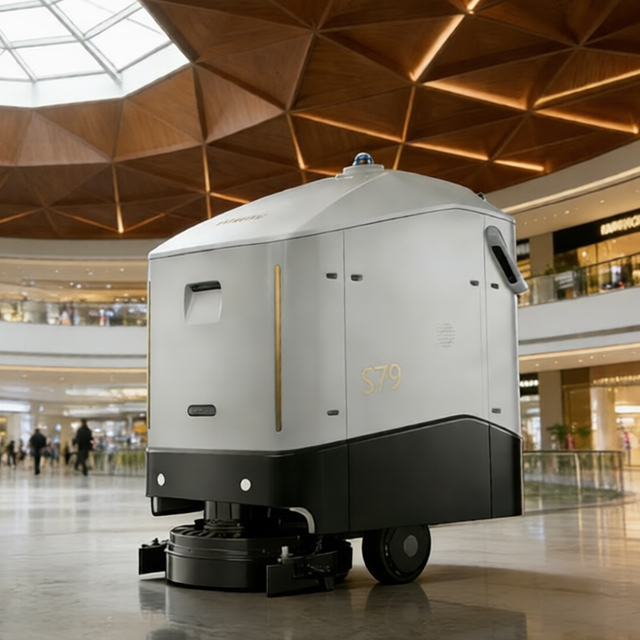
Navigation Dictates Autonomy: The choice between LiDAR, VSLAM (camera-based), and gyroscopic navigation is the primary driver of a robot vacuum's efficiency and price point in warehouse and retail environments.
Suction Metrics Are Incomplete: Raw Pascal (Pa) suction power is secondary to brush roll architecture and airflow design when evaluating real-world industrial debris pickup.
The "80% Rule": A commercial AMR vacuum is a daily preventative maintenance tool designed to capture the majority of surface debris per pass, not a complete replacement for deep-cleaning heavy-duty upright industrial vacuums.
Base Stations Define the Experience: True hands-free operation relies on the base station's capabilities (auto-emptying, mop washing) rather than the robot itself, fundamentally shifting the total cost of ownership.
To evaluate a commercial robot vacuum, buyers must first understand the baseline hardware and structural engineering. These core components dictate physical cleaning capability, airflow efficiency, and long-term durability under daily operational stress. We look past the outer shell to examine the mechanical systems doing the actual work.
The industry-standard mechanical workflow relies on three distinct phases operating simultaneously. Edge-sweeping brushes handle agitation. They spin at calibrated speeds to sweep debris from baseboards, corners, and rack edges directly into the primary cleaning path. If they spin too fast, they scatter debris; too slow, and they fail to dislodge heavy particles like metal shavings or wood splinters.
Main counter-rotating rollers perform extraction. They physically beat the floor surface, lifting dirt from hard concrete floors and agitating commercial walk-off mats to release embedded dust. Finally, the internal vacuum motor provides the suction necessary to pull the suspended debris through the intake port and into the dustbin. These three phases work in tandem to channel dirt from outer edges into the suction path. If one component underperforms, the entire system's efficiency drops, leaving debris behind on the floor.
The mechanics of the vacuum motor involve sealed air pathways and high-speed impeller systems. A tight seal ensures that suction power translates directly to floor-level lift rather than escaping through chassis gaps. Manufacturers often advertise high Pascal (Pa) ratings, but without a sealed airway, that static pressure never reaches the floor.
Single-brush designs are common, but dual-opposing brush roll designs generally offer superior debris capture, especially on high-traffic transition mats. The opposing rotation creates a pinch point that forces debris upward. Bristle brushes agitate commercial carpets well but are highly prone to hair and wire tangles, requiring frequent manual cutting. All-rubber extractors mitigate physical jams significantly. They use flexible rubber vanes to beat the surface and squeegee hard floors, reducing maintenance frequency while maintaining excellent epoxy floor performance.
| Brush Type | Mat Agitation | Hard Floor Performance | Tangle Resistance (Fibers/Wire) | Maintenance Frequency |
|---|---|---|---|---|
| Standard Bristle | High | Moderate | Low | High (Weekly) |
| Combo (Bristle/Rubber) | High | High | Moderate | Moderate (Bi-weekly) |
| Dual All-Rubber | Moderate | High | High | Low (Monthly) |
Independent, spring-loaded drive wheels allow the robot to navigate uneven industrial surfaces. Each wheel has its own motor and suspension travel, allowing the chassis to articulate over ramps, expansion joints, and cable covers. The front-facing omnidirectional caster wheel dictates steering and houses an optical sensor to track physical movement distance.
Threshold clearance capabilities typically range from 15mm to 20mm. Suspension systems impact the transition between smooth epoxy floors and textured safety tile. If the suspension is too stiff, the robot gets beached on thick thresholds, spinning its wheels without gaining traction. If it is too loose, the chassis drags on the floor, causing friction and draining the battery prematurely.
Lithium-ion battery capacities typically range from 5200mAh to over 10000mAh for industrial models, directly impacting runtime. Large commercial floorplans require higher capacities to avoid frequent recharging interruptions. A high-capacity commercial battery generally provides up to 180–240 minutes of runtime on low suction settings, but this drops significantly when maximum suction or active water scrubbing is engaged.
"Charge and Resume" logic allows the robot to calculate the remaining battery required to return to the dock, recharge, and complete a mapped job autonomously. The microcontroller monitors voltage drop and distance to the dock. Once the battery hits roughly 20%, the robot suspends the cleaning cycle, navigates home, recharges to the exact percentage needed to finish the remaining square footage, and deploys again.
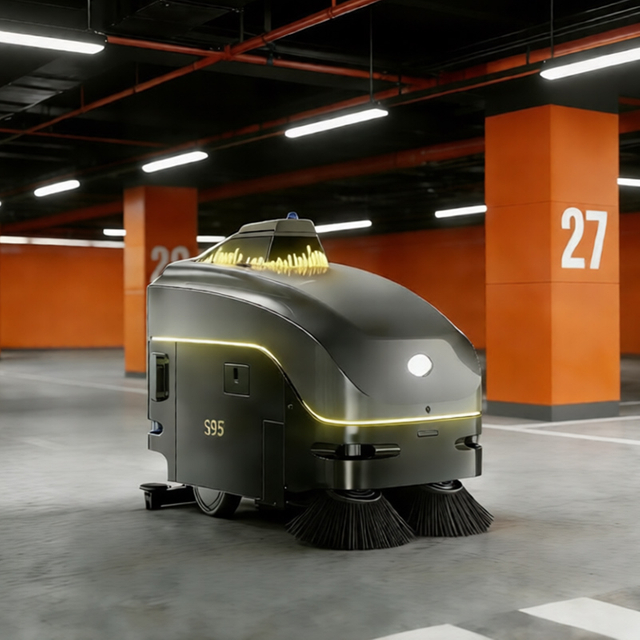
Mapping technology is the most critical factor in determining whether a commercial robot vacuum will operate autonomously or require constant human rescue. The sensors dictate how the machine perceives its environment, plans its route, and reacts to unexpected changes in the floorplan.
Entry-level models rely on infrared proximity sensors and physical bumper switches. They use internal gyroscopes and accelerometers to track movement but lack true spatial awareness. They drive in a straight line until they hit an object, trigger the bumper switch, rotate a set number of degrees, and continue.
These systems suffer from pseudo-random cleaning patterns and an inability to create permanent, editable maps. There is a high likelihood of missing zones in complex floorplans. They cannot support virtual no-go lines or specific room cleaning commands, making them suitable only for small, uncomplicated spaces like single utility rooms or isolated storage offices.
VSLAM uses top-mounted or front-facing cameras to capture thousands of data points, building a visual map of the ceiling structure and warehouse geometry. The algorithm tracks high-contrast feature points (like the corner of a structural column or a light fixture) across consecutive camera frames to calculate the robot's exact position and orientation.
This allows for logical, row-by-row cleaning. However, VSLAM relies heavily on ambient light. Performance degrades rapidly in dark warehouses during night shifts, often causing the robot to become lost or revert to bump-and-navigate behavior. It also requires significant computational load, meaning the onboard processor must work harder to maintain accurate mapping.
LiDAR utilizes a spinning laser turret mounted on top of the chassis. It measures distance via time-of-flight, calculating exactly how long it takes for the laser pulse to bounce off a wall or rack and return to the sensor. It spins at roughly 300 RPM, creating a highly accurate, 360-degree, real-time 2D map of the environment.
The benefits are substantial for commercial operations. LiDAR provides rapid mapping, often completing a warehouse floorplan scan in minutes without needing to drive over every square inch. It functions perfectly in pitch-black environments and allows for precise adherence to digital no-go zones drawn in the fleet management app.
Advanced commercial models integrate front-facing structured light sensors and RGB cameras trained on machine learning databases. While LiDAR maps the walls and large machinery, the front-facing AI camera identifies small objects lying on the floor in the robot's immediate path.
This technology is necessary for avoiding dynamic obstacles like discarded pallets, loose cables, and forklift straps. Standard LiDAR sits too high on the chassis to see items flat on the floor. The AI cross-references the object against an onboard database, determines the threat level, and alters the cleaning path to give the object a wide berth, preventing mechanical jams or tangled brushes.
The onboard processor translates sensor data into real-time steering adjustments. It handles the pathfinding algorithms, ensuring the robot covers the maximum area in the minimum time. Software-side features define the fleet manager experience, offering custom scheduling, virtual boundaries, zone cleaning, and multi-floor map management.
Users can dictate specific suction levels and water flow rates for individual zones. For example, the system can be programmed to vacuum the loading dock with maximum suction and high water flow after shipping shifts, while using quiet mode in administrative corridors to avoid disturbing employees.
Different configurations solve specific environmental challenges. Buyers must match the hardware features to their facility's physical reality, looking past the raw suction numbers to understand how the machine interacts with different surfaces.
Ultrasonic carpet detection sensors allow robots to identify soft surfaces instantly. When the sensor detects the acoustic signature of walk-off mat fibers, it triggers an automatic suction-boost feature, ramping the vacuum motor to maximum power to pull embedded dirt from the pile.
However, physical limitations remain. Thick, textured safety mats or high-friction carpets present a challenge. The robot's clearance may not be high enough to traverse the thick fibers, and the wheels can slip, triggering anti-stuck errors. Furthermore, maintaining a tight suction seal on porous surfaces is difficult, meaning even high-suction models will leave heavier debris behind deep in the substrate.
Anti-tangle combs built into the brush housing are necessary for facilities with high-fiber waste, packaging debris, or plastic strapping residue. These plastic teeth actively strip debris off the spinning brush roll and guide it into the suction port. Without them, long synthetic fibers wrap tightly around the bearings, eventually causing friction that can burn out the brush motor.
Debris impacts bin capacity rapidly. Fine industrial dust expands inside the dustbin, blocking the internal filter and dropping suction power. Wider intake ports and auto-empty stations are highly recommended for commercial operations to ensure the robot can finish a full cleaning cycle without requiring a manual bin emptying midway through the shift.
Scrubbing systems vary drastically in effectiveness. Passive gravity-fed drip mops simply drag a damp cloth across the floor, which is only useful for light surface dust. Vibrating scrubbing plates (sonic scrubbing) scrub the floor at thousands of cycles per minute, breaking down dried spills and light oil spots on warehouse floors.
Dual-spinning mop pads apply downward pressure and rotational friction, mimicking manual industrial floor scrubbing. Auto-mop lifting mechanics are critical for reliability when transitioning from epoxy hard floors to carpeted entryways. When the ultrasonic sensor detects carpet, the robot physically retracts the mop pads upward by 5mm to 12mm, preventing wet rugs while continuing to vacuum.
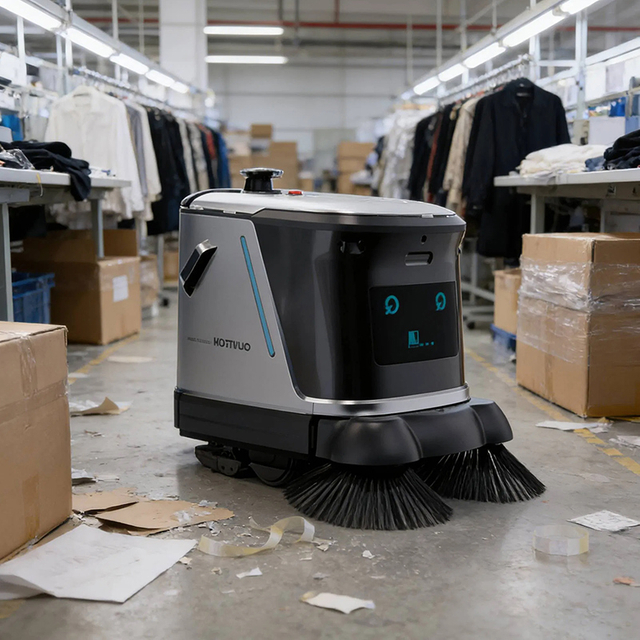
The base station dictates the level of human intervention required on a weekly basis. The industry has shifted the focus from the robot itself to the dock, turning the vacuum into a satellite device managed by a central hub.
Standard docks provide nothing more than electrical contacts for recharging. They require manual bin emptying after every single run, or at most, every two runs. The operator must also manually clean the filter, refill the water tank, and wash the scrubber pad. They are best suited for small commercial offices or operations that do not mind frequent, hands-on maintenance.
These stations house a secondary, highly powerful vacuum motor. When the robot docks, the station pulls debris from the robot's internal dustbin through a trapdoor and into a large sealed bag or bin located in the tower. This extends the manual maintenance interval from daily to roughly once a month.
Disposable dustbags offer convenience and industrial hygiene, sealing shut upon removal to prevent dust plumes. Bagless towers eliminate recurring consumable costs but require the operator to manually dump the large canister into an industrial waste bin, which releases fine dust back into the air and requires periodic washing of the tower's internal cyclones.
| Base Station Type | Manual Intervention Frequency | Features Included | Physical Footprint |
|---|---|---|---|
| Standard Dock | Daily | Charging only | Minimal |
| Auto-Empty Tower | Monthly | Charging, Dust Evacuation | Moderate |
| Fully Automated Hub | Bi-Monthly | Charging, Dust Evacuation, Scrubber Washing, Water Refill, Hot Air Drying | Massive |
Premium stations handle almost every aspect of maintenance. They dispense clean water into the robot's onboard tank, extract dirty water from the scrub-washing process into a separate waste tank, mechanically clean the scrubber pads using plastic bristles, and use hot air drying to prevent mold and odors.
While offering a truly hands-off experience, they have a massive physical footprint, often requiring dedicated floor space near an industrial water source and drain. They also require regular base-station sensor cleaning and manual scrubbing of the washboard area where mud and heavy grease accumulate over time.
Addressing the hidden friction points of owning and operating a commercial robot vacuum ensures realistic operational expectations. Buyers must understand the limitations of the technology and the environmental adjustments required to achieve optimal performance.
Facilities managers often express skepticism regarding incomplete passes or missed fine dust. A commercial robot vacuum is a daily preventative maintenance device that extends the time between manual deep cleans, rather than a total replacement. It keeps the baseline level of dirt low.
Multi-pass cleaning settings can help overcome single-pass limitations. By programming the robot to clean a room twice in a crosshatch pattern, the user significantly increases the debris pickup rate. However, tight corners, rack legs, and narrow crevices will always require occasional manual spot intervention.
Camera-based (VSLAM/AI) models mapping commercial facility interiors raise valid data security and intellectual property implications. These devices capture images of the warehouse or production environment to navigate and identify obstacles. Mitigation strategies include looking for end-to-end encryption protocols and ensuring the manufacturer utilizes local edge processing, meaning images are analyzed on the robot's internal chip and deleted immediately, rather than uploaded to external cloud servers.
Environmental adjustments are necessary for optimal performance. You cannot simply drop an AMR into a cluttered industrial zone and expect success. Follow these preparation steps:
Execute strict cable management: Tie up loose charging cords, temporary extension leads, and machinery wires to prevent them from wrapping around the main extractor.
Clear lightweight mats or tape them down: Robots will push flimsy safety mats around or get their wheels tangled in loose edges.
Ensure adequate clearance under racks and machinery: If a machinery frame has exactly 3.5 inches of clearance and the robot is 3.6 inches tall, it will wedge itself underneath and scratch the LiDAR turret.
Pick up large debris: Items like discarded packaging straps, loose shrink wrap, and cardboard scraps will jam the intake port immediately.
Owning a commercial robot vacuum requires ongoing maintenance. Recurring consumable replacements include industrial-grade HEPA filters, spinning side brushes, main rubber extractors, microfiber scrubbing pads, and auto-empty station bags. Ignoring routine maintenance risks severe hardware failure.
You must regularly clear plastic fibers and debris from the wheel axles and brush bearings. If debris builds up, it creates friction. The motors must draw more amperage to overcome this friction, which generates excess heat and eventually leads to motor burnout or motherboard failure.
A robot vacuum's efficacy is directly proportional to how well its navigation and base station technology match the user's facility layout complexity and tolerance for manual maintenance. We recommend LiDAR-only models for complex, hard-floor facilities; AI-obstacle avoidance models for sites with high physical traffic; and fully automated hubs for operations prioritizing completely hands-off floor scrubbing.
To streamline these complex deployments and safeguard your facility's operational uptime, partnering with a commercial-first technology provider is essential. As a leader in enterprise-grade autonomous hardware, ZYLOR TECH delivers ruggedized, highly serviceable AMRs built to withstand the demanding conditions of heavy industrial and commercial environments.
Measure your lowest equipment and racking clearances to ensure the robot's height profile fits underneath.
Assess your hard-floor-to-carpet ratio to determine if you need a specialized dual-rubber brush roll or a high-lift mopping system.
Evaluate your floorplan complexity to decide between standard LiDAR and advanced AI obstacle avoidance.
Determine your available floor space for a base station to ensure you can accommodate a fully automated hub with access to power and water utilities.
Q: How long do commercial robot vacuums typically last?
A: A commercial-grade robot vacuum generally lasts 3 to 5 years under heavy, daily multi-shift use. Lifespan is heavily dependent on battery degradation and how well the maintenance team services the motor and moving parts. Regular cleaning of optical sensors and bearing assemblies extends the operational life significantly.
Q: Can a commercial robot vacuum completely replace an industrial manual sweeper or scrubber?
A: No. Robot vacuums cannot clean stairs, vertical equipment, or provide the deep-pore concrete scrubbing that heavy-duty ride-on sweepers deliver. They are designed for high-frequency surface maintenance to reduce the required frequency of manual deep cleaning shifts.
Q: Do commercial robot vacuums work in the dark?
A: LiDAR-equipped models function perfectly in the dark because they use their own laser pulses to measure distance, making them ideal for unlit warehouse night shifts. Camera-based VSLAM models generally require consistent ambient lighting to identify visual landmarks and navigate effectively.
Q: How do commercial AMRs handle loading docks and steps?
A: They use downward-facing infrared cliff sensors to detect ledges. When the sensor detects a sudden drop in the floor surface, it commands the drive wheels to stop and reverse direction. These sensors require regular wiping to prevent industrial dust buildup from causing false readings.
Q: What is the ongoing cost of commercial robot vacuum maintenance?
A: You must regularly replace industrial HEPA filters, auto-empty bags, side brushes, and main extractors. The frequency depends on shift usage, but expect to replace filters every two months and brushes every six months to maintain peak airflow and agitation.
Q: How do robot vacuums map multiple floors in a commercial facility?
A: Advanced commercial models feature multi-map memory capabilities, storing up to four distinct floorplans. Operators must manually transport the robot to the new level. Once activated, it uses its sensors to recognize the unique layout and loads the correct map automatically.


