
Views: 0 Author: Site Editor Publish Time: 2026-07-17 Origin: Site


The modern commercial robot vacuum has evolved from a basic novelty into a highly autonomous, sensor-driven facility maintenance appliance. Buyers frequently overspend on unnecessary features or underspend on inadequate navigation systems simply because they do not understand the underlying hardware and software mechanics. Evaluating an industrial robot vacuum requires deconstructing its three core pillars—navigation, cleaning mechanics, and base station automation. You must align these technical specifications with your specific industrial or commercial realities to get actual value. We will break down exactly how these machines map facilities, avoid hazards, and extract industrial debris so you can make an informed hardware decision.
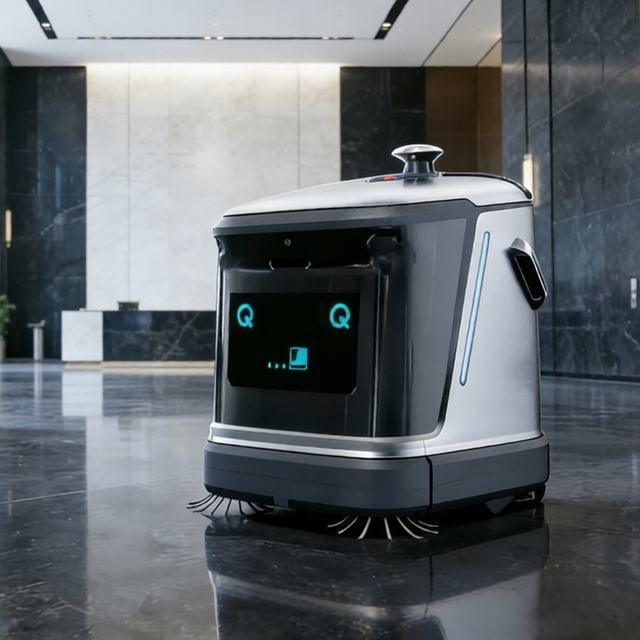
Navigation Dictates Efficiency: The choice between LiDAR, vSLAM (camera-based), and gyroscopic navigation determines mapping speed, low-light performance, and logical pathing.
Sensor Redundancy is Key: High-performing models pair primary mapping sensors with secondary physical, cliff, and wall-following sensors to prevent equipment damage and collisions.
Suction vs. Agitation: High Pascal (Pa) ratings are secondary to heavy-duty brush roll design (all-rubber vs. bristle) and airflow efficiency when evaluating real-world industrial cleaning performance.
Recharge and Resume Mechanics: Smart power management allows the robot vacuum to calculate energy needs, return to base, and resume exact cleaning coordinates.
Automation Trade-Offs: Self-emptying and self-washing base stations drastically reduce daily maintenance but introduce ongoing consumable costs (dust bags, industrial cleaning solutions).
Privacy and Enterprise Security: Advanced obstacle avoidance relies on cameras and AI; buyers must evaluate local vs. cloud data processing and encryption standards.
Without precise spatial awareness, a floor cleaning machine cannot guarantee complete coverage or efficient battery usage. Navigation systems form the brain of the device. They dictate how it moves through a commercial floor, avoids getting lost, and ensures no spot is missed during a cycle.
LiDAR relies on a spinning laser turret mounted on top of the unit. This turret emits light pulses and measures the time it takes for them to bounce back from surrounding objects. This rapid calculation creates a highly accurate, real-time 2D map of the environment. Because it uses lasers, LiDAR operates flawlessly in total darkness. You can schedule nighttime cleaning without leaving facility lights on.
This technology handles complex facility floorplans with multiple rooms and intricate corridors easily. However, it presents specific implementation risks. LiDAR sensors struggle to accurately map floor-to-ceiling glass partitions or highly reflective stainless steel surfaces, sometimes interpreting them as open spaces. The physical turret also increases the overall height of the device, limiting clearance under low-profile racking and low-clearance equipment.
vSLAM utilizes optical cameras to identify visual landmarks. It looks for structural columns, ceiling edges, and permanent fixtures. By tracking these landmarks as it moves, the device calculates its position and maps the environment simultaneously. This approach allows manufacturers to build a lower-profile device that slips under low structural clearances.
vSLAM performance degrades significantly in low-light conditions. Without sufficient ambient light, the cameras cannot identify tracking points. Some manufacturers supplement the optical cameras with onboard LED headlights to illuminate the cleaning path in dark warehouses, but it remains less reliable than lasers in pitch black.
Gyroscopic navigation relies on internal motion sensors and downward-facing optical sensors. They track distance and direction relative to the starting point. The device calculates its path based on wheel rotations and movement data. You will find this method predominantly in budget-tier commercial models.
Gyroscopic systems lack the memory and precision for persistent, multi-room mapping. They clean in a logical pattern but cannot reliably navigate back to a specific zone or handle highly complex layouts efficiently. They work fine for a single open utility room but fail in a multi-corridor facility.
| Navigation Type | Primary Sensor | Low-Light Performance | Best Use Case |
| LiDAR | Laser Turret | Excellent | Complex, multi-room floorplans & warehouses |
| vSLAM | Optical Camera | Poor (unless lit) | Low-clearance utility areas & offices |
| Gyroscopic | Motion Sensors | Moderate | Single rooms or small open storefronts |
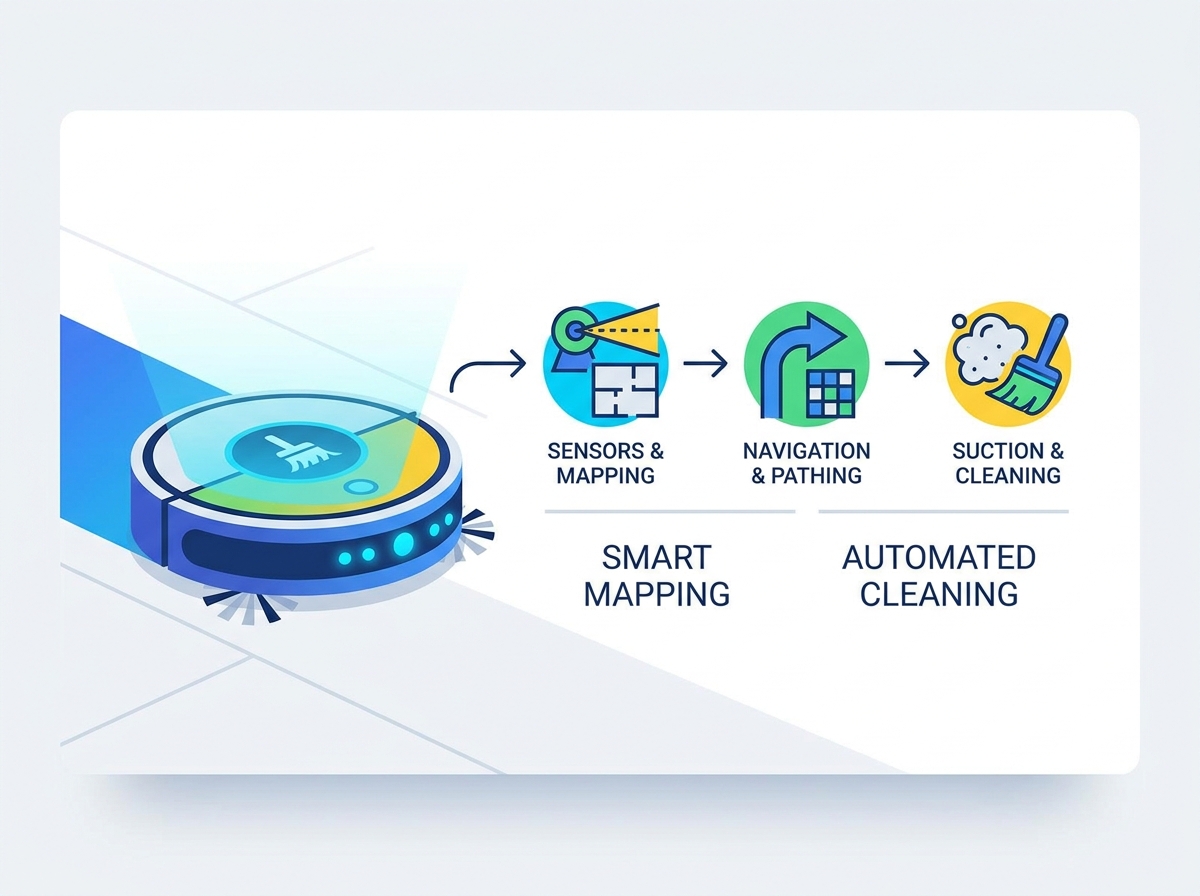
Primary navigation systems map the facility, but secondary sensor arrays keep the device from damaging itself or your facility infrastructure. These auxiliary sensors act as immediate failsafes against environmental hazards.
Downward-facing infrared sensors constantly emit light beams toward the floor. If the beam does not bounce back within a specific millisecond window, the system registers a drop-off. This prevents the unit from tumbling down an open mezzanine, a loading dock, or a staircase. The device immediately stops its forward momentum, reverses, and alters its path.
Spring-loaded physical bumpers integrated with micro-switches act as a mechanical failsafe. They register light contact with objects that optical sensors might misread. Thin metal racking, transparent glass partitions, or very dark industrial surfaces often absorb infrared light. When the bumper compresses, the tactile sensor signals the drive wheels to change direction.
Side-facing infrared sensors measure the exact distance to vertical surfaces. This allows the unit to track mere millimeters away from warehouse walls and baseboards without physically rubbing against them. Proper edge alignment ensures the side brushes can effectively sweep debris from the perimeter into the main suction path.
Macro-navigation involves mapping a room. Micro-navigation involves avoiding immediate, temporary hazards like a discarded pallet or misplaced tools. Advanced obstacle avoidance systems handle these micro-navigation challenges.
Structured light and 3D ToF systems project cross-hatching lasers or infrared patterns directly in front of the device. By analyzing the distortion of these patterns, the system detects the depth, width, and shape of objects immediately in its path. The unit steers around temporary obstacles without bumping into them. This provides a smoother cleaning experience and prevents the machine from dragging items across the facility floor.
AI object recognition pairs RGB cameras with onboard machine learning databases to identify and categorize specific hazards. The system recognizes loose cables, plastic strapping, tools, and industrial debris. High-traffic warehouses or facilities operating continuous shifts require this tier of avoidance. It prevents catastrophic messes or tangled brush rolls. By identifying the object, the software determines the appropriate distance to maintain while navigating around it.
Pascal (Pa) measures static suction pressure. Actual cleaning effectiveness relies heavily on sealed airflow pathways and motor efficiency. High Pa ratings look impressive on a spec sheet, but if the airflow is not properly channeled, the cleaning result will be poor.
High Pa is critical for extracting fine dust and heavy debris from textured commercial carpets or concrete expansion joints. It offers diminishing returns on smooth epoxy floors. Standard suction is usually sufficient to pick up light dust and packaging debris on tile or wood. Evaluating the overall design of the suction channel is just as important as the raw power rating.
Traditional bristle brushes excel at deep carpet agitation, separating fibers to lift embedded dirt. However, they are prone to severe hair and wire tangles. Dual-rubber extractors provide superior performance for preventing physical jams, making them ideal for facilities with high fibrous waste or packaging debris.
Side-sweeping brushes coordinate with wall sensors to pull debris out of corners and edges, flinging dirt into the direct path of the main brush roll. This ensures comprehensive coverage along the perimeter of the facility.
Internal drive motors detect resistance as the unit moves across different floor types. When transitioning from smooth concrete to textured entrance mats, the system automatically adjusts brush roll speed and suspension height to maintain a tight seal against the floor surface, optimizing suction and agitation based on the immediate terrain.
Downward-facing ultrasonic sensors detect acoustic differences between hard floors and carpets. This sensor enables automatic suction boost when the unit detects carpet fibers. For hybrid models, it triggers mop-lifting mechanisms to keep rugs dry while transitioning across mixed surfaces.
Autonomy mechanics define how the system manages its power cycle without user intervention. Efficient power management ensures large commercial floorplans are cleaned completely without requiring manual resets.
The charging dock emits an infrared homing signal or displays a visual marker. When the battery runs low or the cleaning cycle finishes, the unit detects this signal. It aligns its charging contacts precisely with the dock, ensuring a reliable connection for recharging every time.
Smart power management software saves the current coordinate position when the battery drops below a set threshold, typically around 15 to 20 percent. The unit navigates back to the dock, recharges, and then returns to the exact breakpoint to finish the cycle. This feature is essential for commercial zones larger than a single battery charge can cover.
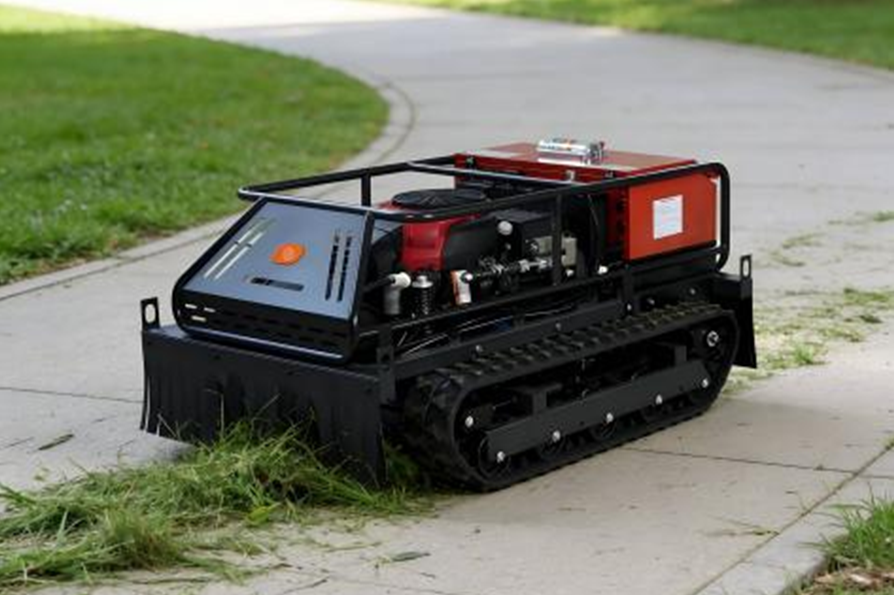
Base stations transform floor cleaning from a daily chore to a weekly or monthly scheduled maintenance task. These docks automate the disposal of debris and the cleaning of mopping pads.
Passive mopping systems drag a damp microfiber cloth across the floor. This is sufficient for light surface dust in retail environments. Active systems utilize sonic vibration pads or dual-spinning mop heads that apply downward pressure. This mechanical scrubbing action is necessary to remove dried stains and sticky spills from commercial hard floors.
Modern base stations offer several automated functions that reduce user intervention. To maintain these systems, follow these practical steps:
Check the auto-emptying dust bag monthly and replace it when it reaches 80% capacity to maintain airflow.
Empty the dirty water tank weekly to prevent bacterial growth and foul odors.
Refill the clean water tank with manufacturer-approved cleaning solutions to avoid clogging the internal pumps.
Wipe down the base station's infrared homing beacon so the unit can dock properly.
These base stations require a significant physical footprint and access to dedicated power and drainage. You must plan your facility layout accordingly to accommodate the dock's size.
Evaluating the digital footprint and user interface is critical when introducing autonomous hardware into your enterprise network. The companion app dictates how you interact with the hardware.
A robust companion app should offer comprehensive control over the cleaning environment. Critical software capabilities include setting no-go zones, drawing invisible walls, and configuring zone-specific suction and water flow settings. Multi-floor map saving is essential for multi-level commercial structures, allowing the unit to recognize its location without rebuilding the map.
Camera-equipped models raise valid data security concerns. Look for models that process object recognition locally on the edge rather than uploading images to cloud servers. Verify that the manufacturer adheres to strict end-to-end encryption standards. Independent certifications like TÜV Rheinland ensure your facility layout and camera feeds remain secure.
Choosing the right model requires a practical synthesis of the technology discussed. Your specific floorplan and industrial environment dictate the hardware specifications you prioritize.
High-Traffic Logistics & Warehousing: Facilities with heavy traffic require robust hazard avoidance and easy maintenance. Prioritize AI obstacle avoidance to steer clear of packaging straps and stray pallets. Dual-rubber brush rolls are mandatory to handle dust and debris without constant tangling. An auto-emptying dock saves your staff from manually emptying the dustbin multiple times per shift.
Complex Floorplans vs. Open Concepts: If your facility features multiple rooms, hallways, and intricate industrial layouts, LiDAR or vSLAM navigation is required for efficient, multi-room mapping. Gyroscopic models are only acceptable for simple, obstacle-free spaces like small storefronts or isolated utility rooms where advanced mapping memory is unnecessary.
Smooth Finished Epoxy vs. Textured Industrial Flooring: Smooth epoxy floors benefit immensely from advanced active mopping systems that scrub away grease and dust. Heavy-duty textured surfaces require maximum Pa suction, deep agitation bristle brushes, and heavy-duty drive wheel assemblies.
Before deploying an autonomous solution, it is vital to perform a rigorous site audit. Start by mapping out high-traffic zones and measuring physical vertical clearances under racking to guarantee hardware compatibility.
Filter your procurement options by navigation type first, prioritizing LiDAR for complex layouts and vSLAM for low-clearance needs.
Assess your primary floor surface to determine if you need a vacuum-first design with high Pa suction or a scrub-first design with active mopping.
Calculate your tolerance for ongoing consumable costs, such as proprietary dust bags and specialized chemicals, before committing to a self-emptying base station.
To stay ahead of these challenges and protect your long-term capital assets, partnering with a dedicated technology provider is essential. As a leading innovator in enterprise autonomous solutions,ZYLOR TECHdelivers ruggedized, highly service-ready cleaning hardware designed specifically to survive continuous heavy industrial operations.
Q: Do commercial robot vacuums work without Wi-Fi?
A: Yes, basic cleaning functions work offline by pressing the physical start button on the device. However, mapping, scheduling, customized zone cleaning, and enterprise firmware updates require an active network connection and the fleet management software.
Q: How do autonomous vacuums handle steps and loading docks?
A: They use downward-facing infrared cliff sensors. These sensors constantly measure the distance to the floor. When they detect a sudden drop, such as a staircase or loading dock edge, the unit immediately stops and reverses direction to prevent a fall.
Q: Can a commercial robot vacuum transition over high industrial thresholds?
A: Most modern commercial units can clear thresholds and transitions up to 2 centimeters high. If your facility has higher thresholds, the device may get stuck or require manual ramping.
Q: How often do I need to replace the parts in an industrial environment?
A: Filters and side brushes typically need replacement every 2 to 3 months under heavy use. Main brush rolls should be replaced every 6 months. Maintenance schedules vary based on shift frequency and debris type.
Q: Will an autonomous cleaner scratch finished epoxy floors?
A: No, they are designed with non-marking rubberized wheels and soft bristles specifically to protect finished surfaces. You must regularly clean the wheels and brushes to ensure hard debris, like metal filings or small rocks, doesn't get trapped and dragged across the floor.

