

Views: 0 Author: Site Editor Publish Time: 2026-07-17 Origin: Site


Facilities managers constantly face a frustrating trade-off between the hours spent actively cleaning facility floors and the standard of cleanliness they actually achieve. Floor care is a high-frequency, unavoidable industrial cleaning routine that demands consistent physical effort. You either sacrifice precious labor hours to push a heavy machine around the facility, or you let dust and industrial debris accumulate until the next deep-cleaning session. This creates a persistent dilemma: do you prioritize automated convenience, or do you rely on manual deep-cleaning power?
Choosing the right floor care strategy requires looking past marketing claims. You need an objective, evidence-based breakdown of performance realities, daily maintenance requirements, and overall cleaning efficiency. By analyzing how different technologies interact with your specific industrial architecture and operational workflows, you can determine the exact setup that keeps your floors consistently clean without draining your labor resources.
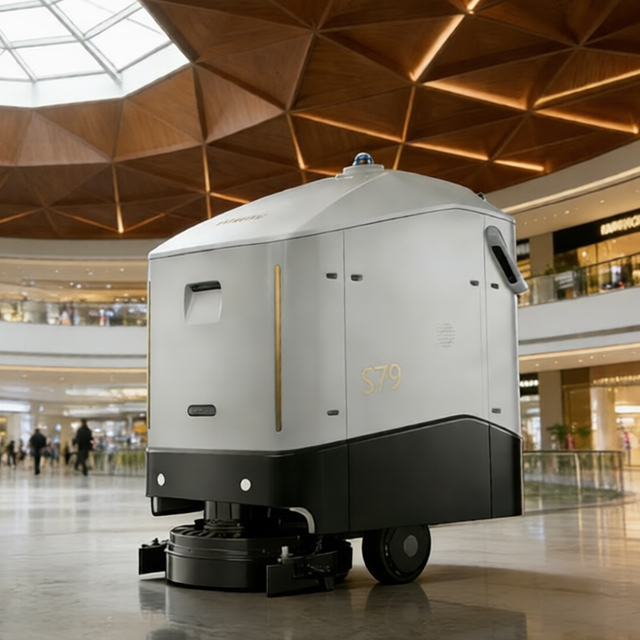
A commercial autonomous mobile robot (AMR) vacuum excels at daily, passive maintenance and reaching tight, low-clearance racking areas, but generally lacks the raw static pressure of high-power corded industrial vacuums for deep grout or carpet agitation.
Traditional heavy-duty manual vacuums (upright, canister, or backpack vacuums) remain essential for multi-level logistics zones, narrow ramps, production machinery interfaces, and immediate, targeted spill response.
The purchasing decision hinges on floor plan complexity, the presence of abrasive debris, and the quantifiable value placed on automated, hands-off maintenance versus manual, high-powered spot cleaning.
Recent technological leaps over the last 3–5 years (LiDAR navigation, self-emptying industrial bases, and active water scrubbing) have democratized high-end features, making a modern commercial AMR vacuum highly accessible and shifting the industrial floor care standard to a hybrid approach.
Before comparing specific machines, you must define what a clean floor actually means for your facility. Floor care splits into two distinct categories: daily maintenance and periodic deep cleaning. Daily maintenance focuses on surface-level debris. This includes preventing the buildup of packaging debris, fine metal particulates, wood splinters, and tracked-in grit. Periodic deep cleaning requires extracting embedded grime, grease, and microscopic dust from deep within textured concrete pores, grout lines, or safety floor mats.
Your facility's layout and flooring materials dictate the mechanical action required to achieve these cleaning goals. Hard floors like polished concrete, finished epoxy, and slip-resistant safety tile primarily require continuous sweeping and heavy-duty suction. Textured floor zones and high-traffic transition mats demand aggressive mechanical agitation. A rotating brush roll must physically separate the surface fibers while high-velocity airflow pulls the heavy debris upward.
Success criteria also depend heavily on your labor allocation and shift schedules. If your facility runs high-frequency shifts or is short-staffed, a system that demands hours of manual labor every day will likely fail. In these scenarios, success means maintaining a baseline level of hygiene with zero physical input, even if it means occasional targeted manual runs for deep-set grime.
To better understand the mechanical requirements of your facility, consider the following breakdown of commercial flooring types and their corresponding cleaning needs.
| Flooring Type | Primary Debris Issue | Required Cleaning Action | Ideal Equipment Profile |
| Polished Concrete & Epoxy | Fine industrial dust, packaging fibers, tire marks | Gentle sweeping, static dust removal, continuous scrubbing | Soft roller brush, moderate suction, high water recovery rate |
| Textured Slip-Resistant Tile | Grout line dirt, greasy spills, tracked mud | High static pressure, active mechanical agitation, water extraction | High-torque dual roller brushes, high CFM vacuum motor |
| Commercial Needle-Punch Carpeting | Embedded sand, carpet lint, tracked-in gravel | Aggressive fiber separation, maximum lifting airflow | Stiff bristle brush rolls, high-airflow suction, heavy duty battery |
When you evaluate your facility against this matrix, the limitations of a single-tool approach become obvious. A machine calibrated to scrub flat concrete will not effectively pull heavy sand out of coarse walk-off mats. This reality forces facility managers to evaluate the specific mechanics of both automated and manual systems.
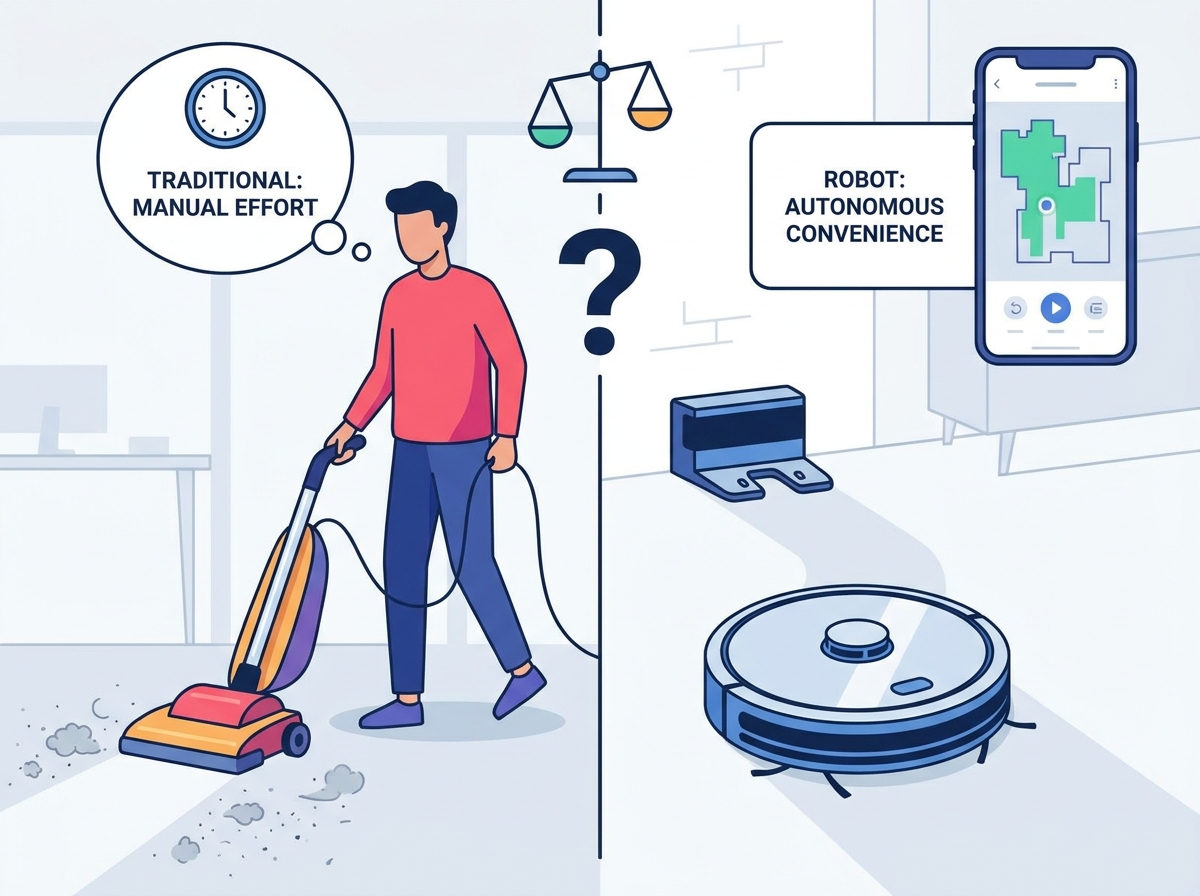
The fundamental difference between automated and manual cleaning lies in their design philosophy. One prioritizes frequency and consistency, while the other prioritizes raw power and immediate results. Understanding these mechanical differences is the first step in building an effective floor care strategy.
A commercial AMR vacuum is designed to operate autonomously, utilizing continuous, scheduled passes to maintain a strict baseline of cleanliness. Instead of waiting for dirt to accumulate and trigger safety hazards, these machines deploy daily to capture debris before it settles into corners or gets ground into the floors. The engineering focus is on navigation, low-profile clearance, and battery efficiency rather than overwhelming suction power.
Modern automated systems have also evolved into dual-function hybrids. These units handle wet and dry debris simultaneously, sweeping up dust while trailing an active scrubbing pad to scrub hard surfaces. This concurrent cleaning approach mimics the results of a daily sweep-and-mop routine without requiring any human intervention. The mechanics rely on side brushes to pull debris into the path of a central roller, which then lifts the dirt into an internal dustbin.
Because they run on battery power and must navigate tight spaces, their internal motors are compact. They generate enough lift to clear flat surfaces and low-pile utility mats, but they do not possess the massive wattage of direct-wired equipment.
Traditional manual vacuums are engineered for maximum immediate extraction. They require an operator to guide the cleaning head, allowing for targeted, intensive cleaning in high-traffic entryways or production zones. The design philosophy here is brute force.
Corded commercial uprights and canister vacuums rely on high-wattage motors drawing direct power from a wall outlet. They generate massive airflow and utilize heavy, aggressive brush rolls. They are the undisputed champions of pulling embedded dirt and heavy particulates out of coarse walk-off mats. When you push a heavy upright over a carpeted mat, the weight of the machine combined with the stiff bristles physically agitates the substrate, dislodging heavy dirt.
Cordless commercial stick and backpack vacuums bridge the gap between heavy uprights and automated machines. They focus on lightweight portability and rapid deployment. You grab them for a quick spill in a commercial aisle, a flight of stairs, or above-floor cleaning tasks like dusting racking and overhead vents.
To determine which system fits your facility, you must evaluate them across specific performance metrics. Raw power is only one part of the equation; navigation, versatility, and operational efficiency play equally critical roles.
Traditional corded vacuums dominate in raw suction, measured in Cubic Feet per Minute (CFM) and air watts. A standard commercial canister vacuum can easily generate over 100 CFM, creating a powerful vortex that lifts heavy particles. Combined with a motor-driven brush roll, this setup violently shakes fibers to dislodge trapped dirt. This mechanical agitation is non-negotiable if you want to extend the lifespan of your commercial carpeted tiles, as embedded sand acts like sandpaper against the backing every time a forklift or hand truck rolls over it.
In contrast, a standard commercial AMR operates on battery power and typically generates significantly lower CFM. While manufacturers often advertise high Pascal (Pa) ratings for static pressure, the actual volumetric airflow is lower. This makes automated cleaners highly effective on flat, hard surfaces where debris rests on top of the floor, but less effective at deep-cleaning high-pile materials.
The physical profile of a vacuum dictates where it can clean. This is where automated machines hold a distinct structural advantage over their manual counterparts.
A low-profile automated vacuum easily glides under pallet racks, heavy workstations, and industrial shelving. These are areas where dust heavily accumulates but are nearly impossible to reach with a bulky manual vacuum without physically moving heavy industrial fixtures.
Modern commercial AMRs utilize LiDAR (Light Detection and Ranging) or SLAM (Simultaneous Localization and Mapping) to create precise digital floor plans. They clean in systematic, overlapping grids, ensuring complete floor coverage. Human operators, by contrast, vacuum erratically. We miss spots, overlap unnecessarily, and often ignore corners when under tight shift-completion deadlines.
However, traditional manual vacuums win decisively when the cleaning task moves off the floor. With specialized attachments, a manual vacuum handles stairs, safety barriers, drapes, machinery crevices, and elevated shelving. An automated floor cleaner is strictly confined to flat, horizontal planes.
The integration of scrubbing and mopping capabilities has dramatically shifted the efficiency landscape. A modern automated hybrid sweeps and washes hard floors in a single pass. It utilizes spinning or vibrating pads with continuous clean water delivery to scrub away dried spills and forklift tire tracks. Replicating this manually requires sweeping the entire floor first, filling a heavy mop bucket, physically scrubbing the floor, and waiting for it to dry.
The automated single-pass method represents a massive reduction in commercial labor. Advanced base stations now automatically empty dust, wash, and dry the scrubber pads after every run, ensuring you never push dirty water across your commercial facility.
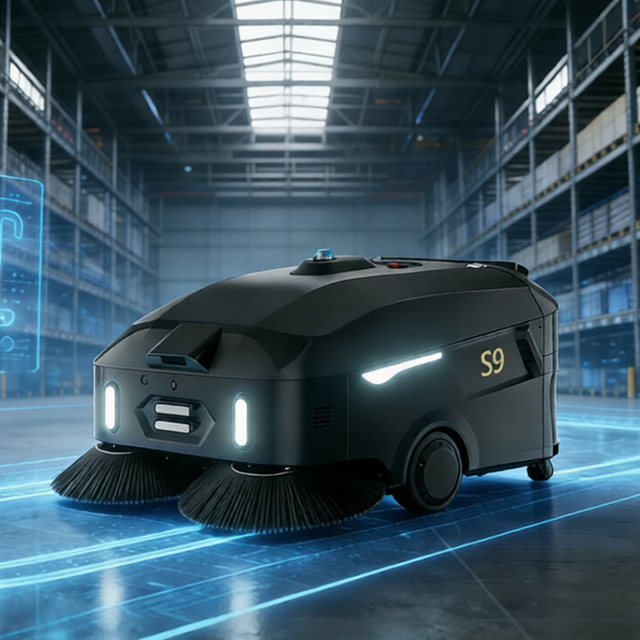
Your specific operational environment introduces variables that can drastically alter the effectiveness of either cleaning method. Industrial debris types and architectural layouts are the two biggest factors that dictate which system will succeed.
Industrial environments require relentless floor maintenance. Packaging fibers, plastic strapping, and fine abrasive dust accumulate rapidly in corners. A daily scheduled run with an automated cleaner is highly effective at managing this constant influx, capturing the debris before it has a chance to build up and cause slip hazards.
However, for facilities with constant heavy industrial waste, a traditional vacuum or a heavy sweep remains necessary. The aggressive brush roll of a manual upright or industrial ride-on sweeper is required to pull deeply lodged debris out of floor expansion joints. A lightweight automated brush roll can get jammed by long packaging bands. In these facilities, the automated machine handles the daily dust control, while manual crews clear larger physical obstacles.
Automation scales poorly in vertical environments. If your facility features a multi-tiered mezzanine layout, a single automated cleaner cannot navigate between floors. You must manually transport the unit and its docking station up and down stairs or use freight elevators, which impacts the hands-free convenience.
In these multi-level scenarios, a lightweight cordless commercial vacuum or backpack model often proves more practical. It allows crews to rapidly move between levels, clean steel grates with ease, and target specific spills without waiting for an AMR to map a new area.
Every piece of mechanical equipment requires ongoing maintenance to function properly. Understanding the long-term maintenance and Total Cost of Ownership (TCO) of both systems is critical for setting realistic procurement budgets.
Automated systems require a consistent supply of consumables. You must regularly replace side brushes, main roller brushes, high-efficiency HEPA filters, and scrubbing pads. If you utilize a self-emptying base station, you will also need a steady supply of proprietary disposal bags. Failing to replace these components on schedule drastically reduces the machine's cleaning performance and can lead to navigation errors or motor strain.
Traditional vacuums also require maintenance, but the intervals are generally longer. Bagless commercial uprights require regular filter washing and occasional drive belt replacements. Cordless manual vacuums will eventually require a battery replacement after several years of heavy use.
The true value trade-off comes down to labor allocation. An automated system requires more frequent, minor maintenance tasks (wiping optical sensors, replacing small filters), but it saves you dozens of hours of active manual labor every week.
Integrating new autonomous technology into your facility workflows requires operational adjustments. You must understand the practical realities and minor deployment challenges before committing to an AMR fleet.
Traditional manual vacuums are ready instantly. If an operator sees a spill or dry debris, they plug it in and clean it up. They can easily navigate around a stray box, a loose pallet, or power cords. The human operator acts as the ultimate obstacle avoidance system.
Automated systems require environmental preparation. Before a scheduled AMR run, the floor must be clear of major hazards. Thick plastic banding, forklift straps, and large cardboard pieces can jam the main roller. While modern AI obstacle-avoidance sensors have drastically improved an AMR’s ability to steer around these hazards, optimal performance still requires keeping your aisles relatively tidy. If your facility floor is constantly cluttered with large discarded items, an automated cleaner will spend more time getting stuck than actually cleaning.
Even with advanced mapping, automated machines occasionally fail. They might get wedged under a low racking brace, high-center themselves on a steep transition ramp, or trap themselves in a mechanical room by pushing an open door shut. You will occasionally receive a system notification requiring your maintenance staff to physically rescue the device.
Traditional manual vacuums are tall but have a relatively small footprint. They easily tuck away into any utility closet. You pull them out when needed and hide them away when finished.
Modern automated systems, particularly those with self-emptying and self-washing base stations, require dedicated floor space. These docks are large, require a permanent electrical outlet, and need clear space in front of them for the machine to navigate home. Finding an appropriate, high-visibility, yet secure location for a large docking station in a busy warehouse or crowded retail layout can be challenging.
Before deploying an autonomous solution, it is vital to perform a rigorous site audit. Start by mapping out high-traffic zones and measuring physical vertical clearances under pallet racks to guarantee hardware compatibility.
Filter your procurement options by navigation type first, prioritizing LiDAR for complex layouts and vSLAM for low-clearance needs.
Assess your primary floor surface to determine if you need a vacuum-first design with high Pa suction or a scrub-first design with active mopping.
Calculate your tolerance for ongoing consumable costs, such as proprietary dust bags and specialized chemicals, before committing to a self-emptying base station.
To stay ahead of these challenges and protect your long-term capital assets, partnering with a dedicated technology provider is essential. As a leading innovator in enterprise autonomous solutions,ZYLOR TECHdelivers ruggedized, highly service-ready cleaning hardware designed specifically to survive continuous heavy industrial operations.
Q: Can a commercial robot vacuum completely replace a traditional manual vacuum?
A: No. While it handles up to 90% of daily surface maintenance, a traditional manual vacuum is still required for cleaning stairs, baseboards, machinery interfaces, tight corners, and performing deep dirt extraction on coarse walk-off mats.
Q: Should my facility buy a commercial AMR vacuum or heavy-duty manual backpack vacuums?
A: Choose automation for hands-free, scheduled daily maintenance across large, flat, horizontal layouts. Choose manual backpack vacuums if your facility has multiple levels, heavy ramp transitions, or requires instant spot cleaning around complex equipment.
Q: Do commercial autonomous vacuums work well on textured industrial mats?
A: They can handle low-pile utility mats, but they struggle with thick, high-friction safety mats. If you have extensive textured matting, look for heavy-duty AMRs with automatic brush roll height adjustments and high-suction carpet boost features.
Q: Are commercial vacuum-scrubber hybrids actually effective?
A: Yes, modern commercial hybrids are highly effective. Unlike older models, current versions use high-speed active scrubbing, dual spinning pads, and automated self-cleaning docks to lift dried industrial stains and mud.
Q: Are autonomous vacuums worth the cost for small retail environments?
A: Yes, they offer excellent labor savings and can clean under display racks where manual vacuums can't easily reach. However, you must ensure you have adequate wall space for the docking station.
Q: How do commercial AMRs handle heavy debris like metal filings or wood splinters?
A: They are excellent at managing daily dust. However, you must exercise caution; highly abrasive materials can wear down standard rollers rapidly. For heavy industrial manufacturing facilities, you must select specialized, ruggedized AMRs featuring reinforced, chemical-resistant rollers and heavy-duty intake filters.


