

Views: 0 Author: Site Editor Publish Time: 2026-07-17 Origin: Site


The commercial cleaning equipment market is increasingly filled with exaggerated marketing claims. Terms such as "AI-powered cleaning," "extreme suction," and "advanced automation" often dominate product descriptions, making it difficult for facility managers to identify solutions that actually improve operational efficiency.
Selecting the wrong Commercial Robot Vacuum can result in inefficient cleaning routes, frequent manual intervention, poor debris collection, and increased maintenance costs. In large commercial and industrial environments, cleaning performance depends on much more than suction power. Navigation accuracy, floor compatibility, obstacle avoidance, automation level, and system reliability all determine whether an automated cleaning solution can deliver measurable value.
To make an informed decision, facility operators should evaluate cleaning systems based on building layout, flooring materials, operational requirements, and desired automation level. Moving beyond basic specifications allows businesses to select equipment that reduces labor requirements, improves cleaning consistency, and supports long-term facility management goals.
This guide explains the core technologies behind automated floor cleaning systems and provides a practical framework for selecting the right commercial robot vacuum for offices, hotels, warehouses, healthcare facilities, and industrial environments.
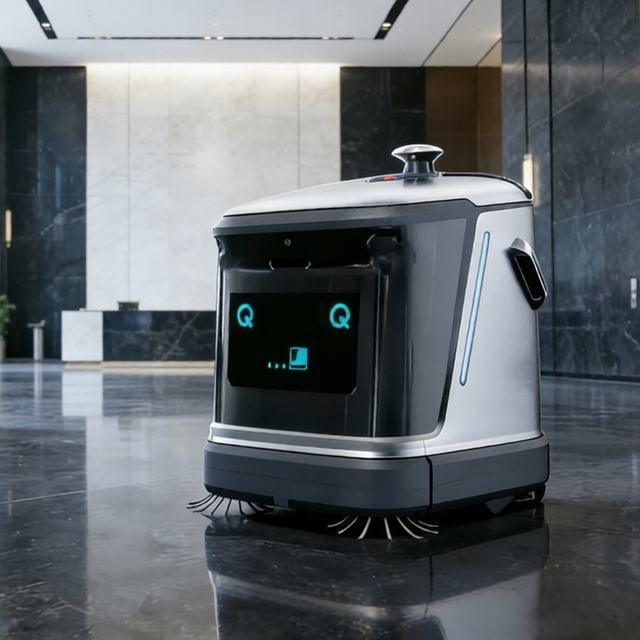
High suction power alone does not guarantee effective cleaning performance. In large commercial environments, a robot vacuum must first understand the surrounding space and follow efficient cleaning routes.
Advanced navigation technologies such as LiDAR and VSLAM enable accurate mapping, allowing cleaning robots to operate systematically instead of moving randomly through facilities.
For commercial applications, reliable navigation helps:
Reduce missed cleaning areas
Improve route efficiency
Minimize repeated cleaning cycles
Avoid unnecessary battery consumption
Support large-area autonomous operation
A powerful motor combined with poor navigation will still result in inefficient cleaning. Route planning and environmental awareness are often more important than maximum suction specifications.
Different commercial facilities contain various flooring materials, and each surface creates different cleaning challenges.
Hard floors require precise edge cleaning and effective fine dust collection, while carpets require stronger agitation and debris extraction capabilities.
| Floor Type | Main Challenge | Recommended Features |
|---|---|---|
| Hardwood / Tile / Stone | Fine dust, corners, surface debris | Edge brushes, optimized suction channels, floor sealing design |
| Low-Pile Carpet | Embedded dirt and surface debris | Automatic suction adjustment, rubber rollers |
| High-Pile Carpet | Mobility resistance and brush obstruction | Larger wheels, stronger drive system, adjustable suspension |
Commercial facilities with mixed flooring require intelligent surface recognition. The cleaning system should automatically adjust suction power and cleaning modes according to detected floor conditions.
Large commercial and industrial spaces require sufficient battery capacity to complete cleaning tasks efficiently.
Small commercial areas may operate effectively with standard battery configurations, while warehouses, hotels, and large office buildings require higher-capacity batteries combined with recharge-and-resume technology.
Recharge-and-resume functionality allows the robot to:
Return automatically to the charging station
Restore battery capacity
Continue cleaning from the previous location
Complete large-area cleaning without operator intervention
For multi-floor facilities, advanced mapping systems are essential. The software should support multiple floor plans, allowing operators to manage different areas without recreating maps.
Commercial environments often include different floor zones, transition strips, entrances, and uneven surfaces.
Before deployment, operators should evaluate:
Maximum climbing height
Doorway transitions
Expansion joints
Uneven flooring areas
Equipment access routes
A cleaning robot that cannot move between operational zones will require frequent manual assistance, reducing the value of automation.
Industrial and commercial-grade systems should include:
Strong drive wheels
Stable suspension systems
Intelligent obstacle detection
Reliable navigation algorithms
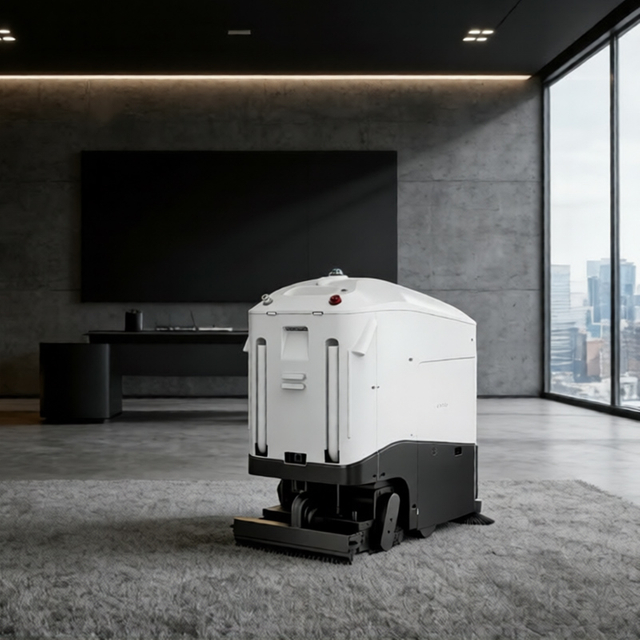
Entry-level automated cleaning systems may rely on basic sensors and gyroscope-based navigation.
These systems typically operate through:
Simple route patterns
Basic obstacle detection
Random or semi-random movement
While these solutions may be suitable for smaller and simpler environments, they have limitations in complex commercial facilities.
Common issues include:
Longer cleaning cycles
Missed areas
Inefficient route planning
Increased operator supervision
For professional applications requiring predictable performance, more advanced mapping technologies are generally preferred.
LiDAR (Light Detection and Ranging) uses laser scanning technology to measure distances and create accurate environmental maps.
Advantages include:
High mapping accuracy
Operation in low-light environments
Fast environment recognition
Reliable route planning
VSLAM (Visual Simultaneous Localization and Mapping) uses cameras to identify visual features and calculate position.
It provides:
Visual environment recognition
Intelligent positioning
Dynamic navigation capabilities
However, camera-based navigation may be affected by lighting conditions, while LiDAR remains highly reliable in dark or changing environments.
For commercial facilities requiring consistent operation, LiDAR-based systems are widely considered a preferred solution.
Advanced commercial robot vacuums integrate AI algorithms with cameras, structured light sensors, and 3D detection technologies.
These systems can identify:
Cables
Equipment obstacles
Temporary objects
Furniture changes
Restricted areas
AI obstacle avoidance reduces the need for manual preparation and allows cleaning robots to operate effectively in dynamic commercial environments.
However, sensor performance may still be affected by:
Highly reflective surfaces
Extremely thin objects
Complex lighting conditions
Continuous software improvement and sensor fusion technology help improve reliability in challenging environments.
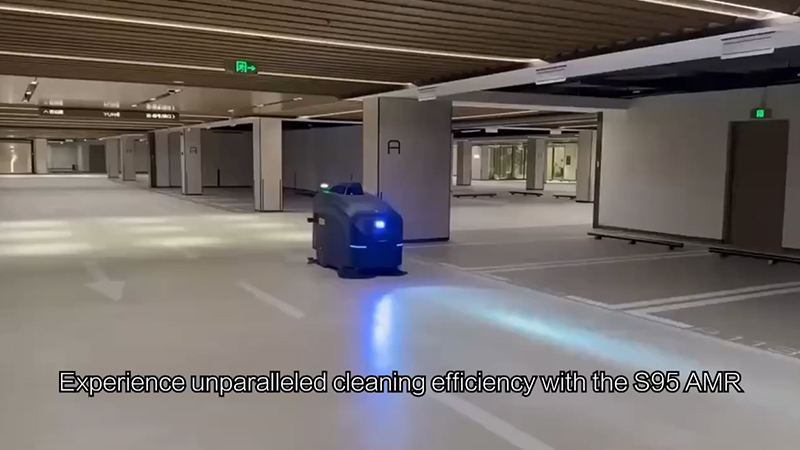
Suction power is an important specification, but it should not be evaluated separately from the complete cleaning system.
In commercial environments, cleaning performance depends on the combination of:
Motor efficiency
Airflow design
Brush structure
Dust collection capacity
Floor detection technology
Cleaning route optimization
A high-performance Commercial Robot Vacuum should effectively handle different types of debris, including:
Fine dust in office areas
Hair and fibers in hotels
Packaging debris in warehouses
Daily dirt accumulation in public facilities
However, excessive suction power does not always provide better results. Poor airflow design, inefficient brush systems, or limited navigation capabilities may reduce overall cleaning efficiency.
The best cleaning systems balance suction performance with intelligent control, ensuring consistent results while optimizing energy consumption.
The main brush directly affects the ability to remove embedded dirt and debris.
Different environments require different brush configurations:
Suitable for:
Commercial hard floors
Offices
Retail spaces
Healthcare facilities
Advantages:
Reduced maintenance
Easier cleaning
Better resistance to dust accumulation
Suitable for:
Mixed flooring environments
Hotels
Large commercial buildings
Advantages:
Handles different debris types
Improves cleaning flexibility
Supports multiple floor conditions
For industrial applications, brush durability is especially important because equipment may operate for extended periods every day.
Corners and wall edges are common problem areas in automated cleaning.
A professional cleaning robot should include:
Extended side brushes
Edge detection sensors
Optimized cleaning paths
In warehouses and large facilities, poor edge cleaning can leave dust accumulation around:
Storage racks
Walls
Equipment bases
Facility corners
Effective edge-cleaning capability improves overall cleaning coverage and reduces the need for manual finishing work.
Basic automated cleaning systems may use simple water tanks for floor mopping.
These systems are suitable for:
Small commercial spaces
Low-frequency cleaning environments
However, limitations include:
Limited water capacity
Manual refilling requirements
Inconsistent cleaning performance
Premium commercial cleaning robots may include:
Automatic mop washing
Automatic drying
Water level management
Cleaning solution control
These features are valuable for facilities requiring frequent cleaning cycles.
Examples include:
Hotels
Airports
Shopping centers
Healthcare facilities
Large office buildings
Automated mop maintenance reduces operator involvement and improves hygiene consistency.
For commercial applications, frequent manual dust removal can reduce operational efficiency.
Advanced base stations provide:
Automatic dust collection
Larger waste storage capacity
Reduced maintenance frequency
This allows cleaning systems to operate longer with less human intervention.
In high-demand environments, mop maintenance is one of the biggest challenges.
Advanced systems can automatically:
Wash mop pads
Remove contaminated water
Dry cleaning components
Prepare the robot for the next cleaning cycle
This improves cleaning consistency and reduces labor requirements.
Basic systems may provide:
Mobile application control
Cleaning schedules
Map management
Cleaning mode selection
These functions are suitable for smaller commercial locations.
Large facilities often require multiple cleaning units working together.
Professional fleet management platforms provide:
Multiple robot coordination
Centralized monitoring
Cleaning task assignment
Operation reports
Maintenance alerts
These systems are especially valuable for:
Large warehouses
Hotel chains
Commercial complexes
Industrial facilities
Commercial cleaning robots increasingly rely on cameras, sensors, and cloud platforms.
Facility managers should evaluate:
Data storage methods
Network security
User permission controls
Software update policies
For sensitive environments such as healthcare facilities, government buildings, and industrial plants, data protection should be considered during equipment selection.
The lowest-cost option may create higher long-term expenses due to:
Frequent maintenance
Limited battery life
Poor navigation performance
Increased manual operation
Commercial buyers should evaluate total ownership costs instead of only initial purchase price.
A robot designed for simple environments may not perform well in complex facilities.
Before purchasing, evaluate:
Floor size
Layout complexity
Cleaning frequency
Obstacles
Floor materials
Required automation level
Every automated cleaning system requires maintenance.
Important considerations include:
Availability of replacement parts
Brush replacement cycles
Filter maintenance
Software updates
Technical support
Reliable after-sales service is essential for long-term commercial operation.
When selecting an automated cleaning solution, facility managers should evaluate the following factors:
| Evaluation Factor | Key Considerations |
|---|---|
| Navigation System | LiDAR, VSLAM, AI mapping accuracy |
| Cleaning Performance | Suction, brushes, mopping capability |
| Facility Size | Battery capacity and coverage area |
| Automation Level | Self-emptying, mop cleaning, scheduling |
| Software | Fleet management and remote monitoring |
| Durability | Industrial-grade components and reliability |
| Maintenance | Parts availability and technical support |
A suitable commercial robot vacuum should not only clean effectively but also integrate into existing facility management processes.
Selecting the right Commercial Robot Vacuum requires evaluating more than cleaning power. Navigation accuracy, floor compatibility, automation features, software capabilities, and long-term reliability all determine whether an automated cleaning system can deliver real operational value.
For commercial and industrial environments, the ideal solution should reduce manual cleaning requirements, improve consistency, and support efficient facility management.
A professional cleaning automation partner can help businesses select systems based on their specific facility conditions, operational goals, and future expansion requirements.
ZYLOR TECH specializes in intelligent cleaning technologies and automated solutions designed for commercial and industrial applications. With advanced product development capabilities and professional technical support, ZYLOR TECH provides reliable cleaning solutions that help businesses improve operational efficiency and facility management performance.
Before making a final decision:
Analyze your facility layout and cleaning requirements.
Compare navigation technologies and automation features.
Evaluate total ownership costs instead of only purchase price.
Confirm technical support, maintenance services, and spare parts availability.
Conduct real-world testing before large-scale deployment.


