
Views: 0 Author: Site Editor Publish Time: 2026-11-04 Origin: Site


Choose an industrial floor scrubber robot by matching its cleaning process to your floor, soil conditions, and operating schedule. Then verify that it can reach the assigned areas, recover dirty water effectively, and complete the work with an acceptable level of staff support.
A wide cleaning path or large battery is useful only when the machine fits the site and produces the required result.
For warehouses, factories, and logistics facilities, the strongest purchasing evidence comes from a representative site trial. This guide explains what to assess before selecting a model.
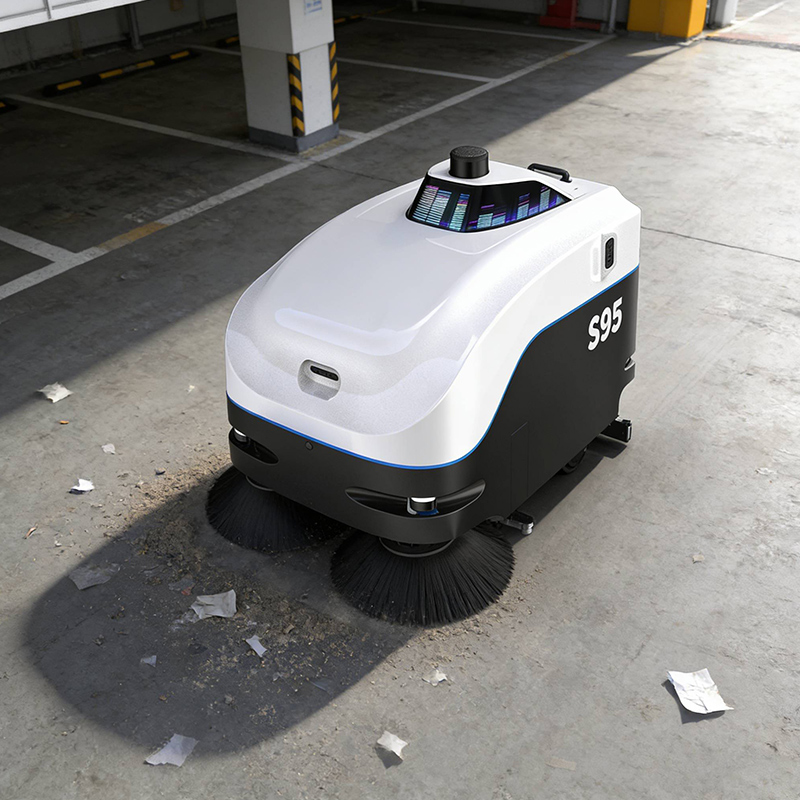
Review how your existing cleaning equipment performs.
Record missed areas, repeat passes, water-servicing stops, residual moisture, and tasks that need manual intervention. Maintenance records can also reveal recurring problems with debris, brushes, or recovery components.
A robot will encounter many of the same floor conditions. Autonomous movement alone will not resolve an unsuitable cleaning process.
Set measurable requirements such as:
Assigned areas to be cleaned.
Acceptable remaining soil and surface condition.
Available cleaning window.
Areas that require manual work.
Acceptable staff assistance and servicing time.
Inspect representative areas before cleaning. Loose dust, packaging fragments, adhered dirt, and greasy residues require different handling.
Remove debris that the proposed machine is not designed to collect. Straps, film, sharp objects, and oversized waste should not be treated as ordinary scrubber material.
If combined debris collection is required, confirm the collection mechanism and permitted materials. A cylindrical brush alone does not establish sweeping capability.
Unknown spills and specialized contaminants need an application-specific assessment before routine cleaning begins.
Document the floor material, coating, texture, damage, joints, and existing maintenance requirements.
Brushes, pads, chemicals, and settings should be selected around both flooring and equipment guidance. Higher pressure is not automatically better, and neither disc nor cylindrical brushes are suitable for every surface.
Trial the proposed process in an agreed area. Inspect soil removal, appearance, residue, and any surface marking.
ZYLOR’s S95 industrial floor scrubber robot is one platform to discuss for industrial cleaning. Confirm the proposed configuration against your actual floors and debris.
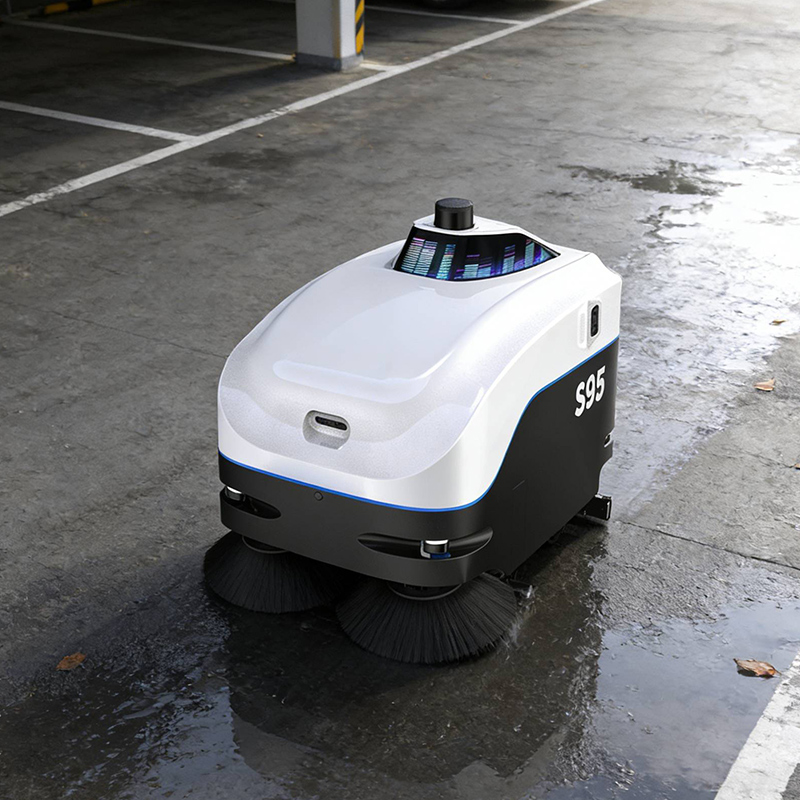
Check more than the narrowest aisle.
Site condition | What to verify |
|---|---|
Doorways and passages | Clearance for the complete operating configuration |
Aisle ends | Space for turns and access to adjacent routes |
Low structures | Clearance beneath permitted overhead obstacles |
Thresholds and joints | Ability to cross while maintaining acceptable cleaning performance |
Ramps | Approved operating conditions and loading limits |
Mezzanines or elevators | Applicable weight and access restrictions |
Service station | Approach route, docking space, and staff access |
Body width, cleaning width, and required operating clearance are different measurements.
Also ask whether brushes, squeegees, or other components extend beyond the stated body dimensions.
Published coverage figures help with initial screening. Site performance depends on layout, settings, traffic, overlap, and the cleaning result required.
Use accepted cleaned area rather than distance traveled as the main output measure.
Measured task productivity = area meeting the agreed standard ÷ elapsed task time
Define whether elapsed time includes travel, waiting, servicing, and charging. Keep the comparison method consistent between proposals.
Do not automatically combine a maximum coverage rate with a maximum battery runtime. They may describe different modes or test conditions.
Inspect the floor during straight passes, turns, transitions, and work near obstacles.
Record water trails, streaks, and areas needing another pass. Check whether the proposed brushes, squeegees, and settings suit the surface.
A recovery system does not guarantee that every floor will be immediately dry. Agree on acceptable results and the site procedure for any remaining moisture.
Navigation should be assessed where the robot will actually work.
Include relevant conditions such as changing pallet positions, reflective surfaces, glass, variable lighting, narrow turns, and temporary obstructions.
Ask the supplier to conduct a controlled demonstration with your site team. Do not create uncontrolled encounters with moving vehicles or people as an informal test.
The useful questions are practical:
Does the robot complete the assigned route?
What happens when an aisle is blocked?
Which areas are missed?
When does it request assistance?
How does staff recover and restart the task?
Sensor names alone cannot answer these questions.
Record the number, cause, and duration of interventions.
Separate navigation assistance from routine maintenance. A robot that needs occasional water servicing presents a different workflow from one that repeatedly needs manual route recovery.
Also confirm which changes staff can make themselves, such as updating restricted zones or adjusting schedules, and which require supplier support.
Ask to see the reports available with the proposed configuration.
Task maps and logs can help show where a robot traveled or recorded cleaning activity. They do not independently prove soil removal, disinfection, or compliance with a hygiene standard.
Confirm reporting limitations, connectivity requirements, user permissions, and how missed areas are identified.
Where a site has specific IT requirements, review network access, data handling, remote support, and update arrangements before deployment.
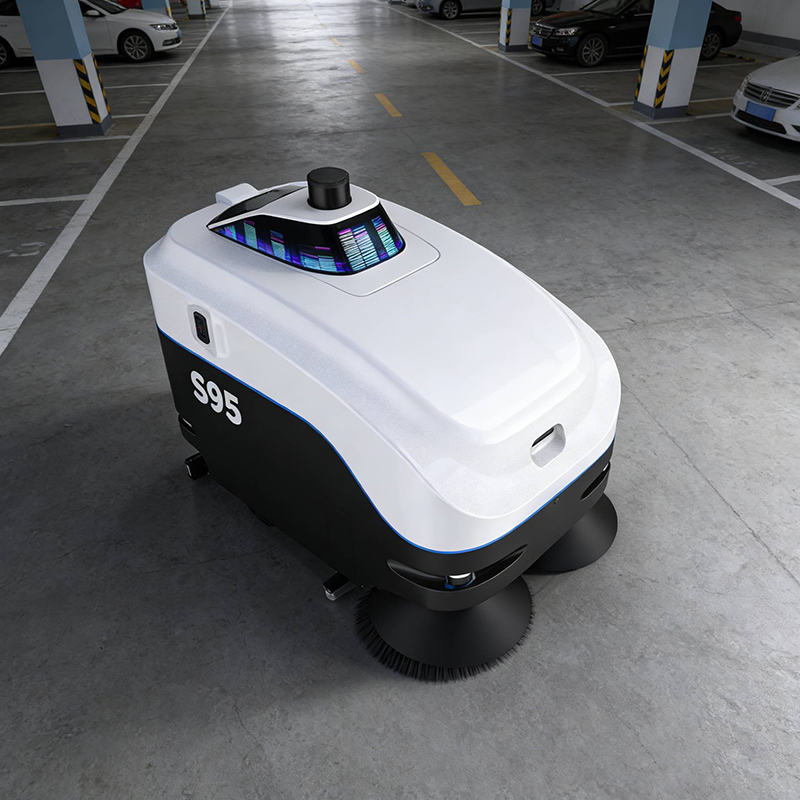
Battery runtime is only one limit on uninterrupted work.
Clean water, wastewater, debris capacity, filters, and routine care can introduce additional stops. Measure these during the trial rather than estimating them from tank size alone.
Confirm which functions are included:
Function | Procurement question |
|---|---|
Automatic charging | What triggers docking, and how is task resumption handled? |
Water refilling and drainage | Is a separate station required, and what is included? |
Routine cleaning | Which components still need staff attention? |
Consumables | What parts require replacement, and how are they accessed? |
Alerts | Which events are reported, through which channels? |
Manual recovery | What procedure and training are required? |
Follow the exact battery and charger instructions. Do not assume opportunity charging, battery swapping, or a particular maintenance procedure is supported.
A charging station and a water-service station have different installation needs.
Request the approved requirements for power, space, approach clearance, water supply, drainage, and network access where applicable.
Have the relevant site team review them before installation. Avoid planning around a generic electrical rating or plumbing arrangement.
Include the robot, station, accessories, delivery, commissioning, training, consumables, software charges where applicable, and site preparation.
Clarify warranty coverage, battery terms, parts availability, and service arrangements in your region.
Ask who handles cleaning-system faults, navigation issues, and software support. Confirm response arrangements and escalation procedures in writing.
ZYLOR’s industrial cleaning robot range can help you identify platforms for discussion. Final suitability should be established through the proposed specification and site evaluation.
Agree on the test zones, cleaning standard, schedule, and recording method before starting.
Pilot measure | Evidence to collect |
|---|---|
Cleaning quality | Remaining soil, residue, streaks, and rework |
Task completion | Accepted area within the available time |
Access | Missed zones and difficult transitions |
Navigation | Interruptions and recovery steps |
Servicing | Staff time for water, debris, and routine care |
Usability | Staff ability to start, monitor, and recover tasks |
Assign an internal owner for daily operation and maintenance. Train the staff who will use the system, and include their feedback in the final decision.
Start with access restrictions and the required cleaning output. Compare usable cleaning width, turning space, servicing needs, and measured route completion rather than building area alone.
Evaluate both against the flooring guidance and actual soil. Brush type does not independently establish cleaning quality or debris-handling capability.
Only rely on operation within the model’s approved lighting conditions. Test the complete navigation and detection system; LiDAR alone does not establish that every function works in darkness.
Confirm the permitted slope, loading, surface, and wet or dry conditions for the exact model. A maximum gradient specification is not proof of suitability for every ramp.
The response varies by system and settings. Confirm whether the robot waits, reroutes, skips an area, retries, or requests assistance, and demonstrate the behavior during the pilot.
Selecting a scrubber robot for a warehouse, factory, or logistics site?
Contact ZYLOR with your floor details, typical soil, cleanable area, access restrictions, and operating schedule. Discuss suitable configurations and the site checks needed to evaluate cleaning performance, servicing, and task completion.

