
Views: 0 Author: Site Editor Publish Time: 2026-09-15 Origin: Site


Facility managers face a constant squeeze from multiple directions. Labor costs keep climbing, turnover remains high, and sanitation standards are stricter than ever. Maintaining clean floors across massive commercial or industrial spaces drains resources rapidly. You either watch operational expenses skyrocket or let maintenance fall behind. We need to cut through the automation hype and look at the reality on the ground. You must objectively evaluate your equipment options based on hard data and facility requirements. The goal is determining whether a robot floor scrubber or a traditional manual machine makes the most operational sense for your specific building. This evaluation requires looking hard at your floor plans, labor availability, and daily cleaning frequency.
Traditional scrubbers offer lower upfront capital expenditure and provide the immediate, manual control required for complex, high-spill, or heavily congested environments with lighter cleaning schedules.
A robot floor scrubber drives long-term ROI by reallocating labor, optimizing cleaning routes, and ensuring consistent, verifiable daily maintenance.
Facility size, layout variability, and contamination types dictate the optimal choice—often resulting in a hybrid fleet approach rather than a complete replacement of traditional equipment.
Successful implementation of autonomous cleaning equipment hinges on accurate facility mapping, staff workflow integration, and strict adherence to sensor and machine maintenance protocols.
Table of Contents
Before comparing specific equipment types, you must define what successful floor maintenance looks like for your operation. Success criteria vary wildly between a retail storefront and a heavy manufacturing plant. Establishing clear baselines ensures you select the right tool for the job.
Evaluating how your cleaning staff spends their shift is the first step. Measure the ratio of hours spent on routine floor cleaning versus high-value facility maintenance. Pushing a manual scrubber across a 100,000-square-foot warehouse consumes hours of labor. You could redirect that same labor to tasks requiring human dexterity. Cleaning restrooms, sanitizing high-touch surfaces, and managing localized spill responses provide higher value to facility hygiene. When a worker spends four hours walking behind a machine, those are four hours lost for detail work.
To accurately assess labor utilization, track these data points over a 30-day period:
Total weekly hours dedicated strictly to floor scrubbing and sweeping.
Time spent preparing, filling, and emptying floor care equipment.
Frequency of deferred maintenance tasks due to labor shortages.
Overtime hours logged specifically to meet baseline floor cleaning standards.
Time spent on machine maintenance, including battery charging and squeegee replacement.
Establishing baseline requirements for daily appearance maintenance is non-negotiable. High-traffic areas demand consistent dust control and sanitation. A manual operator might skip a difficult aisle or push the machine faster at the end of a long shift. This variability leads to uneven cleaning results. Determine how often specific zones require attention. A main entrance may need daily scrubbing. A secondary storage aisle might only require weekly maintenance. Defining these frequencies helps determine if you need the relentless consistency of an automated system or the flexible scheduling of manual equipment.
Floor cleaning directly impacts facility safety. Slip and fall accidents represent a massive liability. Identify the need for slip hazard reduction through effective water recovery. Many industries require verifiable cleaning logs. Food processing plants, healthcare facilities, and specialized manufacturing sectors must adhere to strict OSHA or industry-specific hygiene regulations. Decide if manual sign-off sheets are sufficient or if you require digital, unalterable telemetry data to prove compliance. Proper water recovery is heavily dependent on squeegee condition and vacuum motor performance, regardless of whether the machine is manual or autonomous.
Traditional manual equipment remains the backbone of the commercial cleaning industry. Walk-behind and ride-on auto scrubbers offer distinct advantages in specific environments. Understanding their core capabilities helps identify where they outperform automated alternatives.
Many facilities operate in a constant state of flux. Manufacturing floors feature moving heavy machinery, temporary pallet staging, and unpredictable pedestrian traffic. Traditional scrubbers provide direct operator control. A human operator instantly recognizes a complex obstacle and navigates highly unpredictable environments safely. If a forklift suddenly backs out of an aisle, the operator stops the machine immediately. This real-time, nuanced decision-making remains a significant advantage for manual equipment in chaotic settings. Operators can also visually inspect the floor ahead and avoid picking up large debris that could clog the vacuum hose.
Industrial environments frequently deal with severe floor soiling. Traditional machines demonstrate clear superiority in addressing localized, heavy contamination. A human operator can identify deep tire marks, thick industrial grease, or large liquid spills. They adjust the machine's settings on the fly. They might increase downward pad pressure, dispense more chemical solution, or perform three consecutive passes over a stubborn stain. This targeted, aggressive cleaning approach is difficult to replicate with standard automated routines. For facilities dealing with metal shavings or heavy wood dust, manual cylindrical scrubbers offer the aggressive sweeping and scrubbing combination needed to clear the floor.
Smaller facilities often do not generate the square footage required to justify complex automation. Operations with lighter, infrequent cleaning schedules benefit from the hands-on control of traditional machines. If your facility only requires floor scrubbing twice a week for two hours, a walk-behind unit makes practical sense. The overhead of managing digital maps and automated schedules outweighs the benefits in these smaller, less demanding environments. A standard 20-inch walk-behind scrubber can easily handle a 15,000-square-foot retail space without the need for advanced programming.
Traditional scrubbers present a lower initial purchase barrier. The upfront funding required for a standard walk-behind or ride-on unit is a fraction of the cost of advanced robotics. The market for used or refurbished traditional machines is also robust. This wider availability allows facilities with strict budget constraints to acquire capable equipment without massive initial outlays. Budgeting for a manual machine is straightforward and fits easily into standard annual equipment procurement cycles.
While the initial investment is lower, the ongoing financial burden is substantial. Traditional equipment generates high ongoing expenses tied directly to dedicated operator hourly wages. You must factor in payroll taxes, employee benefits, and potential overtime pay. As labor rates increase globally, the cost of paying a human to operate a floor scrubber continues to rise year over year. The machine only provides value when you are actively paying someone to operate it.
Manual scrubbers feature simpler mechanical maintenance. Repair processes are generally straightforward. Replacing squeegee blades, swapping out scrub pads, and maintaining lead-acid or lithium batteries require basic mechanical knowledge. Your internal maintenance team can often handle routine repairs. These machines generally require less specialized technical support compared to robotics, minimizing downtime when basic components fail. Parts are widely available, and local service technicians can usually diagnose and fix a manual scrubber within a single service call.
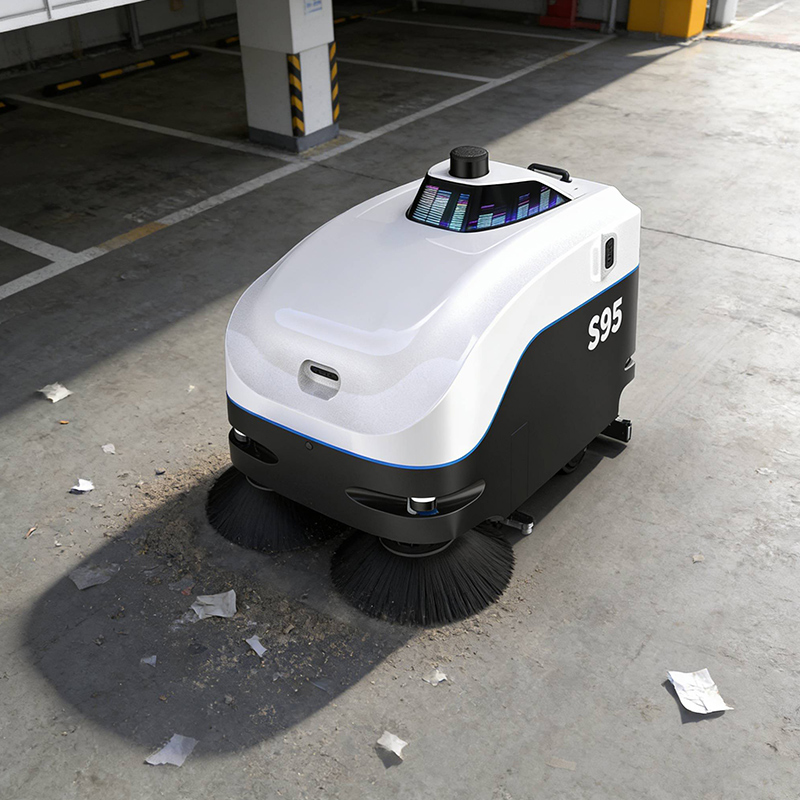
Automated floor care technology has matured rapidly. A robot floor scrubber is no longer an experimental novelty; it is a proven industrial tool. Evaluating its mechanics and performance metrics reveals how it transforms facility maintenance.

Modern autonomous scrubbers rely on sophisticated sensor arrays to navigate real-world commercial settings. They utilize predefined route mapping combined with LiDAR and vision-based cameras. During the initial setup, an operator manually drives the machine through the desired cleaning route. The robot records this path, creating a digital map of the facility. During autonomous operation, the sensors continuously scan the environment. If a temporary obstacle appears, the machine detects it, safely navigates around it, and returns to its programmed cleaning path. This dynamic obstacle avoidance prevents collisions and ensures the machine completes its route even in active environments.
One of the most significant operational advantages is the ability to run scheduled cleaning plans without a dedicated operator. You can deploy the machine during night shifts or low-traffic periods. This off-hours deployment eliminates disruptions to your core business activities. In a retail setting, the floors can be scrubbed after the store closes. In a warehouse, the machine can clean shipping lanes during shift changes. This flexibility maximizes equipment utilization while minimizing interference with staff and customers. You get clean floors without the noise and visual distraction of daytime cleaning.
When selecting automated equipment, evaluate combination units versus specialized single-purpose machines. Sweeper/scrubber hybrids offer immense versatility. They sweep up light debris and scrub the floor in a single pass, maximizing utility across diverse floor types. Specialized single-purpose units often feature larger water tanks and more aggressive scrubbing mechanisms. Your choice depends entirely on your primary contamination type. If you deal with heavy dust and debris, a hybrid is essential. If your floors are relatively clear of debris but require intense wet cleaning, a dedicated scrubber performs better. Consider the floor type as well; polished concrete requires different pad pressure and water flow than uneven epoxy coatings.
Humans get tired; machines do not. A robotic unit achieves uniform cleaning of high-traffic spaces without the variable of operator fatigue. It cleans at the exact same speed, dispenses the exact same amount of water, and applies the exact same pad pressure every single time. It does not skip zones or cut corners to finish a shift early. This relentless consistency elevates the baseline cleanliness of the entire facility. Consistent water dispensing also means the recovery tank fills at a predictable rate, allowing for highly accurate scheduling of dump-and-fill maintenance stops.
Autonomous equipment provides a level of operational transparency impossible with manual machines. These units generate detailed telemetry data after every run. Facility managers can access dashboards showing exact coverage maps, total water usage, and active cleaning times. This data proves compliance with sanitation protocols. If an auditor asks for proof of daily floor maintenance, you simply export the digital cleaning log. This data helps optimize facility management protocols by identifying areas that require more or less frequent attention. You can visually see heat maps of where the machine encountered the most obstacles, indicating potential workflow bottlenecks in your facility.
Adopting automation requires navigating higher initial funding requirements. The advanced sensors and software significantly increase the purchase price. Many manufacturers now offer Robotics-as-a-Service (RaaS) leasing models. This approach shifts the financial burden from a massive upfront purchase to a predictable monthly operational expense. RaaS models often include maintenance, software updates, and technical support, simplifying the financial integration of the equipment. This model allows facilities to upgrade to newer technology at the end of the lease term without being stuck with obsolete hardware.
The true financial benefit of automation comes from labor reallocation, not necessarily headcount reduction. You calculate the return on investment based on redirecting existing staff to complex tasks. While the machine handles the repetitive, time-consuming floor scrubbing, your staff can focus on restroom sanitation, high-dusting, and localized spill response. This strategy improves overall facility hygiene without increasing your total labor budget. It also improves employee morale by removing the most physically demanding and monotonous task from their daily workflow. Staff members transition from machine pushers to equipment managers.
Choosing between these technologies requires a direct comparison across specific operational categories. No single machine is perfect for every scenario. You must match the equipment to your facility's unique characteristics.
Massive square footage heavily favors automation. Warehouses, big-box retail stores, and wide institutional corridors are ideal environments for a robot floor scrubber. These spaces feature long, uninterrupted runs where the machine can maximize its route optimization and efficiency. The larger the open space, the faster the machine generates a positive return on investment by freeing up hundreds of hours of manual labor. A robot can clean a 50,000-square-foot distribution center overnight, ensuring the floor is dry and safe before the morning shift arrives.
Small retail layouts, cluttered manufacturing floors, or facilities with frequent layout changes favor traditional manual control. If your floor plan consists of narrow aisles, tight corners, and constantly shifting displays, an automated machine will spend most of its time recalculating routes or getting stuck. The agility and immediate responsiveness of a human-operated machine are necessary for these complex, variable spaces. A walk-behind scrubber can easily pivot around a temporary endcap display that would otherwise confuse a robotic mapping system.
Traditional machines remain the undisputed standard for immediate, unpredictable wet spill recovery. If a pallet of liquid ruptures in a grocery store, you cannot wait for an automated machine to navigate to the area. A human operator must grab a walk-behind scrubber, drive directly to the hazard, and recover the liquid immediately to prevent accidents and product damage. Manual machines allow for aggressive, multi-pass recovery over a concentrated area.
Robotic scrubbers excel in daily dust control, appearance maintenance, and standard wet scrubbing for light-to-medium soiling. They are designed to maintain a high baseline of cleanliness through frequent, consistent passes. They prevent dirt from grinding into the floor finish over time. By running the robot daily, you prevent the buildup of grime that would otherwise require harsh chemicals and aggressive stripping pads to remove.
The industry is seeing an emerging role for autonomous dry floor care and waterless cleaning robots. These machines focus entirely on daily dust control using specialized sweeping and vacuuming mechanisms. By deploying dry robots for daily maintenance, facilities can reserve intensive wet scrubbing for heavy contamination, reducing overall water and chemical consumption. This approach extends the life of floor finishes and reduces the environmental impact of daily facility maintenance.
Autonomous units actively reduce slip hazards in high-traffic spaces. They utilize consistent, measured water dispensing and immediate vacuum recovery. Because the machine moves at a controlled, steady pace, the squeegee system recovers almost 100% of the dispensed liquid, leaving the floor immediately dry and safe for foot traffic. The machine never rushes, ensuring the vacuum motor has adequate time to extract the dirty water from the floor surface.
Traditional scrubbing relies heavily on human operator judgment to mitigate hazards. The operator must identify slippery conditions, place wet floor signage, and adjust water flow based on floor porosity. If the operator is distracted or poorly trained, they may leave behind a trail of water, creating a severe slip and fall liability. Manual operators must also be trained to properly mix cleaning chemicals, as improper dilution can leave a slippery residue on the floor.
Operational Requirement | Traditional Auto Scrubber | Robot Floor Scrubber |
|---|---|---|
Ideal Environment | Tight, cluttered, dynamic spaces | Large, open, static environments |
Spill Response | Excellent (Immediate manual deployment) | Poor (Designed for routine routes) |
Cleaning Consistency | Variable (Depends on operator fatigue) | Exceptional (Programmed precision) |
Labor Requirement | 100% dedicated operator time | 10-15% for prep and maintenance |
Data & Reporting | Manual logs (Prone to human error) | Automated digital telemetry |
Initial Setup Time | Minimal (Unbox, charge, train, use) | High (Requires facility mapping and testing) |
Take the following immediate actions to evaluate your facility's floor care needs:
Conduct a comprehensive site audit to measure total cleanable square footage and identify potential navigation hazards like ramps or glass walls.
Request a proof-of-concept pilot demonstration from a manufacturer to validate mapping capabilities in your specific environment.
Run a comparative operational analysis calculating the exact number of labor hours you could reallocate to detail cleaning if routine floor scrubbing were automated.
Survey your current cleaning staff to gauge their readiness for new technology and identify potential champions for the implementation process.
A: No. Automated scrubbers handle routine, repetitive floor cleaning. They do not clean restrooms, empty trash, wipe down high-touch surfaces, or respond to sudden spills. They supplement your existing staff, allowing you to reallocate human labor to more complex, detail-oriented tasks requiring dexterity and judgment.
A: The timeline varies based on labor rates, facility size, and cleaning frequency. Facilities operating the machine for at least four to six hours daily typically see a return on investment within 12 to 24 months. This calculation is driven by the value of labor hours reallocated to other essential maintenance duties.
A: Yes. Most modern autonomous scrubbers utilize LiDAR and advanced sensor arrays that do not rely on ambient lighting to navigate. This makes them highly effective for off-hours deployment, allowing facilities to maintain clean floors during night shifts without requiring a human operator to be present.
A: They are not designed for sudden spill response. Autonomous units follow pre-programmed routes for routine maintenance. If a heavy spill occurs, a human operator must intervene by manually driving the robotic unit to the spill or deploying a traditional walk-behind scrubber for immediate recovery.
A: Both require daily mechanical maintenance like emptying tanks, rinsing squeegees, and cleaning brushes. However, robotic units require additional technological maintenance. Operators must regularly wipe down optical sensors, cameras, and LiDAR scanners to ensure safe navigation, and occasionally perform software updates or recalibrate digital maps.
A: Yes. They are equipped with multiple layers of safety sensors, including LiDAR, 3D cameras, and ultrasonic detectors. If a person or object steps into the machine's path, it will instantly stop or safely navigate around the obstacle. They are specifically designed for safe operation in dynamic, populated environments.
A: Choose a combination sweeper/scrubber if your facility generates significant dry debris, dust, or small packaging waste alongside standard floor soiling. Choose a specialized single-purpose wet scrubber if your floors are generally free of large debris but require intense, heavy-duty liquid cleaning and aggressive pad pressure.

