
Views: 0 Author: Site Editor Publish Time: 2026-11-04 Origin: Site


The main difference between an industrial floor sweeper and a floor scrubber is the cleaning task. A sweeper collects loose debris, while a scrubber uses liquid and mechanical agitation to remove soil from compatible hard floors, then recovers the dirty water.
A sweeper is a starting point for loose dust and debris. A scrubber is a starting point for floor washing and removable adhered residues. Facilities with both conditions may need sweeping followed by scrubbing, or a machine specifically designed to combine those functions.
Before comparing size, runtime, or automation, establish what is on the floor and what condition you need after cleaning.
Table of Contents
Factor | Industrial floor sweeper | Industrial floor scrubber |
|---|---|---|
Main task | Collect loose debris | Wash compatible hard floors |
Typical soil | Loose dirt and approved dry debris | Removable adhered dirt and residues |
Cleaning action | Brushes or brooms, often supported by suction | Liquid application and brush or pad agitation |
Collection | Debris bin or hopper | Recovery tank for dirty liquid |
Liquid use | Depends on design; some machines have dust-suppression features | Uses water or an approved cleaning solution |
Main service tasks | Emptying debris and maintaining brushes and dust-control components | Refilling, draining, and maintaining brushes, pads, and recovery components |
Main selection question | Can it collect this debris without unacceptable dust release? | Can it remove this soil and recover liquid without damaging the floor? |
These are functional categories. Some machines combine sweeping, vacuuming, and wet cleaning.
Also separate the cleaning function from the operating format. A walk-behind, ride-on, or autonomous machine may perform sweeping or scrubbing. Automation changes how the machine moves and completes tasks; it does not remove the need to match the cleaning process to the soil.
A sweeper moves loose material into a collection system. Depending on the design, side brushes guide debris toward a main brush or suction path, and the collected material enters a bin or hopper.
Machines with filtration use airflow and filters to control dust generated during collection. Filter construction, condition, and maintenance affect the result.
Do not assume every sweeper can handle every type of industrial waste. Confirm the permitted size, shape, quantity, and characteristics of the material.
Long straps, plastic film, sharp objects, and fibrous waste can present different challenges from ordinary loose dirt. Fine, hazardous, or combustible dust requires an application-specific assessment rather than a general promise of dust collection.
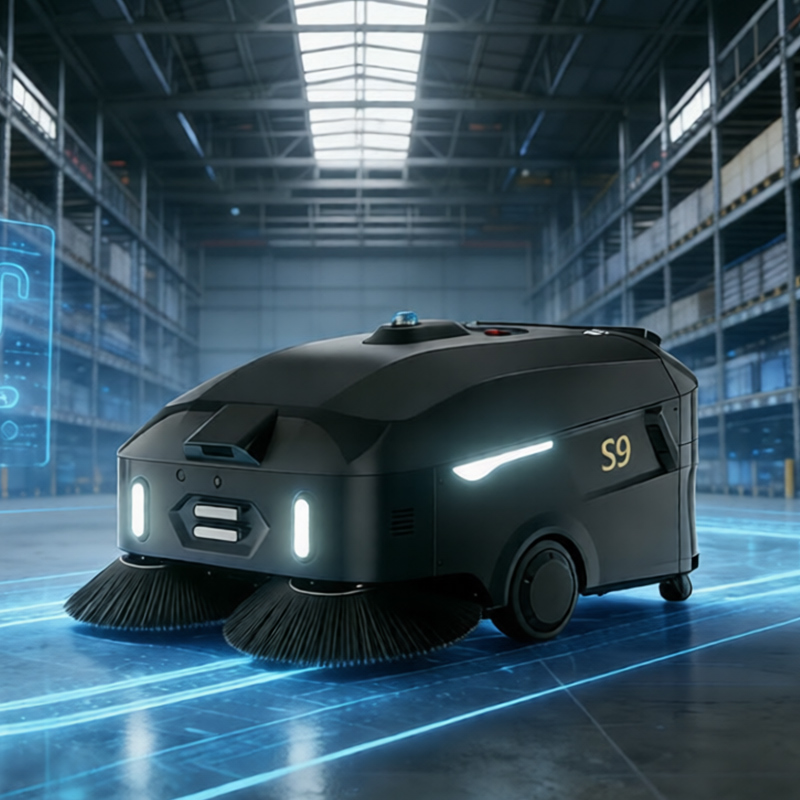
ZYLOR’s S9 industrial sweeping robot is presented for industrial dry-waste collection. Discuss your actual debris with the supplier before treating it as a match.
A typical scrubber-dryer carries out three related steps:
Applies water or an approved cleaning solution.
Agitates the surface with brushes or pads.
Collects dirty liquid through a recovery system.
The cleaning result depends on the floor, soil, chemistry, contact conditions, settings, and recovery performance.
A scrubber may help remove suitable greasy or sticky residues, but it should not be assumed to remove every stain or tire mark. Unknown chemical spills also require a separate response rather than routine machine cleaning.
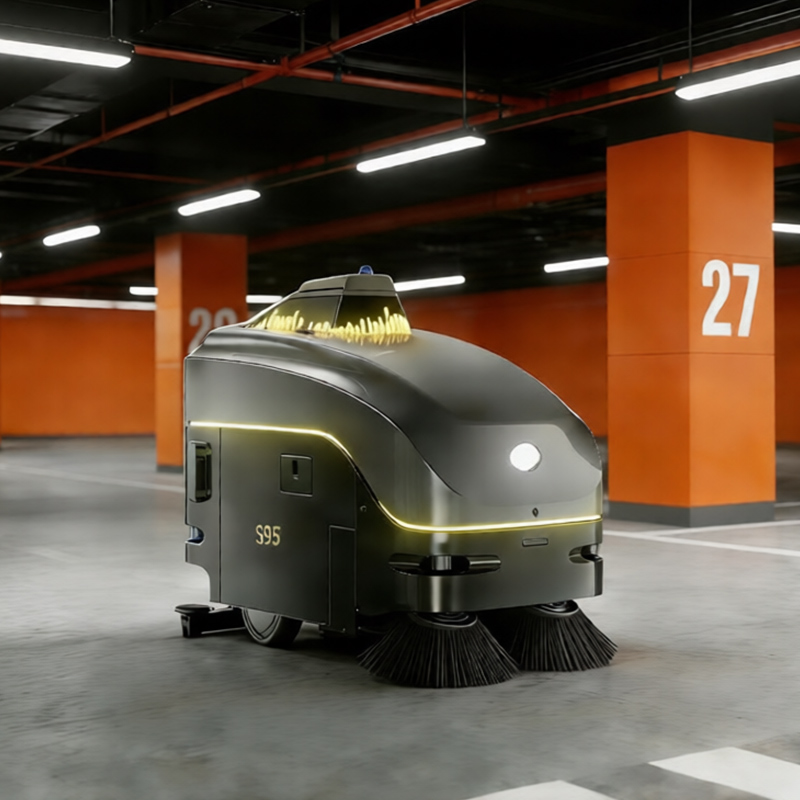
ZYLOR’s S95 industrial floor scrubber robot includes multiple cleaning functions. Confirm the available modes, debris-handling limits, and proposed configuration for your project.
A recovery system is intended to collect dirty liquid, but residual moisture can remain because of floor texture, turns, worn components, obstructions, or operating settings.
Inspect the cleaned surface during a trial. Do not equate the presence of a squeegee with a guarantee that the area is immediately ready for unrestricted traffic.
Observe representative zones before and after a normal shift.
Floor condition | Process to evaluate | What to confirm |
|---|---|---|
Mainly loose debris | Sweeping or suitable vacuum collection | Pickup, dust control, bin capacity, and prohibited materials |
Mainly adhered dirt | Scrubbing | Soil removal, floor compatibility, and liquid recovery |
Loose debris plus adhered soil | Debris removal followed by scrubbing, or an appropriate combination machine | Debris limits and performance of the complete sequence |
Unexpected spill or unknown substance | Site-specific assessment first | Whether routine cleaning equipment is appropriate |
Different zones may need different methods. A receiving area with packaging fragments can have a different cleaning requirement from a finished-goods corridor.
Remove debris that the proposed scrubber is not designed to collect before wet cleaning.
This is particularly relevant to material that can wrap around brushes, obstruct recovery passages, interfere with squeegees, or form a difficult slurry when mixed with water.
However, it is not accurate to require a separate full sweeping pass for every scrubber in every application. Some machines incorporate debris collection or a dedicated pre-sweep system.
Follow the model’s operating instructions and verify the process against the actual floor condition.
A combination machine includes mechanisms intended to collect debris and perform wet cleaning within the same platform.
A cylindrical brush alone does not prove that a machine has a suitable sweeping system. Check for a collection tray or hopper, permitted debris, cleaning sequence, and servicing requirements.
Also clarify whether the listed functions operate simultaneously or as separate modes.
A combination machine may reduce process steps, but it does not automatically halve labor time. Measure loading, servicing, interruptions, and rework before estimating savings.
Identify the floor material, coating, condition, and approved maintenance method.
Choose brushes, pads, chemicals, and settings with the flooring and equipment guidance in mind. Do not apply one pad color or brush specification to every polished concrete, epoxy, or vinyl floor.
Trial the proposed process in an agreed area and inspect for changes in appearance, residue, or surface damage.
Record:
Cleanable area and required frequency.
Narrow passages, doors, and turning spaces.
Floor transitions and permitted slopes.
Load restrictions where relevant.
Pedestrian and vehicle traffic.
Available operating and servicing windows.
There is no universal floor-area threshold that makes a ride-on or autonomous machine mandatory.
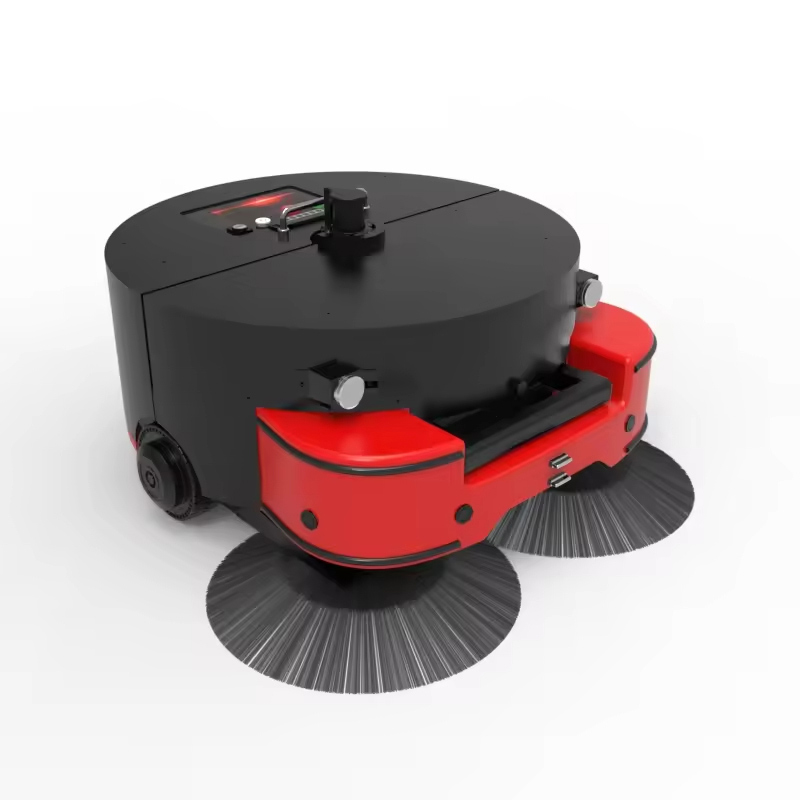
For robotic equipment, test route completion, obstacle handling, dock access, and recovery from interruptions. A compact machine may reach more assigned areas even when a larger machine has a higher published coverage rate.
For a sweeper, examine brush access, debris emptying, dust-control servicing, and filter replacement where applicable.
For a scrubber, examine water handling, recovery-tank cleaning, brushes or pads, squeegees, hoses, and approved chemicals.
Battery care must follow the exact battery system and charger instructions. Different lead-acid designs have different servicing requirements; lithium batteries also require approved operating and charging practices.
Compare equipment, accessories, consumables, staff servicing time, software charges where applicable, and support availability.
Evaluate the cleaning result and workflow together.
Trial measure | What to record |
|---|---|
Cleaning quality | Remaining debris, soil, streaks, and rework |
Dust or moisture | Dust release during sweeping and residual liquid after scrubbing |
Task completion | Accepted cleaned area and total elapsed time |
Access | Missed zones and difficult turns |
Human involvement | Assistance, emptying, refilling, and recovery |
Routine care | Time and steps needed to return the machine to service |
ZYLOR’s industrial cleaning robot range provides a starting point for comparing sweeping, scrubbing, and compact platforms.
Some models can collect specified debris through an integrated system. Others require debris removal first. Check the collection mechanism and operating limits rather than assuming that every scrubber can—or cannot—do this.
A dry sweeper generally does not replace a suitable washing process for adhered grease. Confirm the soil, flooring, and approved cleaning method before selecting a scrubber and cleaning solution.
No. Brush orientation alone does not establish debris-collection capability. Confirm the presence and function of the collection system.
It depends on the floor condition. Loose debris points toward sweeping; adhered dirt points toward scrubbing. Mixed conditions may require both functions or separate cleaning stages.
No. Autonomous movement does not eliminate debris emptying, water servicing, inspections, or consumable replacement. Confirm which tasks are automated and which remain with staff.
Choosing between industrial sweeping and scrubbing?
Contact ZYLOR with photos of your typical debris, floor details, cleanable area, and operating schedule. Discuss suitable cleaning functions and the conditions that should be checked in a demonstration or site trial.

