
Views: 0 Author: Site Editor Publish Time: 2026-11-04 Origin: Site


Industrial floor cleaning robots automate assigned floor-care tasks using navigation, scheduling, and cleaning equipment. Depending on the model, they can collect loose debris, vacuum suitable dust, scrub hard floors, or combine several functions.
The main types are robotic sweepers, robotic vacuums, scrubber-dryers, and multifunction cleaning systems. These categories can overlap, so buyers should check the actual collection and cleaning mechanisms rather than rely on a product name.
This guide explains their working methods, typical applications, and the conditions that determine whether a robot fits an industrial site.
Table of Contents
Robotic sweepers primarily collect suitable loose material from the floor.
Depending on the design, side brushes move debris toward a main brush or suction path. The material enters a collection bin or hopper. Some machines use filtered airflow or other dust-control features.
Sweepers are worth evaluating where routine work mainly involves loose dirt and permitted packaging or production debris.
Check:
Accepted debris sizes, shapes, and materials.
Collection performance near edges and obstacles.
Dust-control requirements.
Usable bin capacity.
Brush access and emptying procedures.
Long film, straps, sharp objects, and fibrous waste can present different challenges from ordinary dirt. An industrial label does not mean the machine can collect every waste stream.
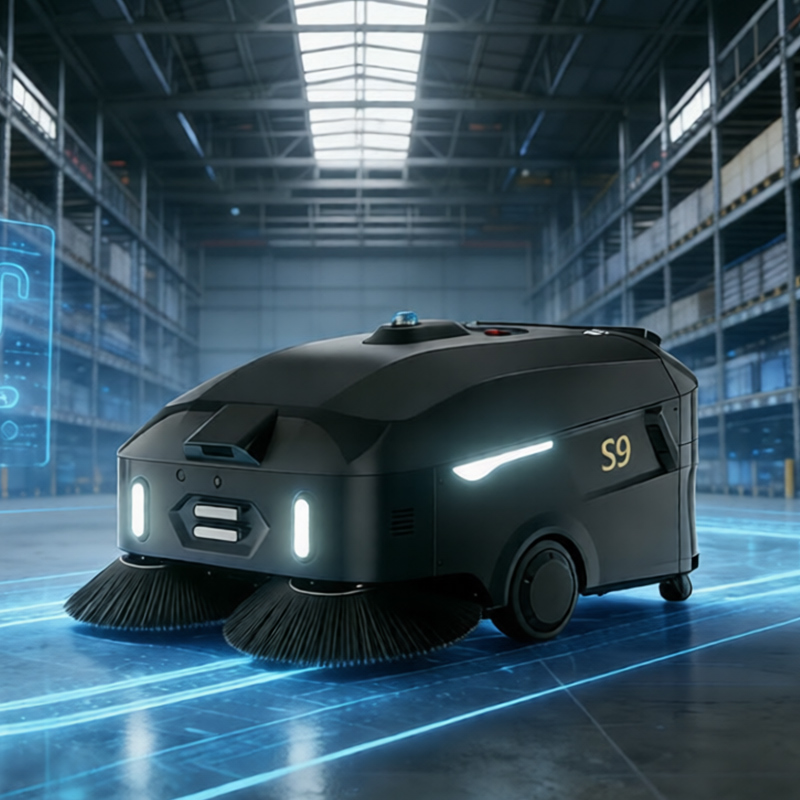
ZYLOR’s S9 industrial sweeping robot is one platform to discuss for industrial dry-waste collection.
Robotic vacuums use suction to collect suitable loose material, sometimes with brushes that help move it toward the intake.
They can be considered where pickup and dust containment are important, provided the machine is suitable for the material and floor.
Sweeping and vacuuming are not mutually exclusive. A machine may use both mechanisms.
When comparing robotic vacuums, review the complete collection system, including the intake, brushes, filters, seals, and emptying process. A suction figure or filter description alone does not establish cleaning performance.
Hazardous or combustible dust requires a separate application assessment. Do not assume a general floor-cleaning robot is approved for specialized dust collection.
Robotic scrubber-dryers wash compatible hard floors.
A typical process applies water or an approved cleaning solution, agitates the surface with brushes or pads, and recovers dirty liquid into a tank.
These robots are worth evaluating for routine floor washing and suitable adhered soil. Results depend on the floor, residue, cleaning chemistry, settings, and recovery system.
Check:
Floor and coating compatibility.
Soil removal at the proposed settings.
Remaining moisture and streaks.
Water-servicing intervals.
Brush, pad, and squeegee maintenance.
Water recovery does not guarantee an immediately dry floor under every condition. Unknown chemical spills should also be assessed separately from routine cleaning.
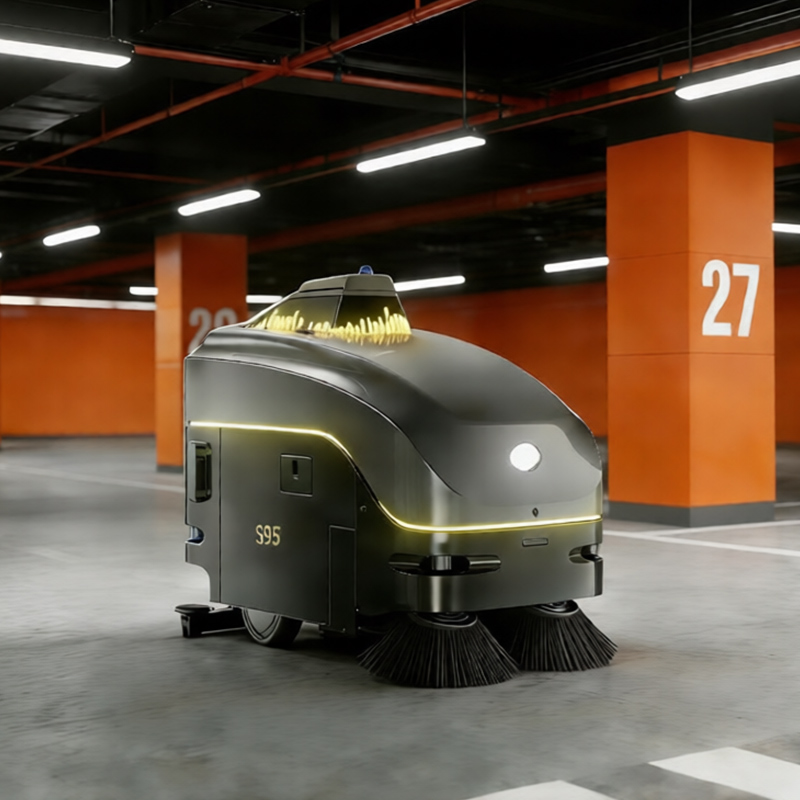
ZYLOR’s S95 industrial floor scrubber robot provides a relevant platform for discussing industrial wet-cleaning requirements.
Multifunction platforms support more than one cleaning task, such as sweeping, vacuuming, and scrubbing.
Some functions may operate together; others may run as separate modes or require configuration changes.
Before choosing a multifunction system, confirm:
Which tasks the proposed configuration performs.
Whether those functions operate simultaneously.
Permitted debris and liquid-handling limits.
Any attachment or consumable changes.
Maintenance for each cleaning system.
A combination machine may reduce process steps, but it does not automatically replace separate equipment in every facility.
The appropriate cleaning type depends on each zone’s floor condition, soil, access, and operating schedule.
Application area | Conditions to assess | Robot type to evaluate |
|---|---|---|
Warehouse storage aisles | Loose dirt, packaging debris, changing pallet positions | Sweeper, vacuum, or a supported combination |
Factory corridors | Process-related soil, coatings, nearby equipment | Dry collection or wet scrubbing matched to the task |
Packing and sorting zones | Paper fragments, film, straps, and temporary obstructions | Suitable debris collection with clear material limits |
Distribution routes | Tracked-in dirt, traffic, and limited cleaning windows | Sweeping or scrubbing according to floor condition |
Loading areas | Thresholds, weather exposure, slopes, and mixed soil | Equipment specifically approved for those conditions |
Warehouses can contain both loose debris and adhered dirt. Receiving areas may need a different process from storage aisles or pedestrian routes.
Measure accessible floor area rather than using the building footprint alone. Record where temporary stock blocks routes and when those areas become available.
A staged process may be appropriate: remove unsuitable loose debris first, then wash the floor where needed.
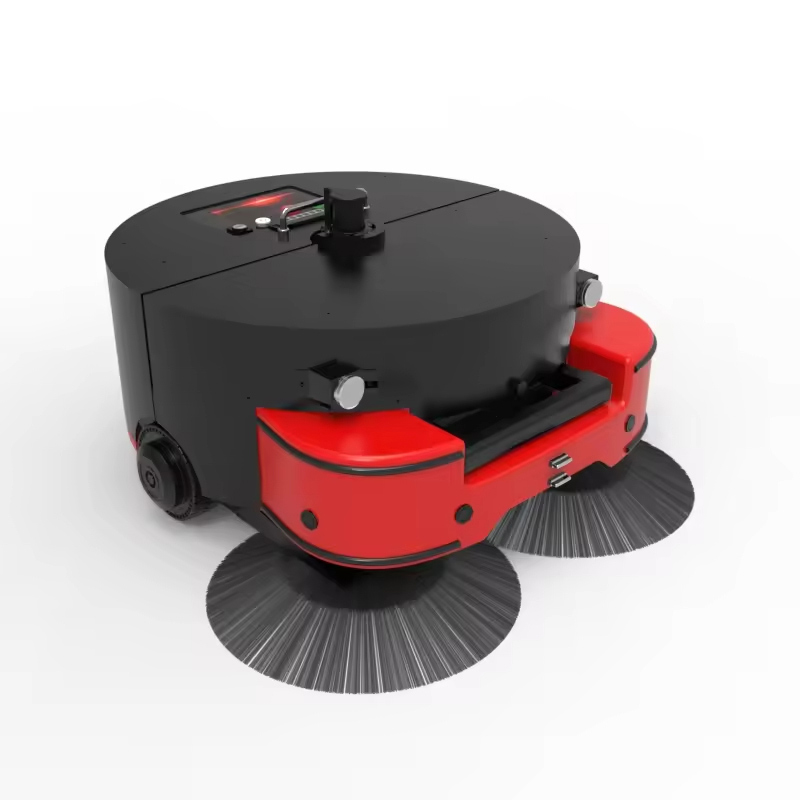
For tighter layouts, evaluate a compact platform against the actual turning and passage requirements. ZYLOR’s GRMMS10 compact industrial cleaning robot is one model to review.
Manufacturing sites should start with the nature of the process residue.
Metal particles, oily residues, textile fibers, and ordinary tracked-in dirt should not be treated as one cleaning category. Confirm what can enter the robot and what needs removal or specialist handling.
Also assess the floor coating, nearby machinery, restricted zones, and any process-specific cleanliness requirements.
A cleaning robot can support a maintenance program, but its presence does not establish hygiene or production compliance.
Logistics facilities often have changing routes and short access windows.
Evaluate cleaning schedules around picking, replenishment, dispatch, and vehicle movements. Test how the robot responds when an assigned route is unavailable.
The cleaning method and navigation plan must work together. Strong pickup performance has limited value if the robot cannot reach the required areas within the available time.
ZYLOR’s industrial and logistics solutions provide a starting point for discussing zone-based deployment.
An industrial site may also contain offices, reception areas, staff facilities, and public corridors.
These zones can have different flooring, noise expectations, and access requirements. A separate commercial platform may be appropriate.
Do not assume one industrial machine is the best choice for every area of the building.
Cleaning heads are equipment configurations, not separate definitions of autonomy.
Disc systems use brushes or pads that rotate against the floor.
Performance depends on the selected tool, contact conditions, machine settings, and flooring requirements. Do not assume a disc head is suitable for polishing or finish removal merely because a pad can be fitted.
Confirm the approved combination with the equipment and flooring guidance.
Cylindrical brushes rotate around a horizontal axis.
Some machines combine them with a debris-collection tray or another collection system. However, a roller brush alone does not establish sweeping capability or remove the need for pre-cleaning.
Evaluate the complete design against the soil and surface.
Orbital or oscillating systems use repeated small movements rather than conventional full rotation.
They are another configuration to evaluate for supported floor-care processes. Suitability for routine cleaning, restoration, or finish removal depends on the exact machine, pad, and flooring instructions.
This configuration should not be assumed to be available on a particular ZYLOR model without confirmation.
Side brushes or other extensions can help reach areas outside the main cleaning path.
Check their actual reach, product pickup, and interaction with walls, racking, and obstacles. A rectangular pad or extended brush does not guarantee complete corner cleaning.
Record the manual follow-up that remains.
Measure passages, turns, thresholds, approved slopes, and access to the service location.
Test representative conditions such as changing pallets, reflective surfaces, variable lighting, and temporary obstructions.
Sensor names alone cannot establish route performance. Review how the complete system detects obstacles, requests assistance, and handles missed areas.
Coordinate operation with the site’s traffic procedures.
Dry-cleaning machines need practical debris emptying and collection-system care. Wet-cleaning machines also need water handling and recovery-system maintenance.
Automatic charging, automatic emptying, and automatic refilling are separate capabilities.
Request the requirements for the proposed configuration, including power, space, connectivity, and any plumbing. Do not assume every deployment needs a water-service station.
Agree on the assigned task and acceptance criteria before testing.
Trial measure | What to record |
|---|---|
Cleaning result | Remaining debris, soil, residue, and rework |
Floor condition | Dust release, surface marking, and residual moisture where relevant |
Task completion | Accepted cleaned area within the available time |
Access | Missed zones and difficult transitions |
Staff involvement | Assistance and routine servicing time |
Operating cost | Consumables, energy, water, software, and support where applicable |
Task maps and logs can help identify recorded activity. They do not independently prove soil removal or disinfection.
Use trial results to compare equipment, staffing needs, and the complete cost of operation.
The main functional types are sweepers, robotic vacuums, scrubber-dryers, and multifunction platforms. Product categories may overlap, so confirm the mechanisms and modes of each model.
Some platforms support all three. Check whether the functions run together, their material limits, and any changes required between modes.
Loose-debris conditions point toward sweeping or vacuum collection. Adhered soil may require scrubbing. Mixed conditions can need separate stages or a suitable combination machine.
Do not assume so. Routine cleaning and disinfection are different outcomes. Any disinfection claim requires a specifically supported process and evidence for the intended application.
No. Restricted spaces, detailed work, unexpected spills, inspections, and equipment servicing can still require people. Include those tasks in the deployment plan.
Need to identify suitable robot types for your industrial site?
Contact ZYLOR with your floor details, typical debris, cleanable areas, and operating schedule. Discuss suitable cleaning functions and a site evaluation covering pickup, floor washing, access, and daily servicing.

