
Views: 0 Author: Site Editor Publish Time: 2026-11-04 Origin: Site


To choose a commercial floor cleaning robot, start with your cleaning task, floor surfaces, and facility layout. Then compare how each model performs during a complete working cycle, including cleaning, charging, water servicing, and staff maintenance.
The best choice is a robot that can deliver an acceptable cleaning result within your available cleaning window, with a manageable level of human support. A high advertised coverage rate alone does not establish that fit.
This guide explains what facility managers, cleaning contractors, and procurement teams should check before making a purchase.
Table of Contents
Before comparing models, document the work you want to automate.
Identify:
Floor materials and surface finishes.
Typical dirt, dust, debris, and spills.
Cleanable floor area in each zone.
Required cleaning frequency.
Available cleaning hours.
Areas that will continue to need manual cleaning.
A shopping mall corridor, carpeted office, and warehouse aisle may require different cleaning methods. Even within one building, entrances can have different cleaning demands from upper-floor corridors.
Cleaning requirement | Robot type to evaluate | What to verify |
|---|---|---|
Loose debris on hard floors | Robotic sweeper or vacuum | Debris pickup, bin capacity, and dust containment |
Routine washing of compatible hard floors | Robotic floor scrubber | Soil removal, water recovery, and floor condition after cleaning |
Carpet maintenance | Commercial robotic vacuum or dedicated carpet-cleaning system | Carpet compatibility, pickup performance, and the specific cleaning process |
Several cleaning tasks across different zones | Multifunction cleaning robot | Performance in each mode and any changeover work required |
Multifunction capability can be useful, but the number of cleaning modes does not tell you how well each mode performs.
Confirm the approved brushes, pads, cleaning solutions, and water settings for your flooring. Test delicate or unfamiliar surfaces before wider deployment.
Cleaning performance should also be assessed separately from disinfection. Do not assume that routine robotic floor cleaning meets a specific infection-control requirement.
A robot must be able to reach and clean the areas assigned to it.
Measure more than the narrowest doorway. Check aisle widths, turning areas, furniture spacing, floor transitions, thresholds, slopes, and access to the service station.
A published minimum passage width describes one aspect of access. It does not prove that the robot can turn, clean effectively, or pass people comfortably in that space.
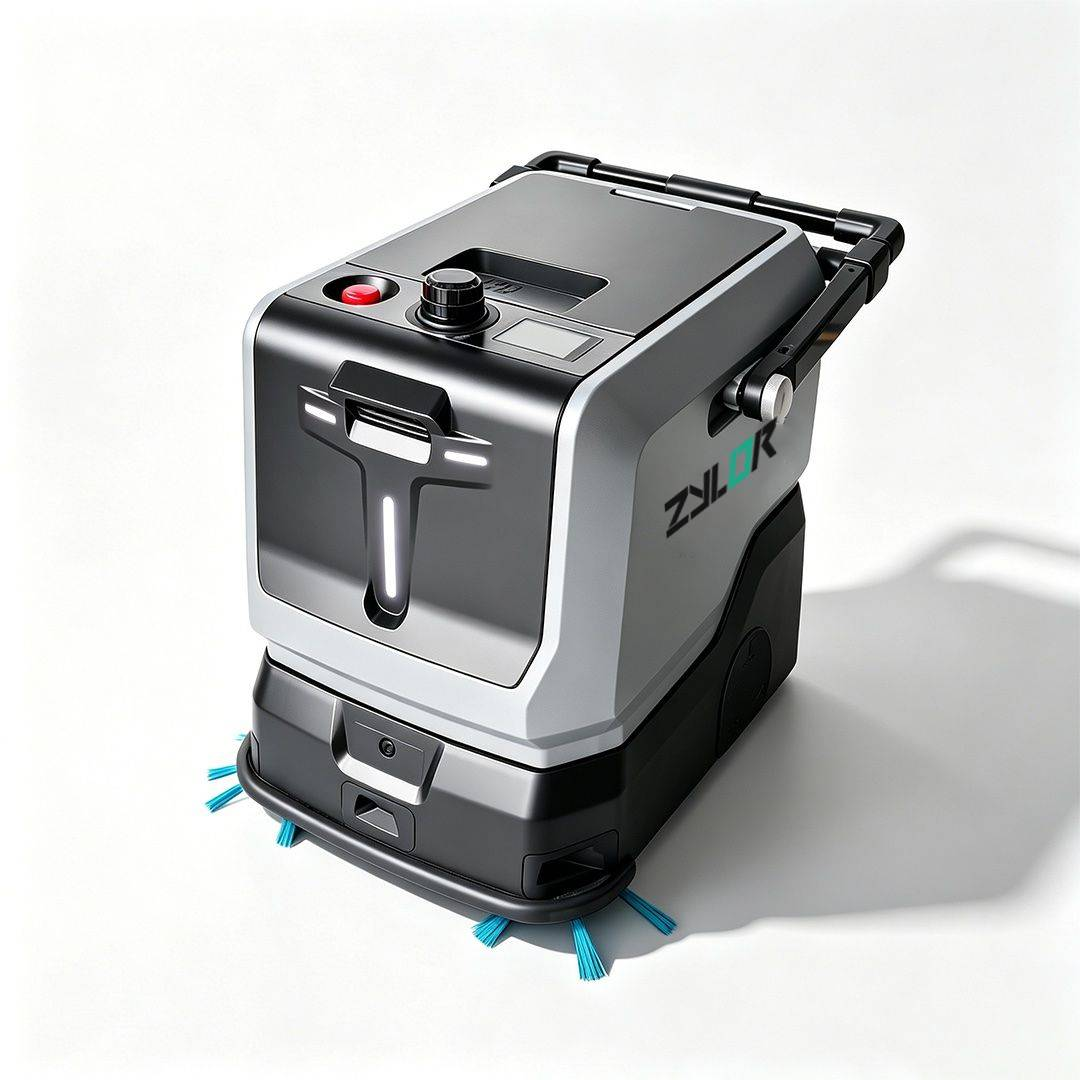
For tighter commercial layouts, the ZYLOR TN10 Pro compact autonomous floor cleaning robot is one model to evaluate. Confirm its suitability against your actual routes and cleaning requirements.
Daytime cleaning introduces pedestrians, carts, moving chairs, and changing access conditions. Overnight cleaning may involve locked doors, reduced lighting, and fewer staff available to respond.
Assess the robot during the hours when you intend to use it.
For multi-floor buildings, confirm whether staff will move the robot or whether a compatible elevator integration is required. Elevator and access-control functions should be checked for the exact model, building system, and installation scope.

Published cleaning efficiency is useful for an initial comparison. Actual coverage depends on the cleaning mode, layout, traffic, soil level, route settings, and time spent servicing the machine.
Ask the supplier what conditions support the stated figure:
Is it theoretical or measured?
Which cleaning mode was used?
Was the test carried out in an open area?
Were turns, obstacles, and repeat passes included?
Does the figure include charging and water servicing?
For purchasing decisions, measure how much floor reaches your agreed cleaning standard within the available time.
A useful site-level measure is:
Effective cleaning rate = accepted cleaned area ÷ total elapsed task time
Define what the elapsed time includes. For a full workflow comparison, record charging, refilling, draining, interruptions, and staff assistance as well as active cleaning.
Keep the cleaning result consistent when comparing machines. Faster coverage has limited value if the floor requires another pass.
Sensor names alone are not enough to compare autonomous cleaning performance.
Ask the supplier to demonstrate how the robot behaves around the conditions present in your building, such as:
Glass partitions and reflective surfaces.
Low furniture and overhanging objects.
Floor edges, stairs, and restricted zones.
Cables, mats, and temporary obstructions.
Pedestrians, cleaning carts, and other moving equipment.
These checks should form part of a controlled demonstration led by the supplier and your site team.
Review emergency stops, alerts, manual recovery procedures, and the documentation relevant to your intended use. Confirm how staff should respond when the robot cannot continue a task.
The objective is to understand both normal operation and the situations that require human intervention.
Autonomous navigation is only one part of an automated cleaning workflow.
A robot may follow routes independently while still needing staff to empty debris, refill water, drain wastewater, clean filters, or maintain brushes and squeegees.
Ask which functions are standard, optional, or dependent on additional equipment:
Automatic charging.
Task resumption after charging.
Automatic clean-water refilling.
Automatic wastewater drainage.
Scheduled cleaning.
Remote alerts and task reports.
Elevator or access-control integration.
For example, the ZYLOR TN30 Pro commercial floor cleaning robot lists automatic charging and an optional station for automatic refilling and drainage. Include the required station and installation work when comparing quotations.
Obtain the model-specific requirements for power, water supply, drainage, clearances, and network connectivity.
The station should be accessible for staff maintenance without blocking normal building use. Confirm that the proposed location is practical before ordering.
Also ask for a routine maintenance checklist. Clear daily responsibilities help prevent a robot from becoming idle because nobody knows who should service it.
The purchase price is only part of the cost of introducing a commercial floor cleaning robot.
Request an itemized quotation covering:
Cost category | Items to clarify |
|---|---|
Equipment | Robot, charging dock, service station, and accessories |
Deployment | Delivery, mapping, commissioning, and training |
Site preparation | Required electrical, plumbing, or building integration work |
Operating costs | Consumables, cleaning chemicals, utilities, and staff servicing time |
Software | Licenses, connectivity, reporting, and renewal charges, if applicable |
Maintenance | Service visits, wear parts, battery replacement, and repairs |
Support | Warranty scope, remote support, local service availability, and response arrangements |
Ask whether software, support, and replacement parts remain available in your operating region.
When estimating financial benefits, distinguish staff time released for other tasks from a direct reduction in payroll or contractor expenditure. These outcomes have different financial effects.
Use pilot results and actual contract terms for your business case rather than assuming a fixed payback period.
A short demonstration can show basic functionality. A representative pilot gives you better evidence of daily suitability.
Agree on the cleaning zones, operating hours, cleaning standard, and evaluation method before the trial begins.
Evaluation area | What to record |
|---|---|
Cleaning quality | Remaining dirt, streaks, water residue, and areas requiring rework |
Task completion | Accepted cleaned area and total elapsed time |
Human assistance | Number, cause, and duration of interventions |
Access | Unreachable areas and difficulty with turns or transitions |
Daily servicing | Time needed for water, debris, consumables, and cleaning the robot |
Workflow fit | Staff usability, alerts, reports, and handover procedures |
Operational impact | Interaction with occupants and disruption to normal activities |
Include the difficult areas, rather than testing only an open lobby.
For offices, retail properties, and shared commercial buildings, ZYLOR’s commercial and office cleaning solutions provide a starting point for discussing site assessment and pilot deployment.
Before placing an order, make sure the supplier has answered these questions:
Which exact model and configuration are included?
Which floors and cleaning tasks are supported?
What practical coverage was demonstrated at our site?
What work will staff still perform?
What infrastructure and integrations are required?
Which costs recur after purchase?
Who provides support in our region?
What acceptance criteria will be included in the agreement?
Documenting these answers helps purchasing, facilities, cleaning, and IT teams evaluate the same proposal.
Usually, a facility will still need people for tasks such as stairs, detailed edge work, unexpected spills, and equipment maintenance. Define the robot’s assigned work and the remaining manual tasks during the pilot.
Some models support multiple surfaces, but supported cleaning methods vary. Confirm which modes are suitable for each floor and whether staff must change attachments, settings, or consumables.
Base the number on cleanable area, cleaning frequency, available operating hours, practical coverage, and service downtime. Separate floors or disconnected zones may also affect the deployment plan.
Connectivity requirements depend on the model and the functions used. Ask what works without a network connection and what requires connectivity, including remote monitoring, reporting, updates, or building integrations.
Provide your facility type, location, floor materials, cleanable area, layout, typical dirt, cleaning schedule, and access restrictions. Photos or a floor plan can help the supplier identify points that need further assessment.
Choosing a commercial floor cleaning robot starts with understanding your site and cleaning workflow.
Contact ZYLOR with your floor types, cleanable area, operating hours, and main cleaning challenges. Ask for a model recommendation and clarification of the proposed configuration, site requirements, and available demonstration or pilot arrangements.

