
Views: 0 Author: Site Editor Publish Time: 2026-07-17 Origin: Site


Investing in automated floor cleaning hardware requires understanding the mechanical realities behind the convenience. Buyers often hesitate, fearing rapid battery degradation, planned obsolescence, and mechanical failures that ruin the initial investment. You expect a machine to survive daily commercial and industrial operational hazards, not just perform in a pristine testing laboratory. The reality of an autonomous mobile robot (AMR) cleaner depends heavily on its repairability, component quality, and the industrial environment it cleans. Instead of trusting marketing brochures, evaluating the actual hardware durability, sensor longevity, and manufacturer ecosystem support provides a clear picture of how long the machine will actually operate on your facility floors.
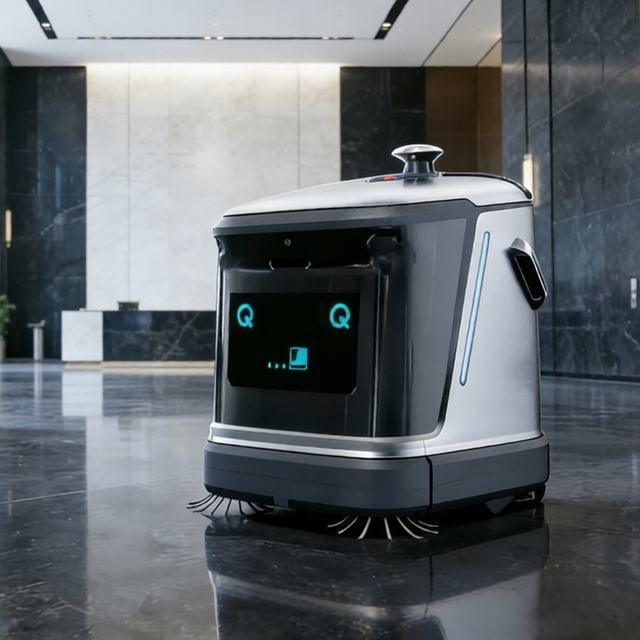
Baseline Expectation: The industry consensus for a commercial autonomous cleaner lifespan is 3 to 6 years (with operators reporting a 3-5 year average and manufacturers claiming 4-6 years), heavily dependent on build quality, duty cycles, and adherence to preventive maintenance protocols.
Primary Failure Points: Batteries (which typically degrade after 2-3 years of multi-shift operations) and moving mechanical parts (heavy-duty drive wheels, main scrubber/brush motors) are the most common points of failure, not the core chassis or industrial-grade mainboard.
Long-Term Value: Long-term value relies on the availability and affordability of OEM (Original Equipment Manufacturer) replacement parts, alongside high-durability consumables.
Environmental Impact: Operating environments with abrasive industrial dust, metal shavings, pallet debris, or slick chemical spills significantly accelerate motor wear and reduce overall lifespan.
Manufacturers test their units in controlled environments. They run machines on flat, obstacle-free epoxy floors with standardized synthetic dust. Under these laboratory conditions, a machine easily hits a lifespan of four to six years. Real-world commercial facilities present a completely different landscape. Expansion joints, drainage grates, pallet debris, wood splinters, and chemical liquids introduce variables that laboratory tests ignore. Crowdsourced data from field service technicians and facilities managers shows a realistic operational lifespan clustering around three to five years. The gap between marketing and reality comes down to the physical friction and unexpected obstacles the machine encounters daily in an active workspace.
We separate lifespan into two categories: usable and technical. Usable lifespan covers the period where the machine navigates effectively and cleans debris without requiring major component swaps. Technical lifespan ends when the industrial motherboard shorts out, the navigation LiDAR fails permanently, or the manufacturer ceases enterprise software support. Most units lose their usable lifespan due to battery depletion or stripped drive gears long before they reach technical death. Understanding this distinction helps facility managers plan for scheduled maintenance rather than capital-intensive full replacement.
| Testing Environment | Surface Type | Obstacle Density | Expected Lifespan |
| Laboratory (Marketing) | Smooth polished concrete | Zero obstacles | 4 to 6 years |
| Light Commercial | Commercial carpet tile & vinyl | Moderate (Desks, pillars, trash bins) | 3 to 5 years |
| Heavy Industrial | Rough concrete, epoxy coatings | High (Pallets, forklifts, active machinery) | 2 to 3 years |
Calendar years mean very little when evaluating industrial mechanical wear. A machine running multiple shifts daily accumulates wear at a vastly different rate than one running twice a week during off-hours. Drive wheel treads wear down, side brush motors degrade, and the lithium-iron-phosphate (LFP) or high-capacity lithium-ion cells degrade with every trip to the fast-charging station. Evaluating a machine based on operating hours or total charge cycles provides a much more accurate metric for longevity.
If you schedule daily, multi-shift cleanings across a large warehouse floor plan, the machine might log thousands of hours in a single year. The constant rotation of the heavy-duty scrub head and the continuous high-rate discharge of the battery accelerate component fatigue. Conversely, running the unit dynamically for targeted spot-cleaning reduces the mechanical load. Facilities managers must balance the desire for constantly clean floors with the physical toll it takes on the hardware assets.
High-capacity battery packs power these industrial machines, and their chemistry dictates a finite lifespan. Every time the unit leaves the docking station, cleans, and returns to recharge, it completes a partial or full charge cycle. Over time, the internal resistance of the battery cells increases, and the total capacity drops. This chemical degradation is unavoidable. You will notice the machine returning to the dock more frequently during a shift, eventually failing to complete its designated facility zone on one charge.
Most standard industrial-grade lithium packs endure 500 to 1,000 full charge cycles before capacity drops below 80% of its original rating. For a unit running daily across multiple shifts, you will hit this threshold in about two to three years. Once the battery degrades, the machine spends more time charging than working. Replacing the battery pack restores the runtime, making it the most critical planned maintenance task to extend the machine's usable life.
Battery Maintenance Protocols:
Monitor the cleaning duration in the fleet management system to spot sudden drops in runtime.
Check the heavy-duty charging contacts on both the machine and the dock for carbon buildup, oxidation, or corrosion.
Wipe the charging contacts weekly with a dry microfiber cloth and contact cleaner to ensure efficient power transfer.
Replace the battery pack when the machine can no longer complete its standard cleaning route within the scheduled operational window.
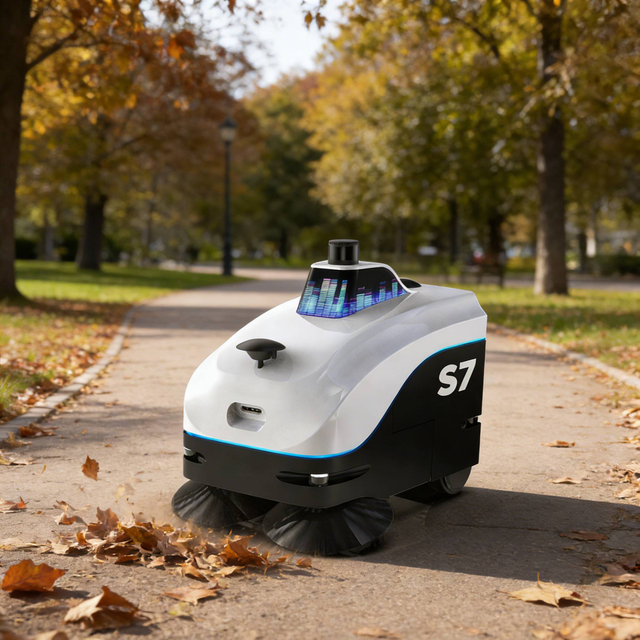
The physical components that interact with the floor take heavy abuse. Side sweeping brushes, the main scrub deck assembly, and the heavy-duty drive wheels fight friction constantly. Entry-level commercial models often use brushed DC motors for the suction and auxiliary brushes. These motors use physical carbon brushes that wear down over time, eventually causing the motor to fail. High-performance industrial models utilize brushless motors, which use electromagnets instead of physical contacts. Brushless motors run cooler, generate superior static lift, and last significantly longer under continuous loads.
Debris ingress destroys mechanical parts faster than standard wear. Plastic strapping, stretch wrap, and packaging fibers wrap tightly around the axles of the main roller brush and the drive wheels. As this debris builds up, it acts like a vice, restricting movement. The motors have to pull more current to overcome this resistance, which generates excess heat. This heat melts the plastic housings around the industrial bearings and burns out the motor windings. Keeping axles clear of debris is the single most important task for preventing mechanical failure.
| Component | Common Failure Cause | Prevention Method |
| Drive Wheels | Tread wear, strapping/wires wrapped around axle | Inspect treads monthly; cut away tangled packaging debris |
| Main Scrubber Motor | Overheating from jammed brush roll or strapping | Remove and clean the scrub roll bearings weekly |
| Side Sweeper Motor | Stripped internal gears due to hitting floor expansion joints | Optimize height clearance and adjust down-pressure settings |
| Suction Impeller | Fine dust bypass due to torn or saturated filters | Replace industrial filters regularly; never run without filtration |
Navigation relies on a complex array of industrial sensors. Light Detection and Ranging (LiDAR) turrets spin rapidly to map the facility in real time. Depth cameras identify obstacles like forklifts and pallets, and ultrasonic sensors prevent collisions in highly dynamic environments. These sensors are sensitive and prone to environmental interference. A spinning LiDAR turret uses a small drive belt and a secondary motor. Fine dust accumulation inside the optical housing can snap the belt or blind the laser emitter, causing the machine to lose localization, spin in circles, and report navigation faults.
Optical cameras require clean lenses to function. Smudges from greasy facility environments or accumulated industrial grime blind the camera, degrading the obstacle avoidance capabilities. Mechanical bumpers rely on heavy-duty return springs and industrial microswitches. If a piece of grit or metal shaving lodges behind the bumper, the switch remains depressed, and the machine thinks it is constantly contacting an obstacle. Regular inspection and cleaning of these sensor arrays keep the navigation logic functioning correctly.
Hardware durability means nothing if the software platform fails. Modern commercial AMRs rely on cloud-based fleet management systems and local network applications to schedule cleanings, edit floor maps, and receive over-the-air (OTA) firmware updates. If a manufacturer decides to deprecate the cloud servers for an older model, the machine loses its autonomous functionality. It might still clean in a manual walk-behind mode if physical controls exist, but you lose the ability to set virtual walls, dispatch missions, or track analytics.
Established enterprise brands maintain their software platforms for years, pushing updates that improve path planning, optimize battery efficiency, and patch security vulnerabilities. Low-cost white-label brands often abandon their software platforms shortly after product launch. When evaluating a commercial purchase, the track record of the manufacturer's enterprise software support and API integration is just as important as the physical build quality.
The surface you ask the machine to clean dictates how hard the internal components work. Polished concrete, finished epoxy, and smooth linoleum offer almost zero rolling resistance. The drive wheels glide easily, and the suction motor operates at a baseline level to pick up surface dust. The battery drains slowly, and the motors stay cool. Smooth hard floors maximize the lifespan of the hardware.
Textured slip-resistant tile, anti-fatigue mats, or rough unfinished concrete create a hostile environment for automated cleaners. The drive wheels must dig into the textured surfaces to maintain traction, drawing significantly more current from the battery. The main scrub head encounters massive friction as it agitates the floor. Many commercial machines automatically increase brush pressure or suction power when resistance is detected, pushing the impeller motor to its maximum RPM. This combination of high torque and high suction generates significant heat, degrading the battery faster and shortening the life of the motors.
Industrial environments produce fine, abrasive particulate matter—such as silica dust, drywall dust, or metal shavings—that presents a major hazard. Fine dust easily bypasses standard filters. It coats the internal electronics, insulates heat-sensitive components, and causes the mainboard to overheat. It also migrates past bearing seals in the suction impeller, causing the motor to seize.
Abrasive metal shavings are highly destructive to rotating axles. They migrate past the brush guards and wrap tightly around the brass or steel bearings. If you do not manually clear this debris, it will friction-weld the bearings and destroy the cleaning module. Facilities with heavy particulate generation require a strict, heavy-duty maintenance schedule. You must replace filters more frequently and inspect the brush bearings after almost every run to prevent catastrophic motor failure.
Deploying a standard commercial cleaning machine in a cold storage warehouse or high-humidity food processing facility guarantees a short lifespan without proper industrial ingress protection (IP ratings).
Cold temperatures permanently damage standard lithium-ion battery cells, drastically reducing their capacity and lifetime unless the machine features integrated battery thermal management systems. Wet areas and high humidity corrode exposed copper charging contacts and degrade internal sensor connections. When acquiring hardware for these extreme environments, buyers must verify the machine’s IP rating (e.g., IPX4 or higher for water resistance) and operating temperature specifications to ensure the hardware is certified for industrial use.
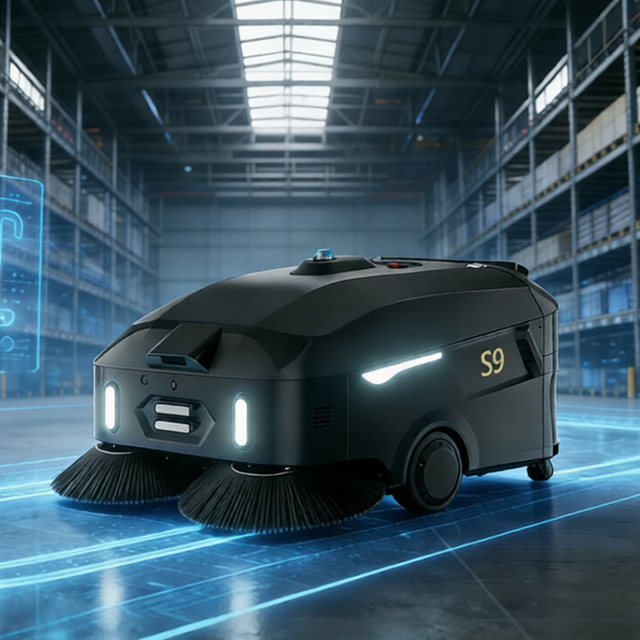
The build quality varies wildly between low-cost commercial units and high-performance industrial fleet machines. Budget commercial models often utilize sealed, semi-serviceable chassis designs. The manufacturers glue or sonic-weld key sub-assemblies. When a wheel motor fails, you cannot access it without compromising the structural housing. These machines are built with a lower durability threshold.
Premium industrial models utilize modular construction. The drive wheels, battery packs, water pumps, and scrub deck modules sit in separate housings secured by standard fasteners. If a wheel motor fails, a facility technician can flip the machine, remove a few bolts, pull out the broken module, and drop in a replacement. This modularity extends the usable lifespan significantly. You are maintaining a long-term capital asset rather than discarding a broken machine.
The hardware is only the initial capital expenditure (CapEx). Keeping the machine running requires a steady supply of operational consumables (OpEx). Squeegee blades wear down, side brushes bend, and main scrub brushes lose their stiffness. If you utilize a self-cleaning utility station, you also need a continuous supply of proprietary chemicals and water filtration cartridges.
Running a machine with worn-out consumables degrades its cleaning performance and puts unnecessary strain on the motors. A worn squeegee leaves water trails behind, creating a slip-and-fall hazard in a commercial facility. A worn brush fails to agitate the floor, leaving dirt and grease behind. Staying on top of the consumable replacement schedule is mandatory for protecting the hardware investment.
| Consumable Part | Replacement Schedule | Function |
| Industrial Pleated Filter | Every 2 to 3 months | Protects the suction motor from fine dust bypass |
| Side Sweeping Brush | Every 3 to 6 months | Sweeps debris from walls and pallet racks into the suction path |
| Main Scrub Brush / Pad | Every 6 to 12 months | Agitates floor surfaces and lifts heavy grease/dirt |
| Squeegee Blades | Every 1 to 3 months | Channels dirty water into the recovery tank vacuum inlet |
Standard commercial warranties cover manufacturing defects for one to two years. They do not cover consumable wear, battery degradation under continuous multi-shift operations, or damage caused by sucking up corrosive chemicals. Because the realistic lifespan of an industrial machine extends to five years, you will operate the machine out of warranty for the majority of its life. This reality makes repairability and parts availability critical factors when selecting a manufacturer.
Extended enterprise service level agreements (SLAs) make sense for flagship fleets with complex docking stations (auto-fill and auto-drain stations). If the high-pressure water pump fails or the self-washing mechanism breaks, the out-of-warranty repair costs are substantial. For basic walk-behind or stand-on AMRs, a robust internal preventive maintenance program often outweighs the cost of external protection plans.
A machine is only as good as the parts available to fix it. Before committing to a brand, check their enterprise portal and third-party commercial marketplaces for replacement modules. Can you easily buy a new LiDAR turret? Are replacement drive wheels in stock? Brands that embrace modular design and sell replacement parts directly to facility managers offer vastly superior long-term value.
Relying on a manufacturer that requires you to ship the entire 300-pound machine to a regional service center for a simple battery swap guarantees operational downtime and high logistics costs. Prioritize hardware that your in-house maintenance team can fix on-site with standard tools.
Hardware survival depends on your maintenance routine. Neglect kills these machines faster than any manufacturing defect. You must clear the physical obstructions that cause motors to overheat. Emptying and rinsing the wastewater recovery tank prevents sludge from backing up into the suction impeller. Wiping down the cliff sensors prevents the machine from driving off loading docks.
Remove the main scrub brush and cut away any packing straps, shrink wrap, or wire wrapped around the end caps.
Pop off the side sweepers and clear debris from the mounting posts.
Wipe the optical cameras, LiDAR covers, and infrared sensors with a dry, lint-free cloth.
Check the heavy-duty front caster wheel; inspect for flat spots and clear debris from the steel axle.
Monthly deep cleaning addresses the fine industrial dust that accumulates inside the chassis. Remove the internal compartments and use a shop vacuum to clean the internal suction port. If your machine uses washable stainless steel or pleated mesh filters, rinse them thoroughly with cold water. You must let them air dry completely for at least twenty-four hours before reinstallation. Installing a damp filter will pull moisture directly into the suction motor, destroying it instantly.
Inspect the drive wheel treads for uneven wear, which could indicate alignment or calibration issues. Use low-pressure compressed air to blow out the LiDAR turret housing, removing fine dust from the optical lenses and the drive belt mechanism. Do not use liquid lubricants on the plastic gears or open axles, as oil attracts industrial dust and creates an abrasive grinding paste. If a wheel assembly squeaks, use a dry PTFE or silicone spray sparingly.
Lithium battery cells require specific management to maintain their capacity. Always leave the machine on its charging dock when not in use. The internal battery management system (BMS) will charge the cells to optimal capacity and then switch to a low-power trickle charge or standby state. This prevents the battery from dropping into a deep discharge state, which permanently damages the cell chemistry.
Keep the charging station away from direct sunlight, heating vents, or unventilated industrial electrical closets. High ambient heat accelerates lithium-ion degradation. If you need to decommission the machine for several months, charge the battery to fifty percent, power the unit down completely using the physical breaker/switch, and store it in a climate-controlled room. Check the charge level every few months to ensure it does not self-discharge to zero.
Repairing makes sense when the core chassis, structural frame, and mainboard remain intact. If the machine navigates correctly, maps accurately, and connects to the enterprise fleet software, you should fix mechanical failures. Swapping a degraded battery pack, replacing a stripped side brush motor, or installing a new drive wheel module are straightforward operational repairs. If the cost of the replacement parts is less than half the price of a new comparable industrial unit, repairing is the logical choice.
Modular machines make this decision easy. Your team orders the part, removes a few fasteners, and the machine is back on the warehouse floor within a shift. Keeping a well-built industrial machine running through minor component replacements maximizes your initial capital investment.
Certain failures dictate immediate replacement. Severe chemical or liquid intrusion into the sealed electrical compartments is terminal. If the machine runs through deep standing water or corrosive chemical spills that bypass the seals, the liquid shorts out the motherboard and corrodes the sensor connections. You cannot fix a water-damaged motherboard reliably.
Similarly, if the main structural chassis is warped or cracked from a collision with a forklift, the structural integrity is compromised, and the machine can no longer maintain proper brush pressure or sensor alignment.
Software abandonment is another terminal condition. If the manufacturer pulls the fleet management application from service or shuts down the cloud servers required for localization and mapping, the machine loses its autonomous capabilities. At that point, the hardware is obsolete, regardless of its physical mechanical condition.
To stay ahead of these challenges and protect your long-term capital assets, partnering with a dedicated technology provider is essential. As a leading innovator in enterprise autonomous solutions,ZYLOR TECHdelivers ruggedized, highly service-ready cleaning hardware designed specifically to survive continuous heavy industrial operations.
Audit Your Floor Plan: Identify high-risk areas like high-friction flooring, ramp transitions, or heavy forklift traffic, and adjust your preventive maintenance schedule accordingly.
Verify Spare Parts Supply Chains: Verify the immediate availability of replacement battery packs, wheel modules, and filters from the manufacturer’s commercial parts network before signing the procurement contract.
Enforce Maintenance Protocols: Establish a strict daily and weekly shift routine to cut packing debris away from the main brush bearings and wipe down all optical sensors.
Optimize Charging Environments: Install the charging station in a temperature-controlled, well-ventilated utility area to prevent deep discharge and thermal damage to the battery cells.
Q: Can you replace the battery in a commercial robot vacuum or scrubber?
A: Yes, replacing the battery is a standard maintenance procedure on commercial-grade models. You typically access the battery compartment via a secure access panel on the bottom or side of the chassis. High-capacity replacement packs are available directly from industrial OEM suppliers. Swapping the battery restores the original runtime and extends the usable life of the machine.
Q: Should I leave my commercial autonomous cleaner plugged in all the time?
A: Yes, leave the unit on its designated charging dock. The internal battery management system (BMS) uses smart charging protocols to stop drawing power once the cells are full. Leaving it docked prevents the battery from entering a deep discharge state, which causes permanent chemical damage to the lithium cells.
Q: Do commercial autonomous cleaners lose suction over time?
A: The industrial suction motors rarely lose power on their own. A drop in static lift or airflow is almost always caused by clogged pleated filters, worn squeegee blades, or physical blockages in the vacuum hose and recovery tank. Replacing the filter and thoroughly flushing the recovery system restores the airflow to original levels.
Q: How often should you replace commercial filters, squeegees, and brushes?
A: Replace industrial filters every two to three months to maintain optimal airflow and protect the vacuum motor. Squeegee blades require replacement or flipping every one to three months depending on the abrasiveness of the floor. Side sweeper brushes and main scrub rollers require replacement every six to twelve months, depending on the friction and chemical exposure they encounter.
Q: Are premium industrial autonomous cleaners more durable than light commercial ones?
A: Yes. Premium industrial models utilize heavy-duty components, such as brushless motors and cast aluminum scrub decks, and feature modular designs that allow for rapid on-site parts replacement. While advanced sensor arrays add complexity, the superior build quality and parts accessibility result in a longer usable lifespan and a lower Total Cost of Ownership (TCO) compared to non-serviceable entry-level units.
Q: Can a commercial autonomous cleaner survive in a woodworking workshop or heavy metal fabrication facility?
A: Standard commercial-grade units will suffer rapid failure in these environments. Fine particulate dust like sawdust bypasses standard light filters, coating the motherboard and binding the motor impellers, while metal shavings will destroy standard rubber wheels and bearings. For these extreme industrial environments, facilities must procure specialized industrial AMRs featuring high IP (Ingress Protection) ratings, heavy-duty filtration systems, and sealed mechanical joints.

