
Views: 0 Author: Site Editor Publish Time: 2026-09-15 Origin: Site


Facility management is currently squeezed between chronic labor shortages, rising wage expectations, and increasingly stringent sanitation standards. Managing a massive facility means fighting a constant battle against dirt, dust, and debris. You have thousands of square feet of hard floors and carpets that need daily attention. Finding reliable staff to push a scrubber for eight hours a shift is harder than ever. When you do find them, the physical toll leads to burnout and turnover. Traditional manual cleaning scales poorly across large square footage, leading to inconsistent quality and opaque operational costs. Autonomous commercial cleaning robots offer a measurable, scalable alternative for baseline maintenance. They handle the monotonous, heavy-duty floor care reliably every single day. Moving from concept to deployment requires a rigorous evaluation of facility readiness, lifecycle expenses, and specific hardware capabilities. You must evaluate your floor types, aisle widths, and daily foot traffic to select the right equipment.
Labor Reallocation, Not Replacement: Commercial cleaning robots deliver the highest ROI when used to automate repetitive floor care, freeing human staff for high-value, detail-oriented tasks.
Facility-Specific Matching is Critical: Success depends on matching the robot’s navigation technology (SLAM, LiDAR) and physical footprint to the specific dynamic environment (e.g., warehouses vs. crowded retail spaces).
Lifecycle Expenses Extend Beyond Hardware: Accurate procurement models must account for software licensing, maintenance contracts, consumable parts (brushes, squeegees), and facility mapping time.
Proof of Clean: Modern fleets provide verifiable, data-driven reporting that supports compliance and quality assurance audits.
Table of Contents
Automating high-frequency, low-complexity tasks transforms unpredictable labor expenses into fixed, manageable assets. Manual floor care requires continuous hiring, onboarding, and shift management. Turnover disrupts cleaning schedules and inflates administrative overhead. When a worker calls in sick, the floors simply do not get cleaned. Robots stabilize these outlays by providing a consistent output for a predictable operational expense. You secure a fixed monthly lease or depreciation schedule instead of dealing with fluctuating overtime pay and holiday rates. Industry claims often cite massive cost reductions for repetitive floor-cleaning tasks. You must frame realistic ROI timelines based on your actual square footage, local wage rates, and utilization rates. A 100,000-square-foot distribution center will see faster returns simply by maximizing robot runtime across multiple shifts. Ensuring the equipment is constantly working rather than sitting idle in a janitorial closet maximizes your capital investment.
Subjective visual inspections leave significant gaps in quality assurance. What looks clean to one supervisor might fail an audit by another. Automated systems replace this guesswork with objective data logging. Fleet dashboards generate precise coverage maps after every shift. They track exact water usage, monitor battery consumption, and record precise runtimes. You can see exactly which aisles were skipped due to temporary blockages. This verifiable reporting directly supports SLA (Service Level Agreement) compliance. Facility management contractors use this data to prove performance metrics to their clients. It eliminates disputes over missed zones, incomplete shifts, or inadequate sanitation efforts. You hand the client a digital heat map showing 98% floor coverage, ending any debate about the night shift's productivity.
Janitorial staff frequently suffer from repetitive strain injuries. Pushing heavy scrubbing equipment across thousands of square feet takes a severe physical toll over time. Slips, trips, and falls remain the highest cause of workers' compensation claims in facility maintenance. Deploying robots for these grueling tasks protects your workforce. Teams shift to safer, detail-oriented duties like sanitizing door handles, cleaning restrooms, and managing waste disposal. You can also assign robots to hazardous environments. Overnight warehouse scrubbing alongside heavy machinery becomes significantly safer when autonomous units handle the floor care. Human workers remain in protected zones, focusing on tasks that require actual dexterity and judgment.
Robot Type | Primary Mechanism | Best Suited Flooring | Ideal Environments |
|---|---|---|---|
Autonomous Scrubbers | Dispense solution, scrub, and recover water | Concrete, tile, epoxy, hardwood | Industrial plants, retail centers, transit hubs |
Robotic Sweepers/Vacuums | Dry debris removal via suction and brushes | Large carpets, pre-sweeping hard floors | Hotels, corporate offices, convention centers |
Specialty/Multi-Purpose | Modular attachments, UV-C light, vertical climbing | Glass, walls, clinical surfaces | Hospitals, architectural glass facades |
These units dispense cleaning solution, scrub the surface with heavy-duty pads, and recover dirty water in a single continuous pass. They excel on hard floors like sealed concrete, ceramic tile, epoxy coatings, and commercial laminate. Industrial plants, large retail centers, and transit hubs rely heavily on them to maintain safe, slip-free environments. The mechanical action relies on adjustable down-pressure and specific pad types to lift stubborn grime. However, they have distinct operational limits. Most standard models require manual intervention for water tank refilling and dumping. Advanced docking stations can automate fluid management, but they require specific plumbing infrastructure installed at the facility level. You must also match the squeegee material to your floor type. Linatex works well for uneven surfaces, while urethane resists oil and chemical degradation in manufacturing plants.
Sweepers focus entirely on dry debris removal. They utilize heavy-duty suction motors and aggressive rotating brushes to lift dirt. These units are ideal for expansive carpeted areas. Hospitality venues, corporate offices, and convention centers deploy them daily to maintain aesthetic standards. They also work exceptionally well for pre-sweeping industrial floors before a scrubber passes through. Removing loose dirt prevents the scrubber's squeegee from clogging and leaving streaks. Their main limitation is dustbin capacity. The physical size of the internal hopper dictates how long the robot can operate autonomously. They also struggle with large, irregular debris like pallet splinters or shrink wrap, which can jam intake valves and snap drive belts.
Some facilities require highly specialized sanitation beyond standard floor care. Modular units allow operators to swap attachments, converting a scrubber into a sweeper based on daily needs. Niche robots tackle vertical and overhead spaces. Automated window, wall, and ceiling cleaners fall into this category, utilizing powerful suction to adhere to vertical planes. UV-C disinfection robots provide clinical-grade sanitation by neutralizing surface pathogens with ultraviolet light. Healthcare environments benefit immensely from these tools during terminal cleaning procedures. They carry higher upfront costs and serve narrower use cases compared to standard floor care units. You deploy these specifically when manual cleaning poses a severe safety risk or fails to meet strict biological standards.
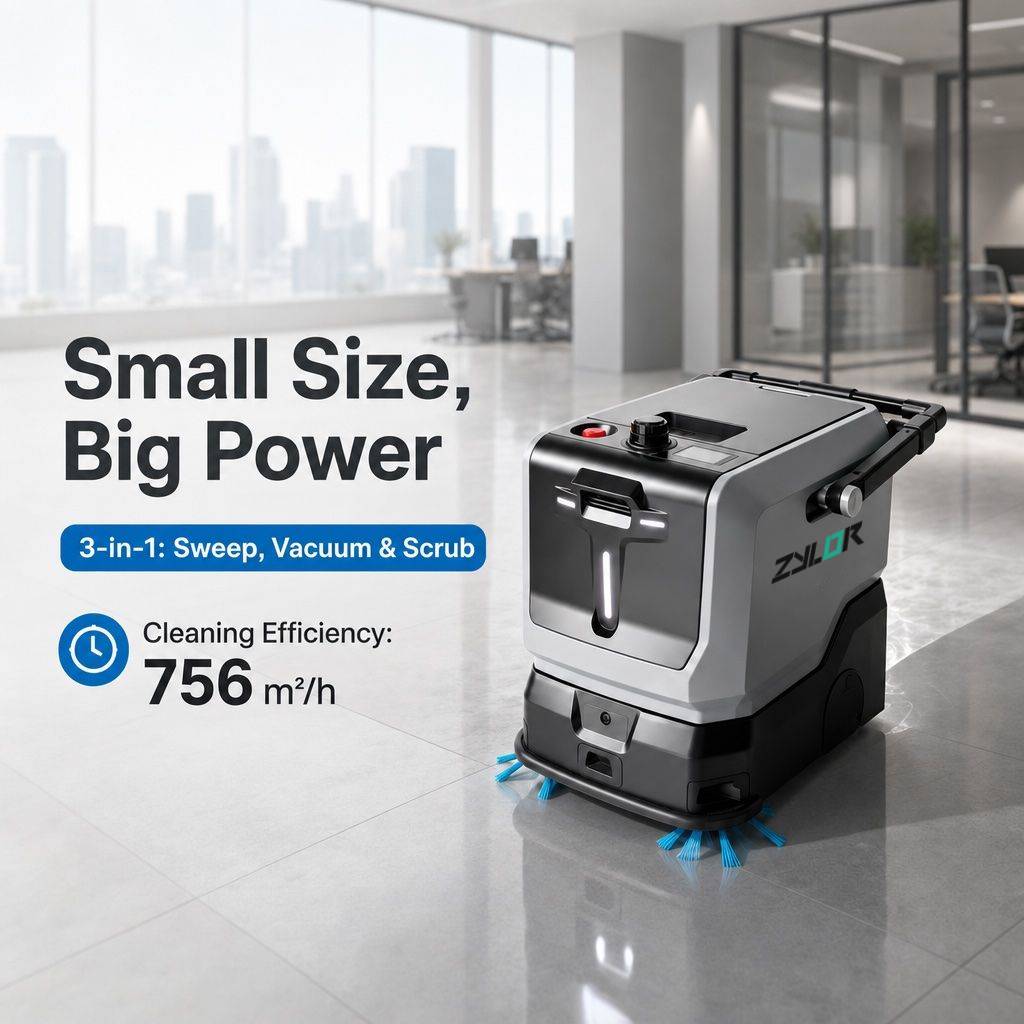
Heavy dust accumulation, constant forklift traffic, and occasional oil spills create harsh operating conditions. Massive square footage demands high endurance and wide cleaning paths. High-capacity scrubbers and sweepers fit this profile perfectly. They feature ruggedized chassis designs and dynamic obstacle avoidance systems. This technology allows them to safely navigate active loading zones without disrupting supply chain operations. They detect moving pallets, tow tractors, and heavy machinery in real time, pausing or rerouting instantly to prevent collisions. You need machines with high-capacity batteries and massive solution tanks to cover 50,000 square feet per shift without stopping.
Hospitals enforce strict infection control protocols to protect vulnerable populations. They experience 24/7 foot traffic and require exceptionally low noise levels to maintain patient comfort. Quiet-operation autonomous scrubbers meet these rigorous demands. UV-C robots equipped with hospital-grade HEPA filtration integrate seamlessly into existing sanitation workflows. They operate efficiently without disturbing patient recovery or clinical staff. Digital data logs prove that critical areas, such as surgical suites and intensive care units, meet stringent compliance standards after every cleaning cycle. The equipment must feature smooth, easy-to-wipe exteriors to prevent the machine itself from becoming a vector for cross-contamination.
These spaces demand flawless aesthetic standards. Lobbies, dining areas, and event spaces must look pristine to protect brand reputation. Unpredictable pedestrian movement and tight retail displays complicate navigation. Compact, highly agile commercial cleaning robots solve this challenge. They feature advanced fall-prevention mechanisms to avoid escalators and stairwells. Their guest-friendly aesthetics blend into premium environments without causing alarm. Many units feature interactive screens that display friendly messages, turning a maintenance task into a positive guest experience. The machines must navigate around temporary promotional kiosks, dropped merchandise, and unpredictable crowds without getting stuck or requiring a manual rescue.
Offices and school campuses feature mixed flooring types. Frequent transitions from thick carpet to hard tile challenge basic equipment. Narrow hallways, complex desk layouts, and scattered chairs require precise, high-resolution mapping. Hybrid vacuum and sweeper units excel in these environments. They handle multi-floor mapping, allowing a single robot to service different levels via elevator integration. Off-hours operation ensures floors are completely clean and dry before staff and students arrive for the day. You program the fleet to deploy at midnight, run their routes, and return to their charging docks before the first employee swipes their badge at 6:00 AM.
Navigation software dictates operational success. SLAM (Simultaneous Localization and Mapping) allows robots to understand their environment and calculate routes dynamically. LiDAR provides precise distance measurements using rapidly spinning lasers, mapping spaces with millimeter accuracy. 3D depth cameras add vital visual context, identifying the shape and nature of obstacles. Evaluate how the robot handles dynamic environments during your selection process. A pallet suddenly moved into a previously mapped aisle should trigger a seamless, intelligent detour, not a system failure or an error code requiring a manual reset. The best systems update their internal maps in real-time, learning which routes are consistently blocked at certain times of day.
Assess continuous runtime against required charge time. Lithium-ion batteries offer longer operational cycles, lighter weight, and faster charging than older AGM (Absorbent Glass Mat) batteries. Evaluate the exact level of human intervention required to keep the fleet moving. Auto-charging docks allow robots to top up their batteries between shifts independently. Automated water swapping stations and self-cleaning squeegee mechanisms drastically reduce daily maintenance requirements. Less human touch equates to higher true autonomy and better operational efficiency. If your staff spends two hours a day rescuing, draining, and cleaning the robot, you have simply traded one labor problem for another.
Advanced hardware requires robust software to deliver value. Review the vendor's cloud-based dashboards for real-time monitoring capabilities. You need instant error alerts sent to mobile devices and detailed performance analytics accessible via web portals. Discuss API capabilities with potential vendors. Integrating robot data into existing Building Management Systems (BMS) streamlines facility operations. Advanced CMMS (Computerized Maintenance Management Systems) platforms can automatically log maintenance tickets based on robot diagnostics, ensuring preventative maintenance occurs on schedule. You want a system that automatically orders replacement brushes when the onboard sensors detect excessive wear.
Safety features are entirely non-negotiable in commercial environments. Drop-off sensors prevent catastrophic falls down stairs or loading docks. Tactile bumpers provide physical emergency stops if optical sensors fail due to dirt or glare. Emergency stop buttons must be highly visible and easily accessible to anyone nearby. Audible chimes and visual strobe alerts protect staff and guests by signaling the robot's presence. Review OSHA compliance considerations for autonomous mobile robots operating alongside human workers to ensure your deployment meets all regulatory standards. The machine must default to a dead-stop if it loses sensor input, rather than blindly pushing forward.

To move from evaluation to active deployment, execute the following steps:
Initiate a comprehensive site audit with two to three shortlisted vendors to identify environmental constraints like steep ramps or glass walls.
Request a 30-day proof-of-concept pilot in a controlled, high-traffic zone to test real-world navigation and battery endurance.
Establish clear, measurable KPIs for the trial period, focusing heavily on total square footage covered and human intervention rates.
Train a dedicated internal champion to oversee daily operations, manage basic maintenance, and train new staff on the equipment.
A: Facilities typically choose between upfront capital expenditure and Robotics-as-a-Service (RaaS) leasing models. RaaS wraps hardware, software updates, and preventative maintenance into a predictable monthly operational expense. This lowers the initial barrier to entry and ensures facilities always have access to the latest hardware and navigation updates.
A: No. They operate strictly on a co-bot model. Robots automate repetitive, time-consuming floor care. This allows facility managers to reallocate human labor to high-touch surfaces, detailed sanitation, waste management, and complex tasks that require human dexterity and judgment.
A: Modern units integrate LiDAR, 3D depth cameras, and ultrasonic sensors. This array provides real-time, 360-degree obstacle detection. The robot continuously scans its environment, identifying moving pedestrians and static objects to calculate safe detours instantly without human intervention.
A: Daily maintenance includes emptying and rinsing recovery tanks, wiping down optical sensors, and cleaning debris from squeegees. Scheduled preventative maintenance involves inspecting battery health, replacing worn brushes, and updating navigation software to ensure peak performance and longevity.
A: Yes, depending on the specific sensor array. Models relying primarily on LiDAR and ultrasonic sensors can navigate and clean effectively in complete darkness. However, camera-dependent models may require ambient lighting to map the environment and avoid obstacles accurately.
A: Initial mapping involves manually driving the robot through the desired cleaning routes to establish boundaries. The time required depends entirely on the square footage and layout complexity. A standard gymnasium might take an hour, while a complex warehouse could take a full shift.

