
Views: 0 Author: Site Editor Publish Time: 2026-11-04 Origin: Site


Autonomous industrial cleaning robots perform assigned floor-cleaning tasks using navigation, scheduling, and supported cleaning systems. Depending on the model, these tasks can include sweeping, vacuuming, or wet scrubbing.
For factories and warehouses, successful deployment depends on more than the robot’s cleaning capacity. The equipment must fit the floor conditions, work around operational constraints, and have a practical servicing process.
Start with a defined area and measurable cleaning requirements. Validate the complete workflow before expanding across the facility.
A factory or warehouse rarely has one uniform cleaning requirement. Receiving areas, storage aisles, production corridors, and packing stations can generate different soils and have different access conditions.
Facility zone | Conditions to assess | Cleaning approach to evaluate |
|---|---|---|
Receiving and dispatch | Tracked-in dirt, packaging debris, changing traffic | Suitable debris collection and planned cleaning windows |
Storage aisles | Dust accumulation, pallets, restricted access | Sweeping or vacuum collection matched to the debris |
Production corridors | Process-related soil, coatings, nearby equipment | Approved dry or wet cleaning methods |
Packing and sorting areas | Paper fragments, film, straps, temporary obstructions | Debris removal with clear limits on wrapping materials |
Shared pedestrian routes | People, carts, appearance requirements | Appropriate cleaning settings and traffic coordination |
Assess the actual conditions rather than assigning equipment from the zone name alone.
Document which areas are accessible, temporarily unavailable, or excluded from robotic cleaning. Include the manual tasks that remain.
Sweeping and vacuum collection are starting points for suitable loose debris. Confirm material size, shape, quantity, and collection limits.
ZYLOR’s S9 industrial sweeping robot is presented for industrial dry-waste applications. Review representative debris with the supplier before deciding on suitability.
Wet scrubbing is a starting point for washing compatible hard floors and removing suitable adhered soil. Confirm flooring guidance, cleaning chemistry, agitation, and liquid recovery.
The S95 industrial floor scrubber robot provides another platform to evaluate where wet cleaning is required.
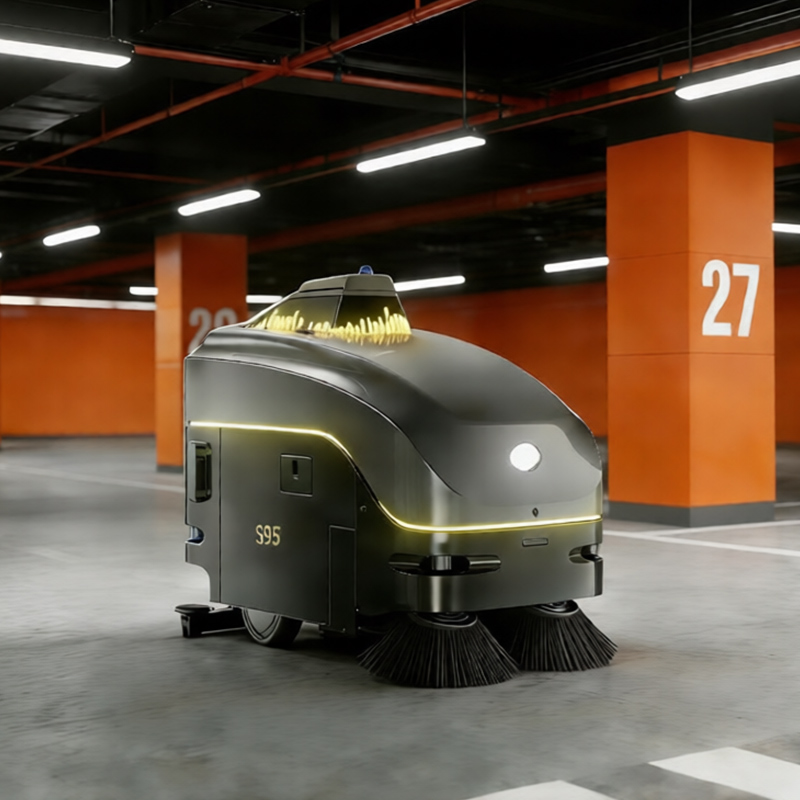
Combined cleaning functions may be useful for mixed tasks, but confirm the collection mechanism and whether functions operate simultaneously or in separate modes.
Do not assume that one platform can handle every waste stream. Sharp objects, wrapping materials, unknown spills, and specialized dust may require separate procedures.
The cleaning plan should reflect how the facility operates during each shift.
Review forklift routes, pedestrian crossings, staging locations, loading activity, and areas where pallets frequently move.
Check routes under representative conditions, including:
Narrow passages and turning points.
Temporary stock and parked equipment.
Doors, thresholds, joints, and approved ramps.
Reflective surfaces and variable lighting.
Access to charging or service stations.
A map created during an empty shift does not establish performance during peak operations.
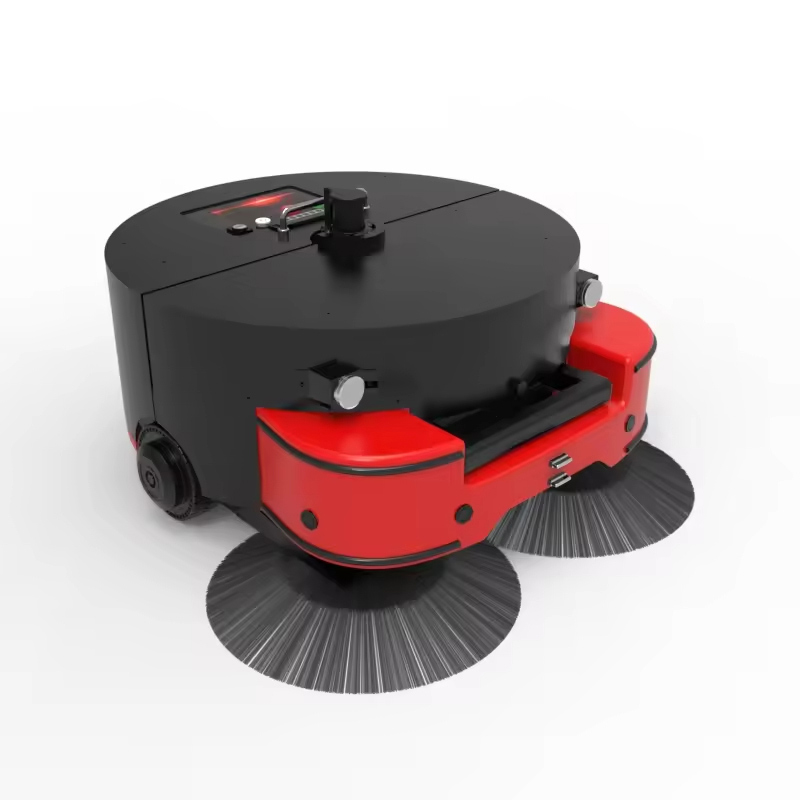
Obstacle detection supports operation, but it does not replace site traffic management.
Work with the supplier and relevant site teams to establish permitted routes, restricted areas, crossing arrangements, and staff response procedures.
Ask how the robot behaves when a route becomes blocked. Depending on the system and settings, it may wait, reroute, skip an area, retry later, or request assistance.
Demonstrate these behaviors under controlled conditions. Avoid relying on claims that the robot will always negotiate moving industrial traffic without interruption.
Different zones may need different schedules. A main corridor might be available between shifts, while a picking aisle may become accessible after replenishment.
Confirm which scheduling functions the proposed system supports.
If integration with warehouse or building software is required, define the exact purpose first. An integration should solve an identified workflow issue rather than become an assumed requirement.
ZYLOR’s industrial and logistics cleaning solutions describe an approach based on operational mapping, targeted pilots, and wider deployment.
Autonomous movement and automatic charging do not mean that every maintenance task is automated.
For dry-cleaning machines, review debris emptying, brush access, filters where fitted, and collection-system cleaning.
For wet-cleaning machines, review clean-water supply, wastewater handling, recovery components, brushes or pads, and squeegee care.
Function | What to confirm |
|---|---|
Charging | Docking, charging procedure, reserve settings, and task resumption |
Debris handling | Manual or automatic emptying and permitted materials |
Water servicing | Manual or station-supported refilling and drainage |
Routine care | Components requiring inspection or cleaning by staff |
Alerts | Events reported and the staff response required |
Recovery | Approved procedure when a task cannot continue |
Follow the model-specific operating and maintenance instructions. Do not assume a common procedure applies across the entire fleet.
A charging station and an automated water-service station have different requirements.
Request the approved specifications for power, approach space, clearances, network connectivity, and any water or drainage connections.
Have site engineering review the proposed location. The station must remain accessible without obstructing production, logistics, or emergency access.
Avoid planning around generic drain sizes or electrical ratings.
Name the people responsible for starting tasks, checking results, responding to alerts, and completing routine care.
Include the cleaning team in the pilot. Their feedback can reveal difficult loading, inconvenient servicing locations, or unclear recovery steps.
Train the relevant shifts rather than relying on one experienced operator. Maintain a clear handover process so the robot remains usable when staff change.
Where connectivity is involved, ask the IT team to review access, data handling, updates, and remote support requirements.
A demonstration establishes basic functionality. A representative pilot provides evidence for an operating decision.
Agree on the assigned area, cleaning standard, available time, and recording method.
Measure | Evidence to record |
|---|---|
Cleaning quality | Remaining soil, debris, residue, and rework |
Task completion | Accepted cleaned area within the available window |
Operational interaction | Waiting, detours, blocked routes, and disruption |
Staff involvement | Assistance frequency, cause, and duration |
Servicing | Time for emptying, water, routine care, and charging |
Reliability | Missed tasks, alerts, and recovery outcomes |
Test difficult but representative conditions. A successful run through an open corridor does not establish suitability for every aisle.
Task logs and maps can help identify recorded activity and missed zones.
They do not independently prove soil removal, disinfection, or compliance with a hygiene requirement. Assess the floor result separately.
If reporting is part of the procurement requirement, review the actual output, export options, limitations, and connectivity needs.
Include the robot, stations, accessories, installation, commissioning, training, consumables, software charges where applicable, and support.
If purchase, rental, or subscription arrangements are offered, compare their actual terms. Do not assume maintenance and updates are automatically included.
Also distinguish staff time released for other tasks from a direct reduction in expenditure. Use measured pilot results when estimating financial benefits.
Water, chemical, energy, and damage-reduction claims should likewise be based on comparable measurements rather than assumed percentages.
After a successful pilot, add zones in manageable stages.
Recheck route access, servicing demand, schedules, and staff workload as coverage increases. A new building or production area may need a fresh assessment rather than a copied configuration.
For multiple robots, confirm how zones, docks, and task priorities are coordinated. More machines do not automatically create an effective fleet.
Possibly, when the specific machine, routes, traffic arrangements, and site conditions support it. Validate the proposed operating periods with the supplier and site team.
Some platforms support multiple functions, but suitability depends on the debris, floors, access, servicing, and workload. Separate machines or cleaning stages may be appropriate.
Requirements vary. Some deployments mainly need a suitable charging location, while others need water servicing or building integration. Confirm the installation scope for the proposed configuration.
Only rely on operation within the model’s approved lighting conditions. Test the complete detection and navigation system rather than assuming a particular sensor guarantees darkness capability.
No. Restricted spaces, stairs, unexpected spills, detailed cleaning, inspections, and equipment servicing can still require people. Include these responsibilities in the operating plan.
Considering autonomous cleaning for an industrial site?
Contact ZYLOR with your floor plan, typical soil, cleanable areas, shift pattern, and traffic constraints. Discuss suitable robot roles and a pilot scope covering cleaning results, route completion, servicing, and staff responsibilities.

