
Views: 0 Author: Site Editor Publish Time: 2026-09-15 Origin: Site


Facility maintenance faces an escalating challenge in modern commercial environments. Operations managers must balance rising janitorial labor costs and high turnover rates against the demand for stringent, documented cleanliness standards. Manual floor cleaning in large-scale commercial spaces creates severe operational inefficiencies. Human crews often leave inconsistent coverage, generate significant chemical waste, and lack the ability to easily verify cleaning metrics. When staff members use traditional mops and walk-behind scrubbers, fatigue naturally sets in. This leads to degraded cleaning quality toward the end of a shift. Furthermore, manual processes provide no telemetry data to prove that a specific hallway or lobby was actually sanitized to compliance standards.
To solve these persistent problems, facilities are shifting away from manual equipment and consumer-grade vacuums. They now deploy enterprise-grade solutions designed for heavy-duty, continuous operation. This technical evaluation guide helps operations managers and facility directors decide whether to adopt, pilot, or scale an autonomous floor cleaning robot. You will learn exactly how these complex machines navigate, where they fit best within different industries, and how to integrate them into your existing operational workflows.
Mapping and Navigation Over Hardware Specs: An autonomous floor cleaning robot's viability depends more on its SLAM (Simultaneous Localization and Mapping) and dynamic obstacle avoidance capabilities than its raw top speed.
Facility-Specific Deployment: ROI is highly dependent on matching the machine type (e.g., dedicated commercial floor scrubber vs. multi-mode vacuum) to the specific environmental constraints (e.g., warehouse concrete vs. corporate mixed-flooring).
Workflow Augmentation, Not Replacement: Successful implementation requires integrating the robot into existing janitorial workflows, shifting human labor from repetitive scrubbing to high-value detail work.
Hidden Implementation Realities: True deployment costs must account for infrastructure upgrades (plumbed docking stations, dedicated network access) and ongoing maintenance (sensor calibration, consumable replacement).
Continuous Software Evolution: The best enterprise robots are not static machines; they rely on proprietary AI and Over-the-Air (OTA) updates to continuously improve routing efficiency and obstacle recognition.
Table of Contents

Commercial cleaning robots use SLAM technology to map their surroundings and navigate autonomously. LiDAR, 3D cameras, and ultrasonic sensors help the robot track its position and detect obstacles in real time.
Unlike older systems that require operators to manually record routes, modern robots automatically calculate efficient cleaning paths. If racks, pallets, or other obstacles move, the robot updates its map and adjusts its route.
This enables more accurate navigation, fewer interruptions, and reliable cleaning coverage in complex commercial and industrial spaces.
Proprietary AI software processes massive amounts of sensor data instantly. The system must distinguish between static objects and dynamic obstacles within milliseconds. Static objects include permanent shelving, architectural pillars, and walls. Dynamic obstacles include moving forklifts, walking pedestrians, and temporary pallet drops. When a sudden path blockage occurs, strict safety protocols immediately engage.
The forward-facing depth cameras detect an anomaly in the expected path.
The onboard processor calculates the size, trajectory, and speed of the obstacle.
The robot halts its forward momentum and disengages the active cleaning deck to prevent water pooling.
The navigation system plots a safe detour around the object, maintaining a minimum clearance distance.
Once clear, the machine resumes its original cleaning path and reactivates the scrubbing or vacuuming mechanisms.
If the environment changes drastically and the path is entirely blocked, the machine updates its internal map and finds an alternative route. It never forces its way through a crowded aisle or attempts to push through physical barriers. This level of spatial awareness prevents workplace accidents and equipment damage.
Physical cleaning actions vary significantly by surface type. Hard floors require heavy-duty cylindrical or disc scrubbing mechanisms. These systems dispense water and detergent, agitate the surface, and use squeegee recovery mechanisms to leave floors completely dry. Carpets require entirely different mechanical actions, focusing on agitation and airflow. Multi-mode robots handle both environments smoothly. They automatically adjust brush pressure and water flow based on real-time surface feedback.
Cleaning Deck Type | Primary Mechanism | Ideal Floor Surface | Key Operational Advantage |
|---|---|---|---|
Disc Scrubber | Flat, rotating circular pads or brushes | Smooth concrete, VCT, terrazzo, tile | High down-pressure for removing stubborn, stuck-on stains. |
Cylindrical Scrubber | Tube-shaped brushes rotating at high RPM | Uneven concrete, grouted tile, rubberized floors | Sweeps small debris into a catch tray while scrubbing simultaneously. |
Commercial Vacuum | High-suction motor with beater bar agitation | Commercial broadloom, carpet tiles, walk-off mats | Extracts embedded dirt and dust without using water or chemicals. |
When transitioning from tile to carpet, advanced units lift their wet mop pads instantly. They increase suction power, measured in Pascals (Pa), to extract embedded dirt and debris. This mechanical adaptability ensures optimal cleaning efficacy without requiring manual intervention from your staff. You avoid the risk of a machine accidentally dispensing water onto a carpeted boardroom floor.
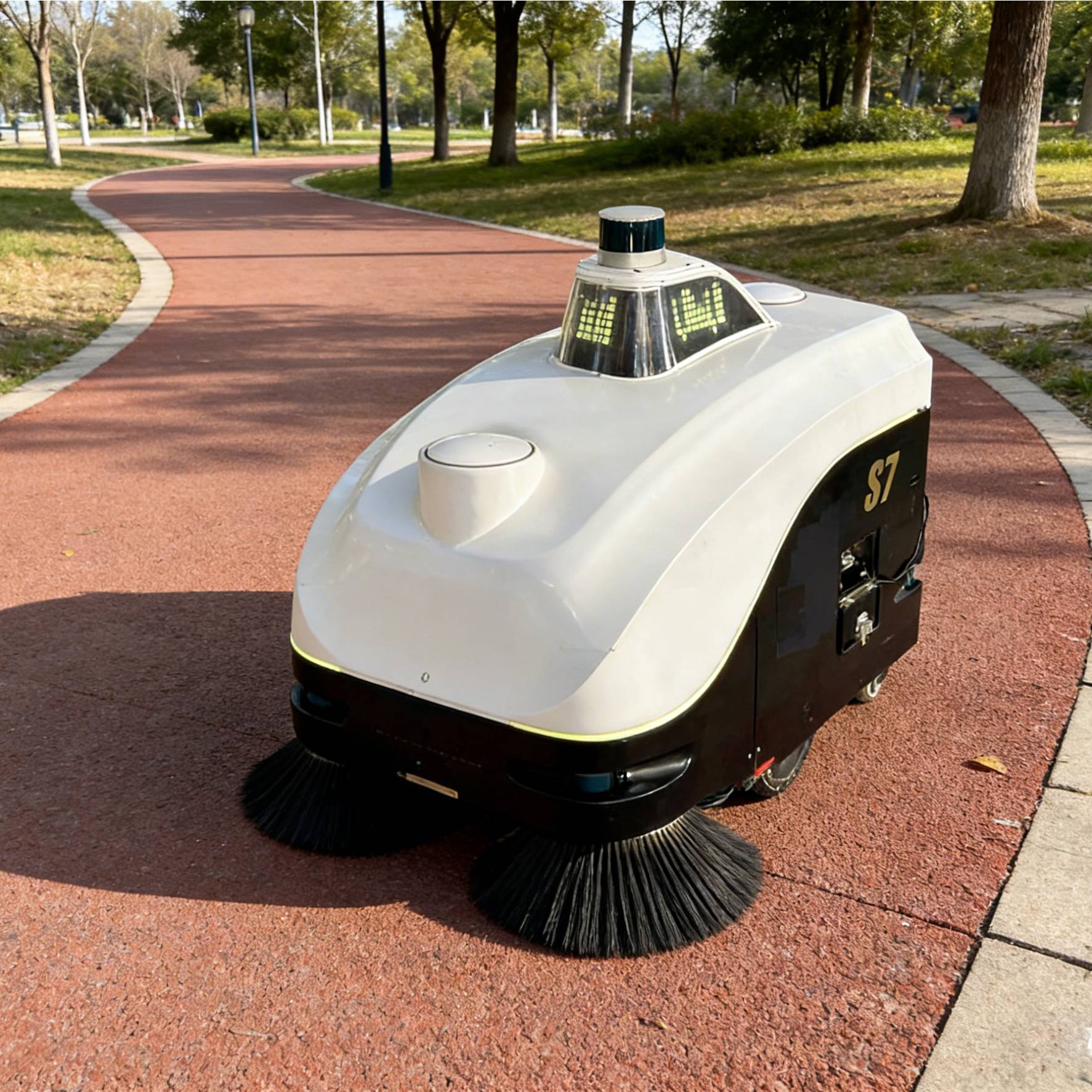
Warehouses present unique and demanding cleaning challenges. Success here requires massive square footage coverage per shift. The machine must handle heavy dust, wood splinters, and pallet debris without clogging. It must also navigate safely around active material handling equipment like reach trucks and pallet jacks. The ideal solution is a large-capacity commercial floor scrubber.
Requires high battery autonomy to cover vast concrete expanses.
Needs massive water tanks to minimize refill interruptions during a shift.
Demands heavy brush down-pressure to remove stubborn tire marks and compacted grime from porous concrete floors.
Must feature industrial-grade squeegees that resist tearing on rough expansion joints.
Retail spaces demand extreme agility and safety. Success means navigating narrow aisles safely without knocking over end-cap displays. The machine must operate around the general public, including children and shopping carts, without causing disruption. Rapid spill response capabilities are mandatory for maintaining a safe shopping environment. The ideal solution is a mid-sized, highly agile scrubber.
Must feature low noise output to avoid disturbing customers during operating hours.
Immediate floor-drying mechanisms are absolutely required to prevent slip-and-fall hazards.
Needs a compact turning radius to navigate tight checkout lanes and promotional displays.
Should include a manual override mode for staff to quickly clean up localized spills.
Hospitals require strict adherence to sanitation compliance and infection control protocols. Success criteria include HEPA filtration to capture airborne pathogens and extremely quiet operation for patient wards. The machine must navigate tight, highly trafficked corridors filled with medical carts safely. The ideal solution involves specialized multi-mode robots.
Look for units with UV-C disinfection add-ons that sanitize the floor after scrubbing.
Hospital-grade HEPA filtration is non-negotiable to prevent cross-contamination.
The equipment must integrate into the facility's rigorous daily sanitation schedule without interrupting critical care operations.
Requires easy-to-sanitize external chassis materials that withstand harsh hospital-grade disinfectants.
Corporate and educational facilities feature highly mixed flooring environments. Success requires transitioning smoothly from hard lobby floors to carpeted hallways and conference rooms. The machine must navigate complex architectural layouts, including cubicle mazes and cafeteria seating. Scheduled after-hours operation is typically preferred to minimize daytime disruption. The ideal solution is a multi-mode vacuum and scrubber hybrid.
Must lift mop pads over carpets automatically to prevent water damage.
Dynamically adjusting suction power ensures deep cleaning across all surfaces while conserving battery life.
Needs advanced scheduling software to clean specific zones at designated times.
Should feature a sleek, unobtrusive design that blends into professional environments.
Raw performance indicators determine the actual cleaning value of the machine. You must assess suction power, brush RPM, and mechanical down-pressure. Down-pressure, measured in pounds or kilograms, dictates the scrubbing effectiveness against stubborn stains. High brush RPM ensures thorough agitation of dirt trapped in floor crevices. Strong suction guarantees complete water recovery, leaving floors instantly dry. These metrics ensure the machine meets commercial sanitation standards. Do not rely on visual design or sleek aesthetics. Focus entirely on the mechanical output and the quality of the internal components driving the cleaning deck.
Hardware Metric | Commercial Standard Range | Operational Impact |
|---|---|---|
Brush Down-Pressure | 50 lbs to 150+ lbs | Determines the ability to remove compacted dirt, grease, and forklift tire marks. |
Brush Speed (RPM) | 200 RPM to 600+ RPM | Higher speeds provide better agitation for uneven surfaces and grouted tile. |
Vacuum Suction (Water Lift) | 40 inches to 70+ inches | Ensures complete water recovery, leaving floors dry and safe for foot traffic immediately. |
Noise Level (Decibels) | 55 dB to 75 dB | Lower decibel ratings allow for daytime cleaning in noise-sensitive environments like hospitals. |
Continuous run-time involves much more than just battery life. A six-hour lithium-ion battery is useless if the clean water tank runs dry in two hours. If the machine requires manual refilling constantly, autonomy fails entirely. Evaluate the balance between electrical power and consumable capacity. The machine should ideally deplete its battery and its water supply simultaneously. This synchronization minimizes human intervention. Look for systems that allow you to adjust water flow rates dynamically. Lowering the flow rate on lightly soiled floors extends the operational time between required pit stops. Advanced units utilize water recycling systems that filter and reuse scrubbing water, drastically extending the runtime before a drain-and-fill is required.
Automated base stations are critical for achieving true autonomy. Evaluate features like self-cleaning dustbins and automatic mop pad washing systems. Basin self-cleaning prevents foul odor buildup within the docking station itself. Direct-plumbed water exchange allows for extended unattended cleaning cycles. The station automatically drains dirty recovery water into the sewer line and refills the clean water tank. This automated servicing reduces daily maintenance tasks for your janitorial staff. It transforms the robot from a tool that needs constant babysitting into an independent asset. Without a plumbed docking station, your staff must manually empty heavy recovery tanks and refill clean water tanks multiple times per shift.
Cloud-based reporting dashboards provide verifiable data for facility managers. Operations teams need concrete proof of clean to ensure regulatory compliance. Dashboards generate visual heat maps of cleaned areas after every shift. They track exact water usage, battery consumption, and highlight any skipped zones caused by blocked pathways. This telemetry data allows you to optimize cleaning schedules and route efficiency. It provides concrete evidence that sanitation protocols are being met daily. You can export these reports for compliance audits or internal quality assurance reviews. If a slip-and-fall incident occurs, you can pull the telemetry data to prove the floor was cleaned and dried according to schedule.
The software ecosystem matters just as much as the physical hardware. Machine learning algorithms improve navigation over time. The robot learns the most efficient routes through your facility and remembers common obstacle locations. Over-the-Air (OTA) updates future-proof your investment significantly. Vendors push software enhancements, new navigation protocols, and improved obstacle recognition models directly to the machine via Wi-Fi. This ensures your equipment gets smarter and more capable long after the initial deployment date. A machine running on outdated, static software will quickly become a liability as your facility layout evolves.
Technological limitations still exist in complex environments. Robots often struggle with highly reflective surfaces like glass walls or floor-to-ceiling mirrors, which can confuse LiDAR sensors. The laser pulses bounce off the glass, making the robot think the room extends further than it does. Sudden drop-offs, loading docks, and steep ramps pose significant navigational risks. You must address these edge cases proactively during the initial deployment phase. They require physical barriers or strict software no-go zones drawn on the digital map. Mapping these restrictions accurately prevents accidents, equipment damage, and operational downtime. In some cases, applying a strip of frosted tape at the LiDAR scanner's height on a glass wall solves the reflection issue entirely.
Deployment requires several hidden prerequisites that facilities often overlook. You cannot simply unbox a commercial robot and expect it to run indefinitely without proper site preparation. Preparing this infrastructure beforehand ensures a smooth rollout and prevents delays during the installation process.
Identify a Staging Area: Select a dedicated, out-of-the-way location for the docking station that does not block emergency exits or high-traffic corridors.
Install Electrical Hookups: Ensure the staging area has heavy-duty, dedicated electrical outlets capable of handling the high-amperage draw of rapid battery chargers.
Plumb Water and Drainage: For fully autonomous stations, hire a plumber to install a dedicated clean water supply line and an accessible floor drain for wastewater disposal.
Verify Network Connectivity: Test the Wi-Fi or cellular signal strength in the staging area. The machine needs a stable connection to transmit telemetry data, download OTA updates, and send error alerts.
Clear Mapping Routes: Before the initial mapping run, remove temporary pallets, wet floor signs, and loose debris to ensure the robot records a clean, accurate baseline map.
Verify that the equipment meets strict regional safety standards before deployment. Look for ANSI, CSA, CE, or OSHA compliance documentation. These certifications are mandatory for autonomous mobile robots operating in public spaces alongside humans. They ensure the machine features redundant safety sensors, emergency stop buttons, and fail-safe braking mechanisms. Compliance protects your facility from liability claims and ensures safe daily operation. Never deploy uncertified robotics in environments shared with employees or the general public. A machine lacking proper safety relays can cause severe injury if its software crashes while moving at top speed.
Mitigate the fear of robot replacement among your existing staff immediately. Provide a clear framework for training and workflow integration. Teach janitorial teams how to manage the robot effectively. They must learn to clear large debris before a run, clean the sensors, and perform basic maintenance like swapping out worn squeegee blades. Reallocate their newly saved time to high-touch surface sanitization, restroom detailing, and tasks requiring human dexterity. This integration turns the robot into a valuable team asset rather than a perceived threat to their livelihood. When staff realize the machine handles the grueling, repetitive floor scrubbing, adoption rates skyrocket.

You can purchase the hardware outright or utilize subscription models. CapEx requires a larger initial investment but eliminates recurring hardware fees. This model suits facilities with large capital budgets and in-house maintenance teams capable of handling minor repairs. Robotics-as-a-Service (RaaS) operates as a predictable monthly operational expense. RaaS mitigates obsolescence risk entirely. The subscription typically includes all software updates, routine preventative maintenance, and immediate hardware swaps if a unit fails. This model ensures you always have functioning, up-to-date equipment without bearing the burden of long-term depreciation. It also shifts the maintenance burden back to the vendor, ensuring higher overall uptime.
Advanced robots reduce environmental impact significantly while lowering operational costs. They use precise chemical dosing systems to eliminate detergent waste entirely. Instead of a worker guessing how much floor cleaner to pour into a bucket, the machine dispenses the exact milliliter required based on the water flow rate. Advanced water recycling systems filter and reuse scrubbing water multiple times during a single run. This drastically reduces overall wastewater generation and fresh water consumption. Resource efficiency lowers monthly utility bills and consumable costs. It also supports corporate sustainability initiatives and helps facilities achieve green building certifications like LEED.
Calculate a realistic return on investment using specific, measurable metrics. Start with the direct labor hours saved on routine floor care tasks. Subtract the time staff spends managing, cleaning, and maintaining the robot daily. Factor in the financial savings from reduced chemical and water usage. Finally, account for the extended lifespan of consistently maintained flooring, which delays expensive replacement projects. When floors are scrubbed daily with the correct down-pressure and chemical dilution, the finish lasts significantly longer. This comprehensive formula provides a clear, accurate picture of the true operational value the machine brings to your facility.
Autonomous floor cleaning robots are highly capable enterprise tools that deliver measurable operational returns when matched correctly with facility layouts. Decision-makers should prioritize vendors based on specific technical merits rather than marketing claims. Look for sensor redundancy, frequent over-the-air AI software updates, and robust local maintenance support. To move forward with deployment, follow these actionable steps:
Conduct a comprehensive facility floorplan audit to identify ideal deployment zones and potential navigational hazards.
Define your baseline cleanliness metrics clearly to establish success criteria for the new equipment.
Evaluate your facility's infrastructure readiness, specifically checking for available plumbing and electrical hookups in potential staging areas.
Request a 30-day on-site pilot program from your shortlisted vendors to validate performance in your actual environment.
A: The robot uses LiDAR and 3D depth cameras to detect obstacles in real-time. When a person or object blocks the path, the machine stops immediately. It calculates a safe detour around the obstacle. If the path is completely blocked, it updates its map and cleans another area before returning later.
A: Yes, multi-mode robots handle mixed flooring smoothly. When sensors detect a transition from hard floors to carpet, the machine automatically lifts its wet mop pads. It stops water flow and increases vacuum suction power to extract dirt from the carpet fibers without causing water damage.
A: The robot does not require continuous internet access to clean. It relies on its internal computer and downloaded maps to navigate safely. However, it will not be able to send real-time alerts or upload cleaning reports to the cloud dashboard until it reconnects to the network.
A: Modern sensors rarely require manual calibration. However, they do require regular physical cleaning. Janitorial staff should wipe down the LiDAR lenses, depth cameras, and ultrasonic sensors daily with a microfiber cloth to ensure accurate navigation and prevent false obstacle detection.
A: Fully automated docking stations require access to a standard water supply line and a floor drain. You will need a plumber to install a dedicated water hookup and ensure the drain can handle the wastewater discharge. Basic charging stations only require a standard electrical outlet.
A: Mapping a new facility typically takes a few hours, depending on the square footage. An operator walks or drives the robot around the perimeter of the desired cleaning zones. The machine uses its sensors to build a digital map, which is then saved for all future autonomous runs.

